CeMM Research Center for Molecular Medicine of the Austrian Academy of Sciences, Vienna, Austria.
Department of Molecular Biology, Max Planck Institute for Biophysical Chemistry, Göttingen, Germany.
Nat Genet. 2020 Jul;52(7):719-727. doi: 10.1038/s41588-020-0635-0. Epub 2020 Jun 1.
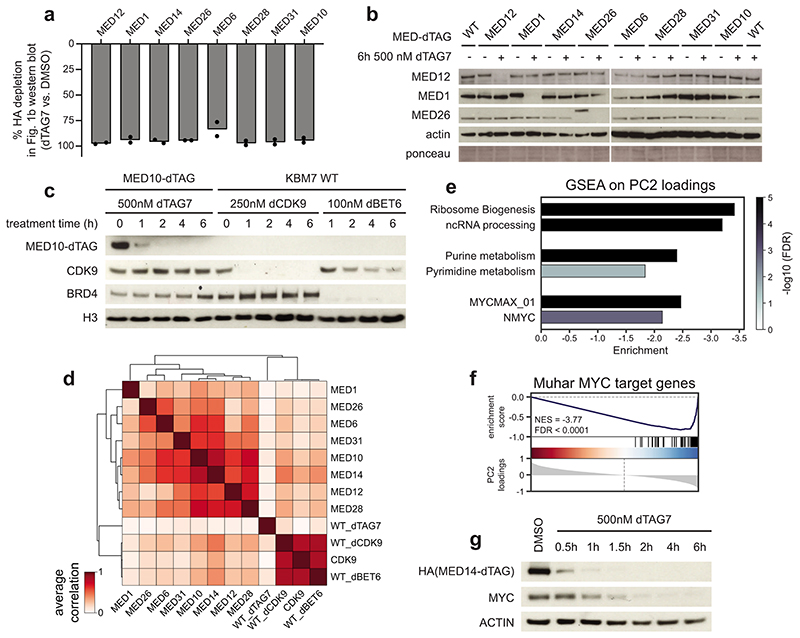
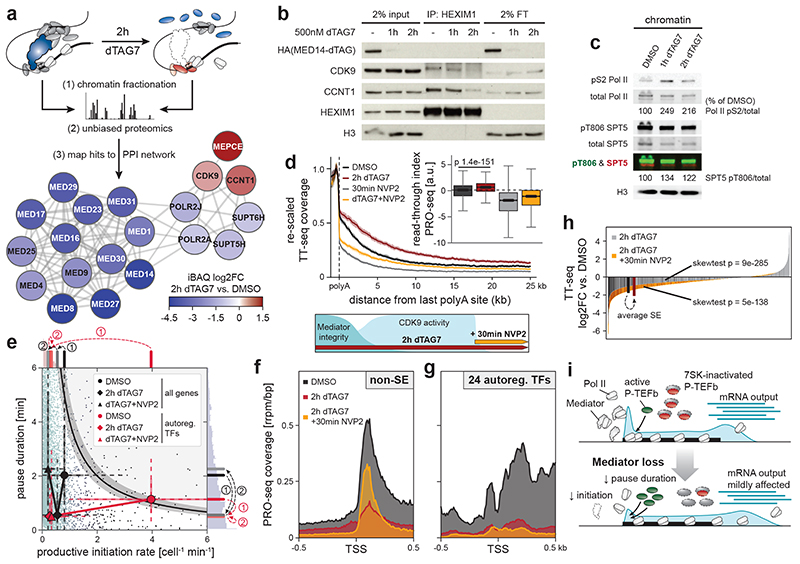
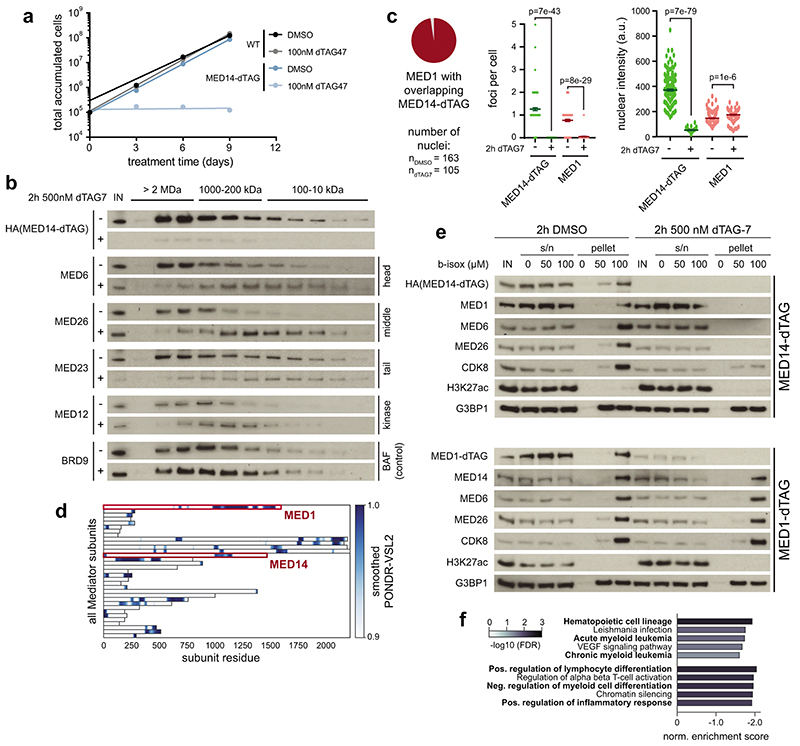
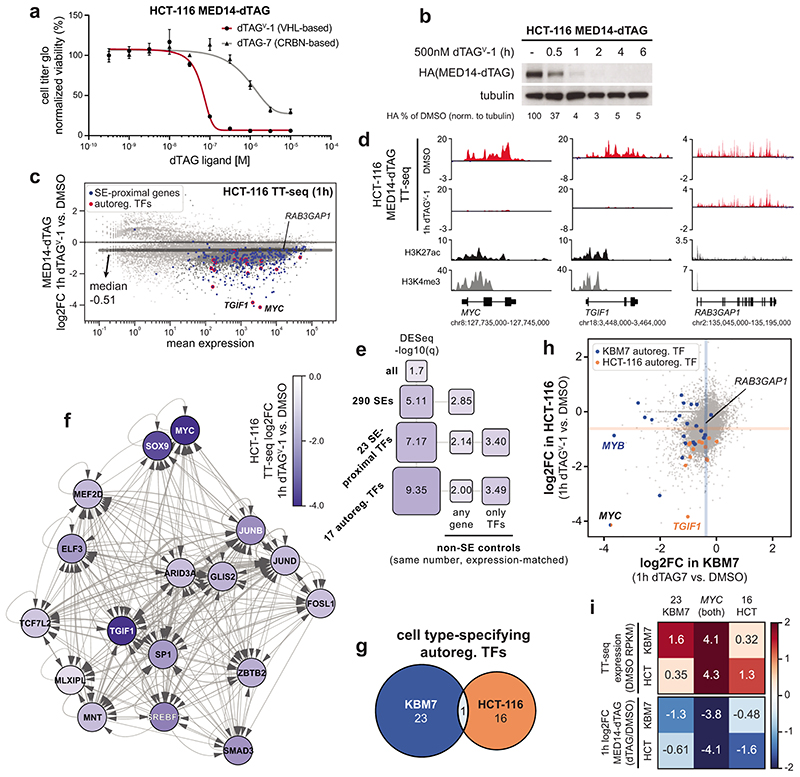
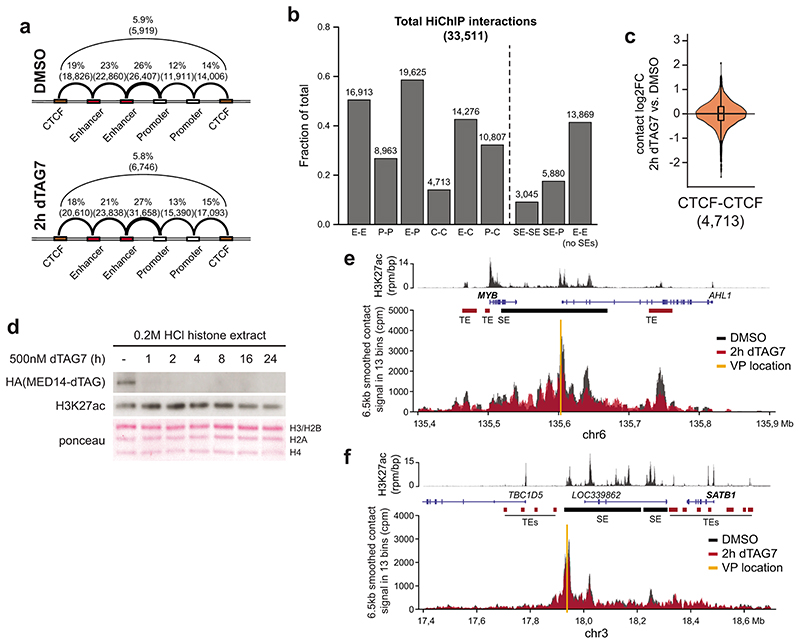
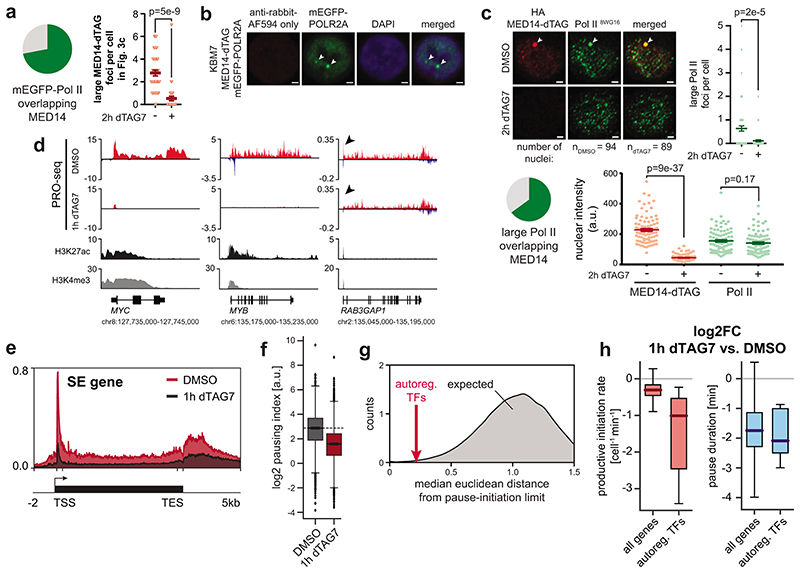
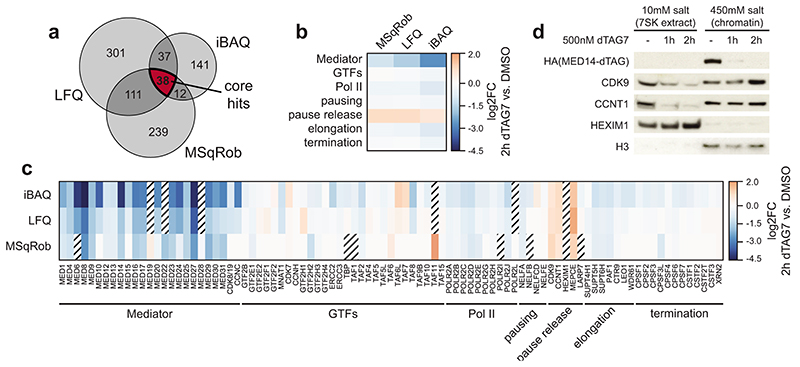
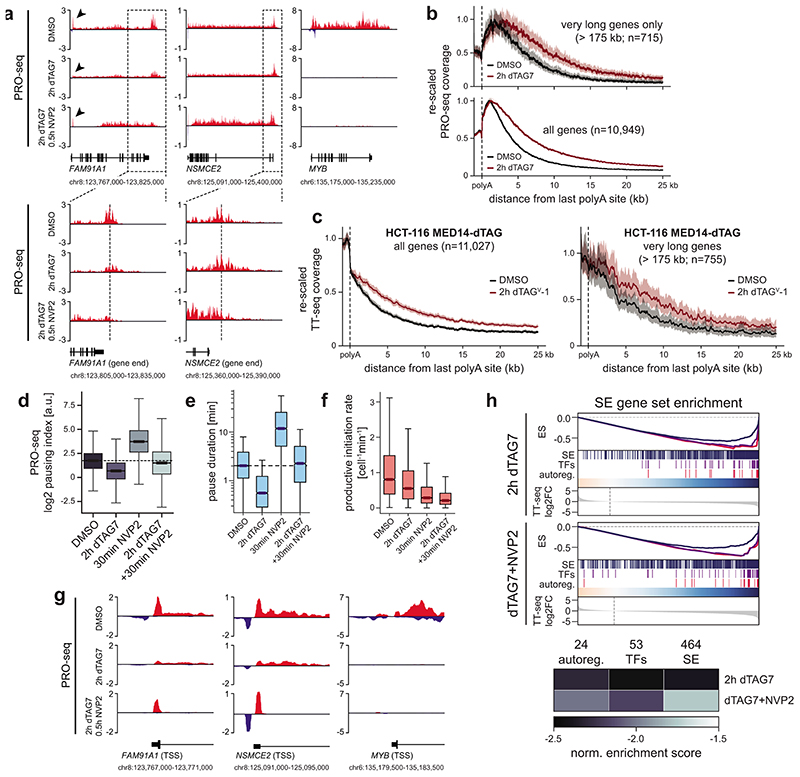
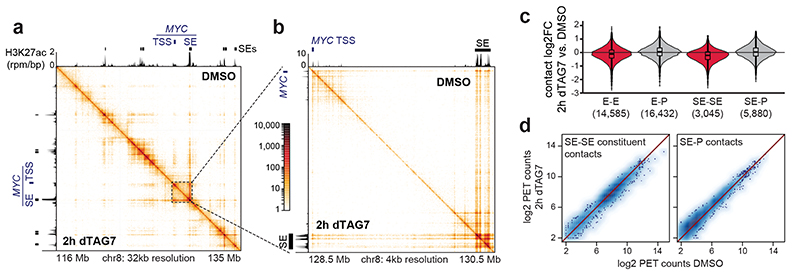
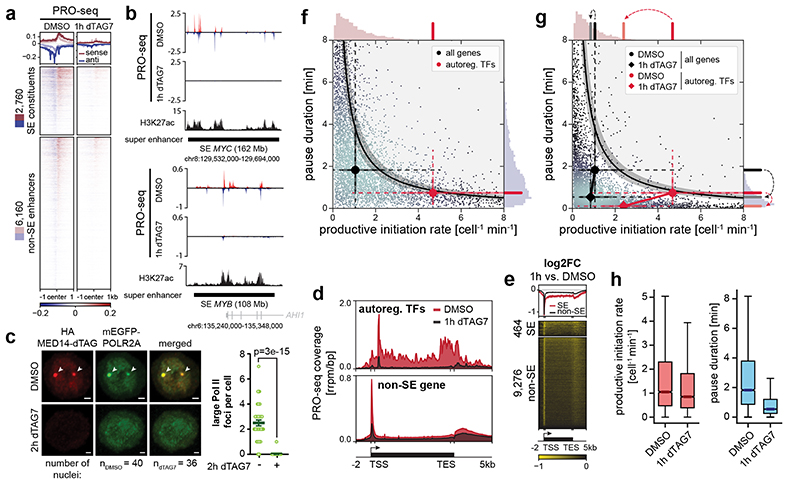
The Mediator complex directs signals from DNA-binding transcription factors to RNA polymerase II (Pol II). Despite this pivotal position, mechanistic understanding of Mediator in human cells remains incomplete. Here we quantified Mediator-controlled Pol II kinetics by coupling rapid subunit degradation with orthogonal experimental readouts. In agreement with a model of condensate-driven transcription initiation, large clusters of hypophosphorylated Pol II rapidly disassembled upon Mediator degradation. This was accompanied by a selective and pronounced disruption of cell-type-specifying transcriptional circuits, whose constituent genes featured exceptionally high rates of Pol II turnover. Notably, the transcriptional output of most other genes was largely unaffected by acute Mediator ablation. Maintenance of transcriptional activity at these genes was linked to an unexpected CDK9-dependent compensatory feedback loop that elevated Pol II pause release rates across the genome. Collectively, our work positions human Mediator as a globally acting coactivator that selectively safeguards the functionality of cell-type-specifying transcriptional networks.
中介复合物将 DNA 结合转录因子的信号导向 RNA 聚合酶 II(Pol II)。尽管处于这一关键位置,但人类细胞中介复合物的机制理解仍不完整。在这里,我们通过将快速亚基降解与正交实验读数相结合,定量了中介复合物控制的 Pol II 动力学。与凝聚物驱动转录起始的模型一致,中介复合物降解后,大量低磷酸化的 Pol II 迅速解体。这伴随着细胞类型特异性转录回路的选择性和显著破坏,其组成基因的 Pol II 周转率异常高。值得注意的是,大多数其他基因的转录输出在急性中介复合物缺失时基本不受影响。这些基因的转录活性的维持与一个出乎意料的 CDK9 依赖性补偿反馈回路有关,该回路提高了整个基因组中 Pol II 暂停释放的速度。总的来说,我们的工作将人类中介复合物定位为一种全局作用的共激活因子,它选择性地保护细胞类型特异性转录网络的功能。