Division of Cancer Sciences, University of Manchester, Manchester, UK.
Department of Medical Oncology, Spital STS AG, Thun, Switzerland.
Eur Radiol. 2020 Nov;30(11):6241-6250. doi: 10.1007/s00330-020-06957-9. Epub 2020 Jun 1.
To investigate the effects of Image Biomarker Standardisation Initiative (IBSI) compliance, harmonisation of calculation settings and platform version on the statistical reliability of radiomic features and their corresponding ability to predict clinical outcome.
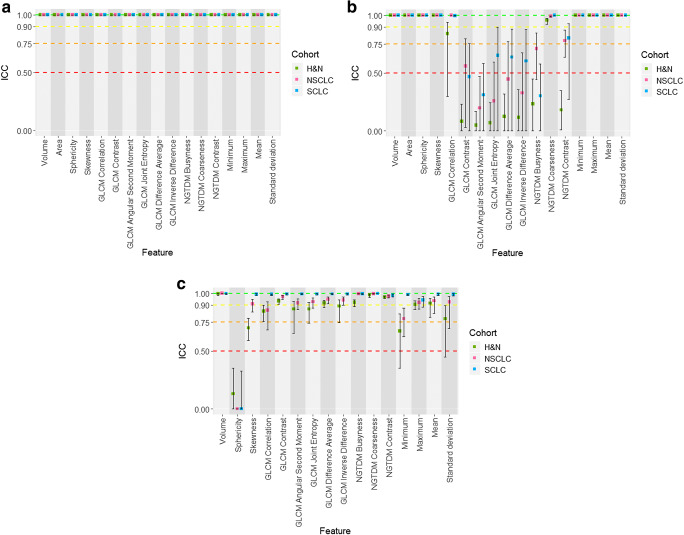
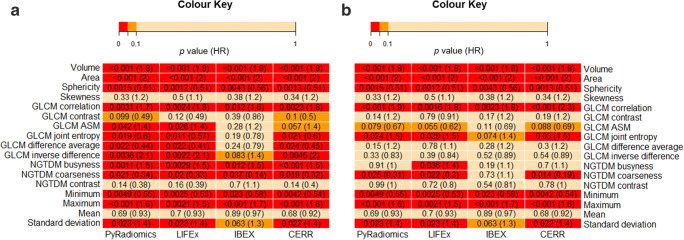
The statistical reliability of radiomic features was assessed retrospectively in three clinical datasets (patient numbers: 108 head and neck cancer, 37 small-cell lung cancer, 47 non-small-cell lung cancer). Features were calculated using four platforms (PyRadiomics, LIFEx, CERR and IBEX). PyRadiomics, LIFEx and CERR are IBSI-compliant, whereas IBEX is not. The effects of IBSI compliance, user-defined calculation settings and platform version were assessed by calculating intraclass correlation coefficients and confidence intervals. The influence of platform choice on the relationship between radiomic biomarkers and survival was evaluated using univariable cox regression in the largest dataset.
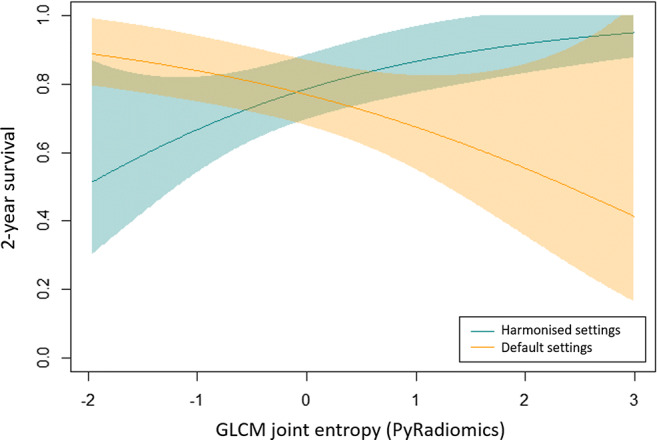
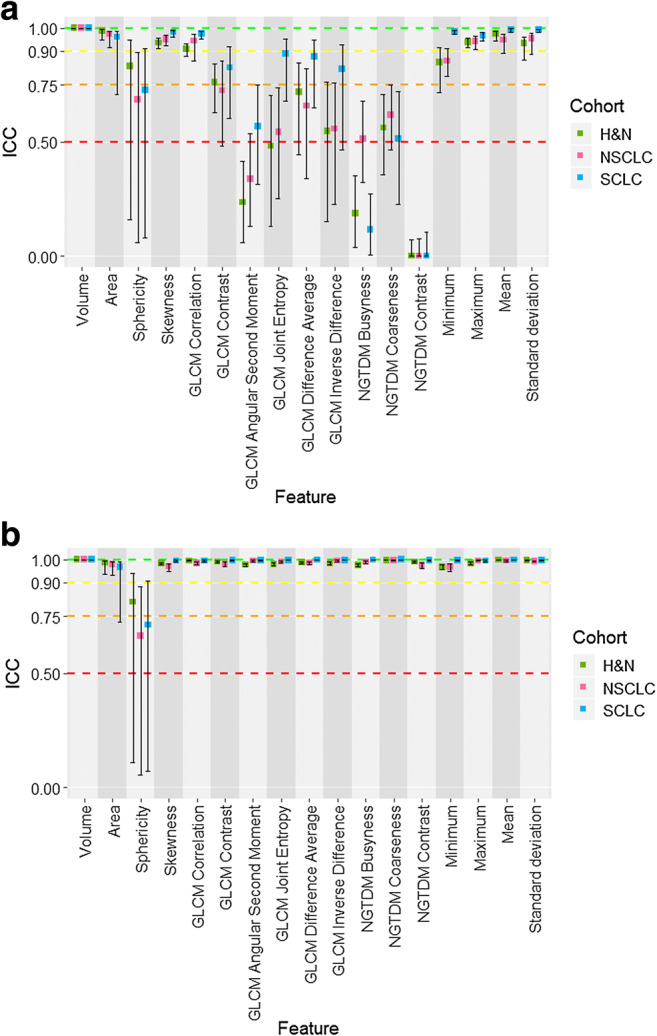
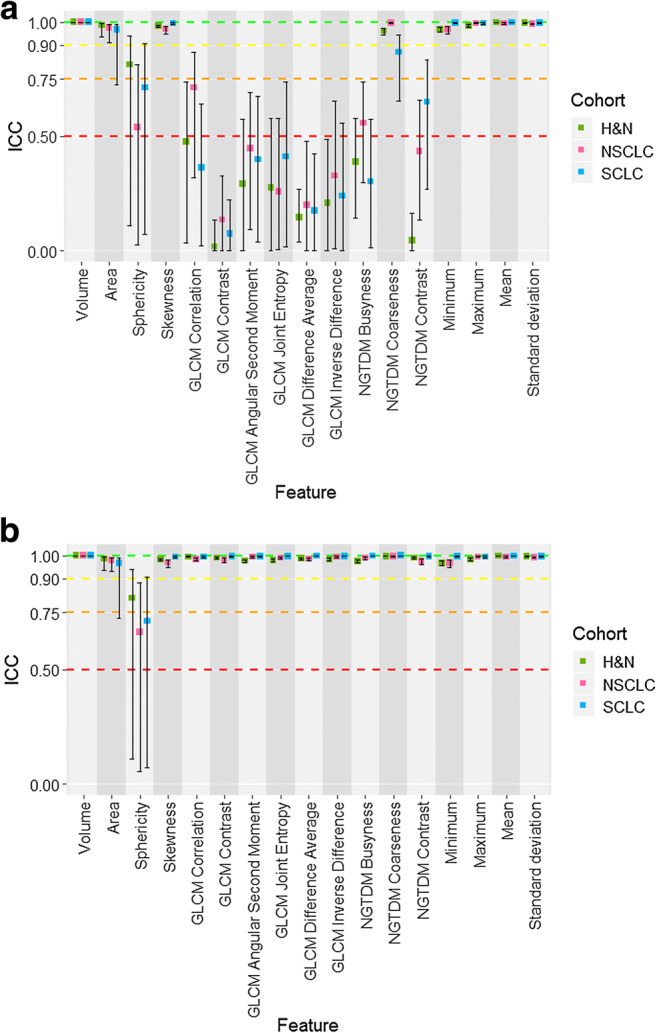
The reliability of radiomic features calculated by the different software platforms was only excellent (ICC > 0.9) for 4/17 radiomic features when comparing all four platforms. Reliability improved to ICC > 0.9 for 15/17 radiomic features when analysis was restricted to the three IBSI-compliant platforms. Failure to harmonise calculation settings resulted in poor reliability, even across the IBSI-compliant platforms. Software platform version also had a marked effect on feature reliability in CERR and LIFEx. Features identified as having significant relationship to survival varied between platforms, as did the direction of hazard ratios.
IBSI compliance, user-defined calculation settings and choice of platform version all influence the statistical reliability and corresponding performance of prognostic models in radiomics.
• Reliability of radiomic features varies between feature calculation platforms and with choice of software version. • Image Biomarker Standardisation Initiative (IBSI) compliance improves reliability of radiomic features across platforms, but only when calculation settings are harmonised. • IBSI compliance, user-defined calculation settings and choice of platform version collectively affect the prognostic value of features.
探究图像生物标志物标准化倡议(IBSI)合规性、计算设置协调以及平台版本对放射组学特征的统计可靠性及其预测临床结局的相应能力的影响。
本研究回顾性评估了三个临床数据集(患者数量:108 例头颈部癌、37 例小细胞肺癌、47 例非小细胞肺癌)中放射组学特征的统计可靠性。使用四个平台(PyRadiomics、LIFEx、CERR 和 IBEX)计算特征。PyRadiomics、LIFEx 和 CERR 符合 IBSI 标准,而 IBEX 则不符合。通过计算组内相关系数和置信区间评估 IBSI 合规性、用户定义的计算设置和平台版本的影响。在最大的数据集上,使用单变量 Cox 回归评估平台选择对放射组学生物标志物与生存之间关系的影响。
当比较所有四个平台时,只有 4/17 个放射组学特征的计算可靠性为极好(ICC>0.9)。当分析仅限于三个符合 IBSI 的平台时,15/17 个放射组学特征的可靠性提高到 ICC>0.9。未能协调计算设置会导致可靠性较差,即使在符合 IBSI 的平台上也是如此。软件平台版本也会对 CERR 和 LIFEx 中特征的可靠性产生显著影响。在不同平台上,被确定为与生存有显著关系的特征不同,风险比的方向也不同。
IBSI 合规性、用户定义的计算设置以及平台版本的选择都会影响放射组学中预后模型的统计可靠性和相应性能。
· 放射组学特征的可靠性在特征计算平台之间以及软件版本的选择上有所不同。
· IBSI 合规性提高了跨平台的放射组学特征的可靠性,但前提是要协调计算设置。
· IBSI 合规性、用户定义的计算设置和平台版本共同影响特征的预后价值。