Tolaymat Thabet, El Badawy Amro, Genaidy Ash, Abdelraheem Wael, Swqueria Reynold
U.S. Environmental Protection Agency, Office of Research and Development, Cincinnati, OH, USA, WorldTek Inc, Cincinnati, OH, USA, Chemistry Department, Faculty of Science, Sohag University, Sohag, 82524, Egypt.
J Clean Prod. 2017 Feb 1;143:401-412. doi: 10.1016/j.jclepro.2016.12.094.
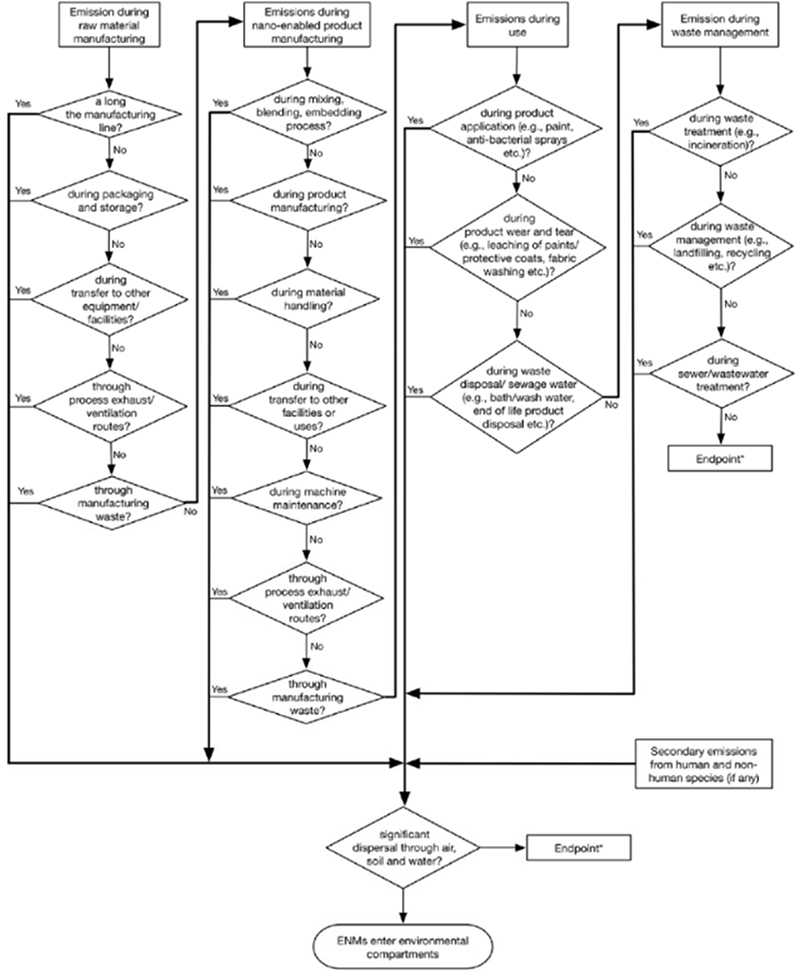
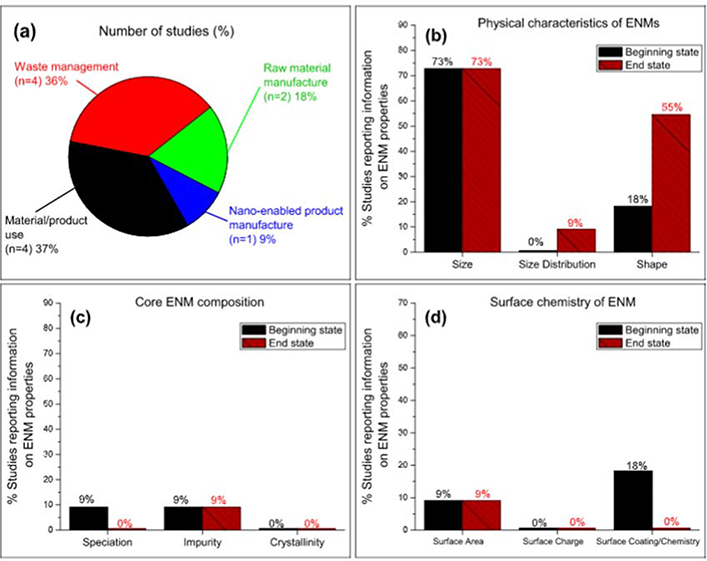
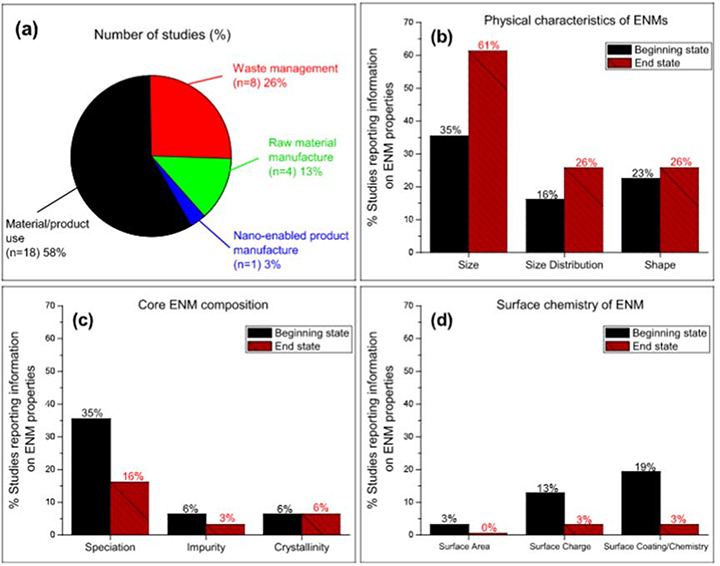
The current study presents evidence on metallic and metal oxide engineered nanomaterial (ENM) emissions into the environment and an analytic perspective of the outcomes of evaluated studies with respect to different individual end points along the lifecycle trajectory. The key findings suggest that 1) the published literature on emissions of metallic ENMs is limited in both the number and information available on the characteristics of emitted ENMs; 2) the studies are classified as experimental and computational studies focused on predicting ENM emissions; 3) the majority of studies investigated ENM emissions during nanomaterial use and waste management, followed by raw material manufacturing, and finally, nano-enabled product manufacturing; 4) the studies primarily reported the concentration/quantity of emitted ENMs, whereas the physical-chemical characteristics of emitted ENMs were rarely measured or reported; and 5) the published literature primarily focused on emissions of silver and titanium dioxide ENMs and lacked similar information on other surging metallic and metal oxide ENMs such as nano-zero valent iron (nZVI), aluminum (Al), and aluminum oxide (AlO) ENMs. The evidence suggests that emitted nanoparticles into the air cover a wide range of concentrations below and above the allowable occupational exposure limits. The concentrations of nanoparticles in water systems are considered in the toxic to very toxic range for a variety of biological species. Given the critical gaps in knowledge, one cannot read across different sources of emissions for metallic and metal oxide ENMs hampering efforts with respect to understanding realistic scenarios for transformations in the natural environment and biological media.
本研究提供了关于金属及金属氧化物工程纳米材料(ENM)向环境中排放的证据,并从分析角度探讨了评估研究在生命周期轨迹中不同个体终点方面的结果。主要发现表明:1)关于金属ENM排放的已发表文献在数量以及所提供的排放ENM特性信息方面都很有限;2)这些研究分为专注于预测ENM排放的实验性研究和计算性研究;3)大多数研究调查了纳米材料使用和废物管理过程中的ENM排放,其次是原材料制造,最后是纳米产品制造;4)研究主要报告了排放的ENM的浓度/数量,而排放的ENM的物理化学特性很少被测量或报告;5)已发表文献主要关注银和二氧化钛ENM的排放,而缺乏关于其他新兴金属及金属氧化物ENM(如纳米零价铁(nZVI)、铝(Al)和氧化铝(AlO)ENM)的类似信息。证据表明,排放到空气中的纳米颗粒浓度范围广泛,既有低于也有高于职业接触允许限值的情况。水系统中纳米颗粒的浓度对于多种生物物种而言处于有毒到剧毒的范围。鉴于知识方面的关键差距,无法对金属及金属氧化物ENM的不同排放源进行类推,这阻碍了我们理解自然环境和生物介质中转化的实际情况。