Institute for Medical Microbiology, Immunology and Hygiene, Technische Universität München (TUM), 81675 Munich, Germany.
German Center for Infection Research (DZIF), Partner Site Munich, 81675 Munich, Germany.
Cells. 2020 Jun 1;9(6):1367. doi: 10.3390/cells9061367.
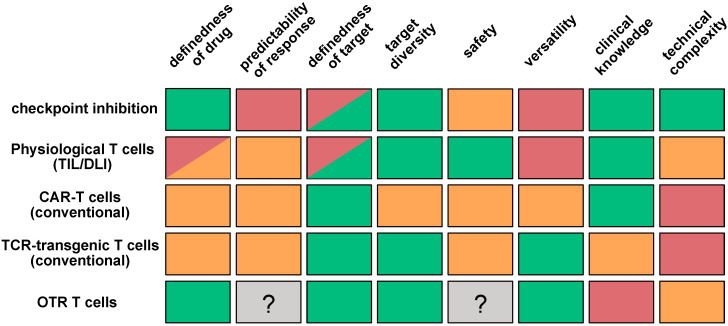
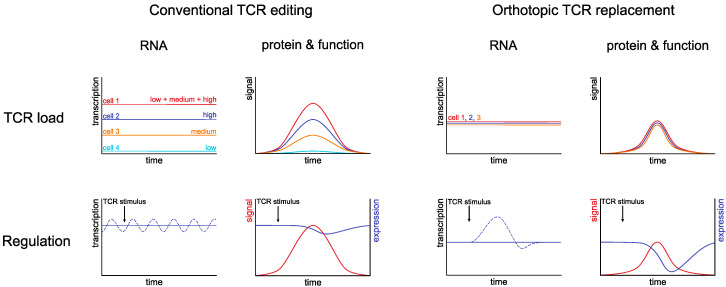
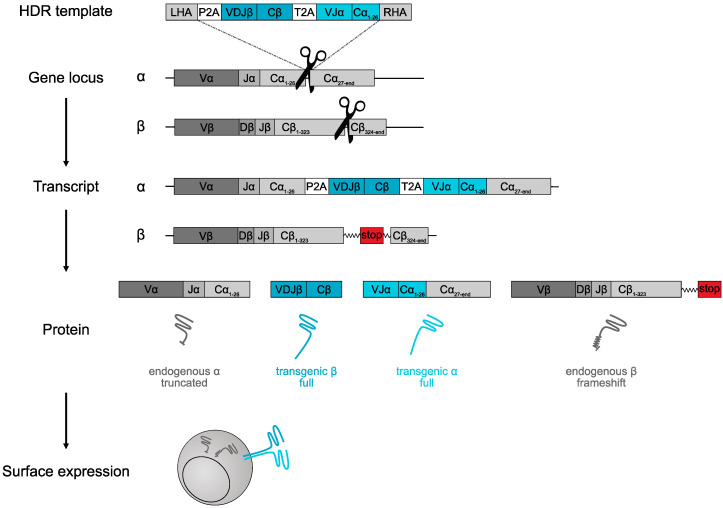
Natural adaptive immunity co-evolved with pathogens over millions of years, and adoptive transfer of non-engineered T cells to fight infections or cancer so far exhibits an exceptionally safe and functional therapeutic profile in clinical trials. However, the personalized nature of therapies using virus-specific T cells, donor lymphocyte infusion, or tumor-infiltrating lymphocytes makes implementation in routine clinical care difficult. In principle, genetic engineering can be used to make T-cell therapies more broadly applicable, but so far it significantly alters the physiology of cells. We recently demonstrated that orthotopic T-cell receptor (TCR) replacement (OTR) by clustered regularly interspaced short palindromic repeats (CRISPR)/ CRISPR-associated protein 9 (Cas9) can be used to generate engineered T cells with preservation of near-physiological function. In this review, we present the current status of OTR technology development and discuss its potential for TCR-based therapies. By providing the means to combine the therapeutic efficacy and safety profile of physiological T cells with the versatility of cell engineering, OTR can serve as an "enabler" for TCR-based therapies.
天然适应性免疫与病原体共同进化了数百万年,目前,非工程化 T 细胞的过继转移用于对抗感染或癌症,在临床试验中表现出了异常安全和有效的治疗特征。然而,利用病毒特异性 T 细胞、供者淋巴细胞输注或肿瘤浸润淋巴细胞进行治疗具有个性化的特点,这使得其在常规临床护理中的实施变得困难。原则上,基因工程可用于使 T 细胞疗法更广泛地适用,但迄今为止,它显著改变了细胞的生理学特性。我们最近证明,通过成簇规律间隔短回文重复序列(CRISPR)/CRISPR 相关蛋白 9(Cas9)进行的正交 T 细胞受体(TCR)替换(OTR)可用于产生具有近乎生理功能的工程化 T 细胞。在这篇综述中,我们介绍了 OTR 技术发展的现状,并讨论了其在 TCR 为基础的治疗中的应用潜力。通过提供将生理 T 细胞的治疗功效和安全性与细胞工程的多功能性相结合的手段,OTR 可以作为 TCR 为基础的治疗的“推动者”。