Department of oncology UNIL CHUV, Ludwig Institute for Cancer Research Lausanne, Lausanne University Hospital and University of Lausanne, 1015 Lausanne, Switzerland.
Cells. 2020 Jun 18;9(6):1485. doi: 10.3390/cells9061485.
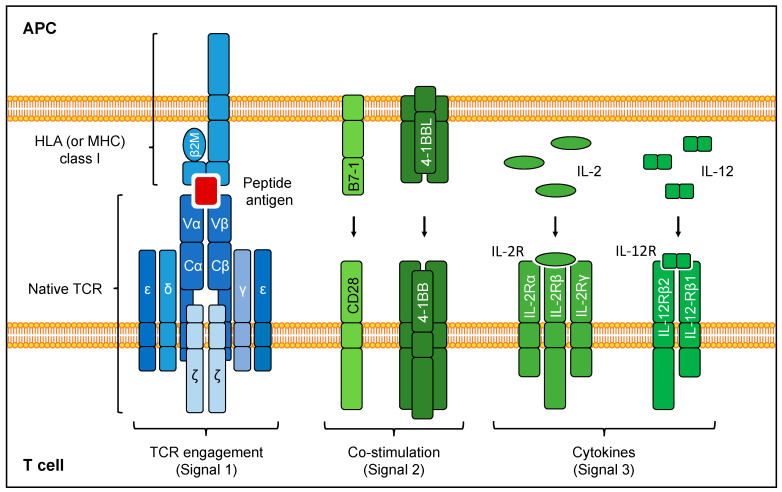
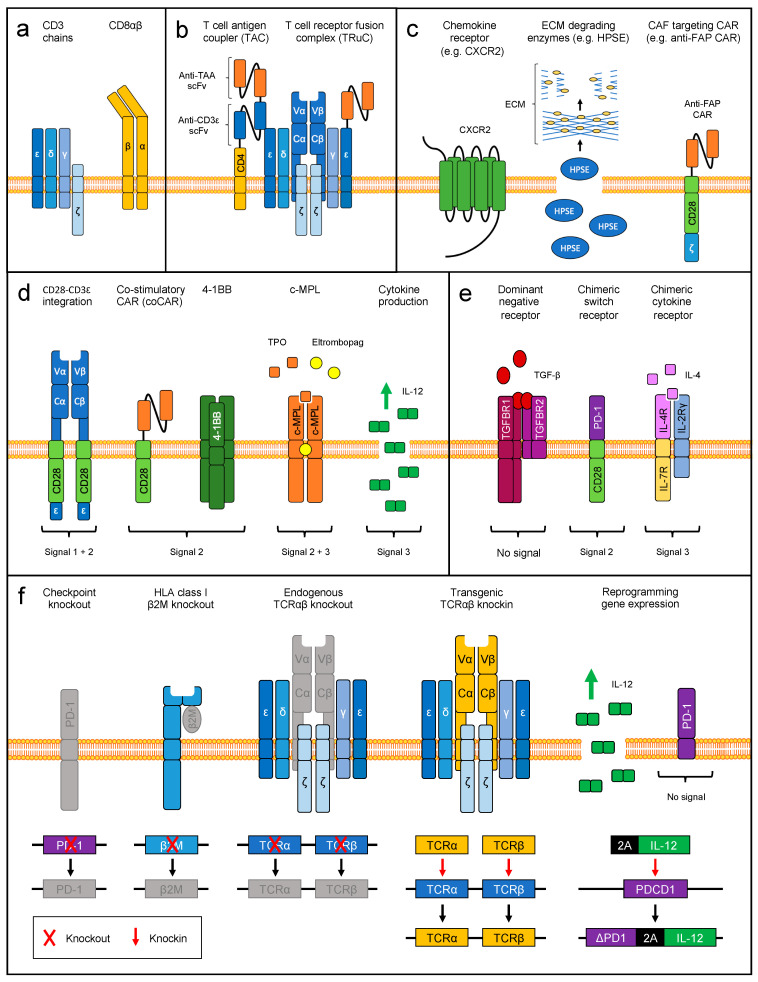
T cell receptor (TCR)-based adoptive T cell therapies (ACT) hold great promise for the treatment of cancer, as TCRs can cover a broad range of target antigens. Here we summarize basic, translational and clinical results that provide insight into the challenges and opportunities of TCR-based ACT. We review the characteristics of target antigens and conventional αβ-TCRs, and provide a summary of published clinical trials with TCR-transgenic T cell therapies. We discuss how synthetic biology and innovative engineering strategies are poised to provide solutions for overcoming current limitations, that include functional avidity, MHC restriction, and most importantly, the tumor microenvironment. We also highlight the impact of precision genome editing on the next iteration of TCR-transgenic T cell therapies, and the discovery of novel immune engineering targets. We are convinced that some of these innovations will enable the field to move TCR gene therapy to the next level.
T 细胞受体 (TCR)- 为基础的过继性 T 细胞疗法 (ACT) 在癌症治疗方面具有广阔的前景,因为 TCR 可以覆盖广泛的靶抗原。在这里,我们总结了基础、转化和临床研究结果,深入了解 TCR-ACT 面临的挑战和机遇。我们回顾了靶抗原和传统的 αβ-TCR 的特征,并对 TCR 转基因 T 细胞治疗的已发表临床试验进行了总结。我们讨论了合成生物学和创新工程策略如何为克服当前的局限性提供解决方案,包括功能亲和力、MHC 限制,以及最重要的肿瘤微环境。我们还强调了精确基因组编辑对 TCR 转基因 T 细胞治疗下一阶段的影响,以及新的免疫工程靶点的发现。我们相信,其中一些创新将使该领域能够将 TCR 基因治疗提升到一个新的水平。