Ruiz Carlos, Kadimisetty Karteek, Yin Kun, Mauk Michael G, Zhao Hui, Liu Changchun
Department of Mechanical Engineering and Applied Mechanics, University of Pennsylvania, 220 South 33rd St. Philadelphia, PA 19104-6315, USA.
Department of Biomedical Engineering, University of Connecticut Health Center, 263 Farmington Avenue, Farmington, CT 06030, USA.
Micromachines (Basel). 2020 Jun 1;11(6):567. doi: 10.3390/mi11060567.
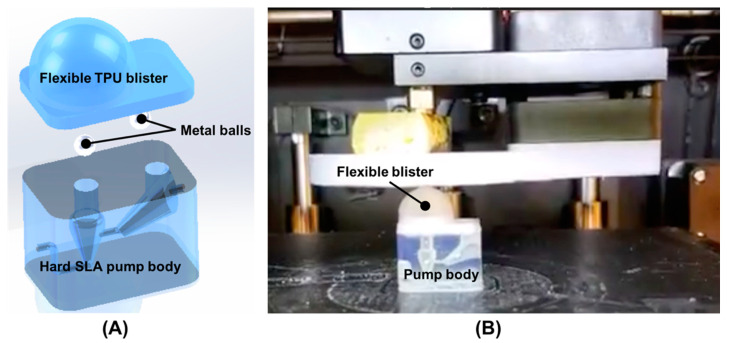
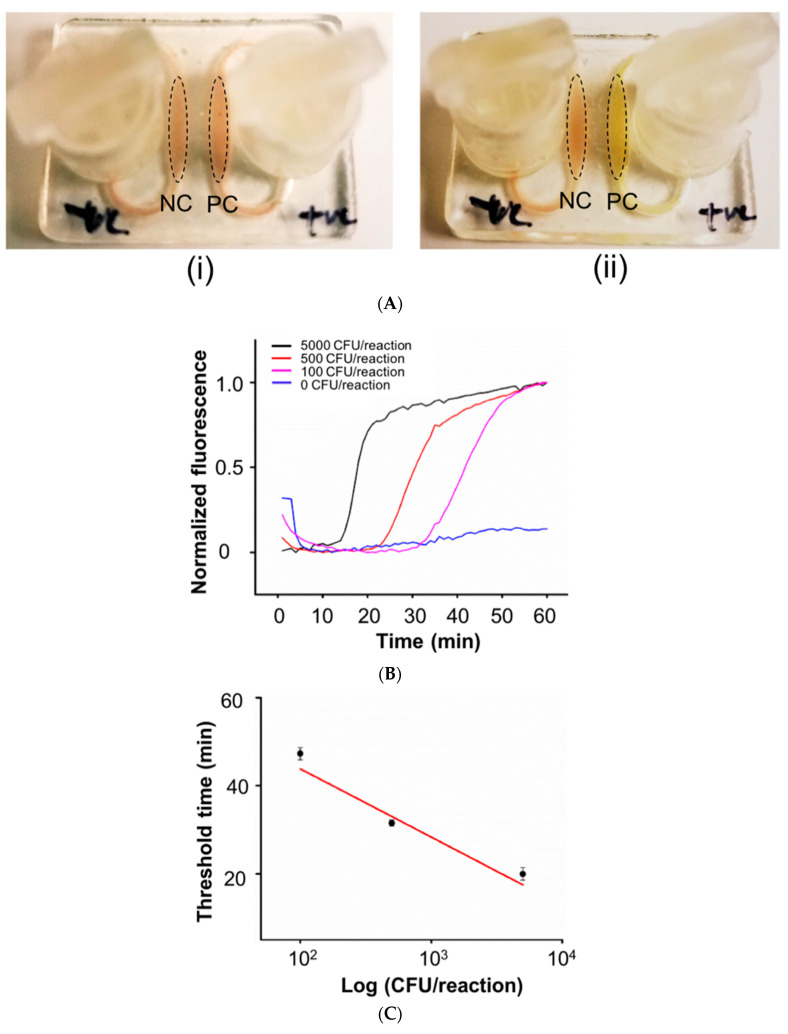
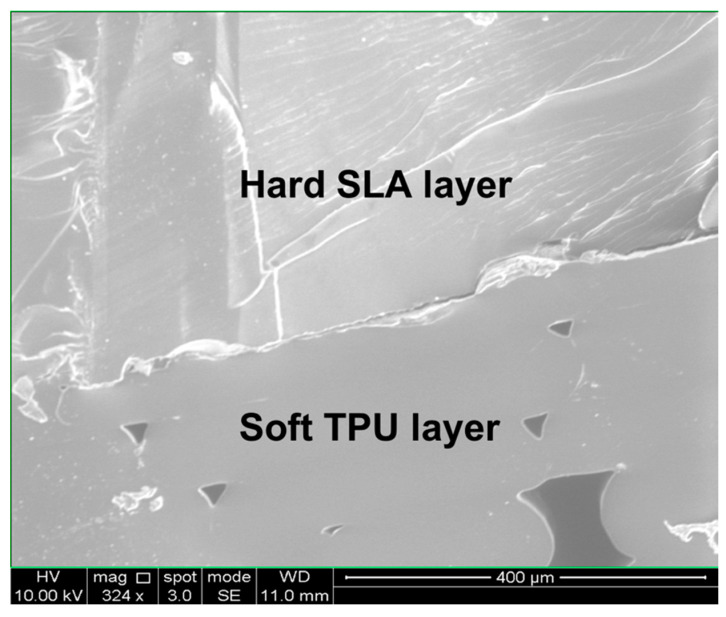
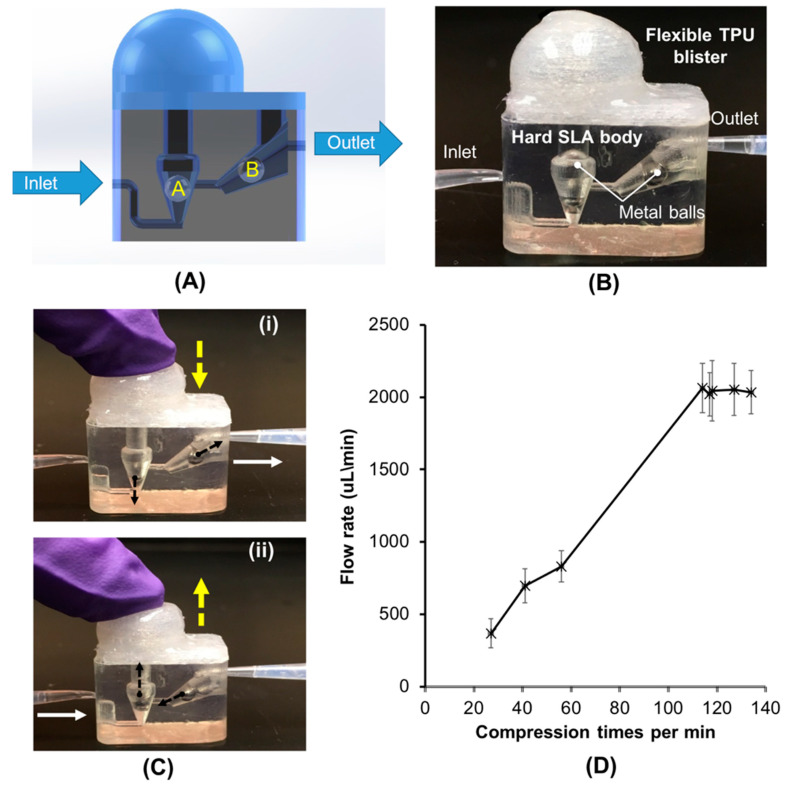
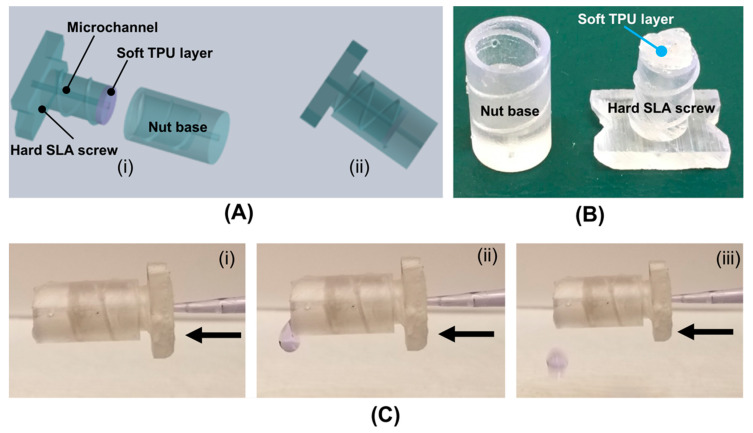
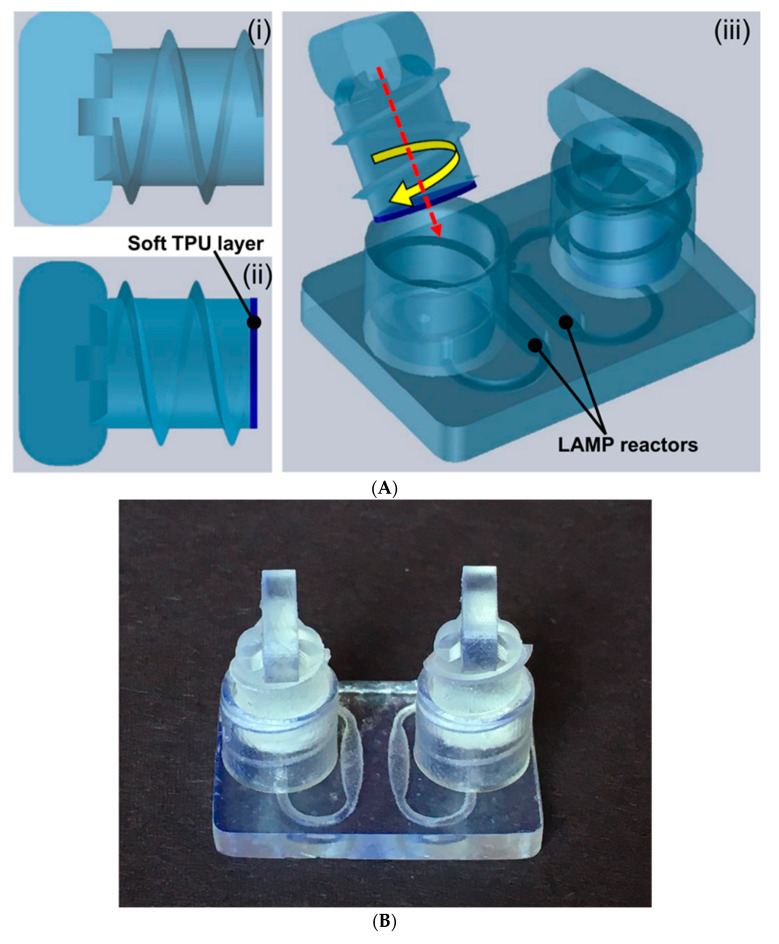
Widely accessible, inexpensive, easy-to-use consumer 3D printers, such as desktop stereolithography (SLA) and fused-deposition modeling (FDM) systems are increasingly employed in prototyping and customizing miniaturized fluidic systems for diagnostics and research. However, these 3D printers are generally limited to printing parts made of only one material type, which limits the functionality of the microfluidic devices without additional assembly and bonding steps. Moreover, mating of different materials requires good sealing in such microfluidic devices. Here, we report methods to print hybrid structures comprising a hard, rigid component (clear polymethacrylate polymer) printed by a low-cost SLA printer, and where the first printed part is accurately mated and adhered to a second, soft, flexible component (thermoplastic polyurethane elastomer) printed by an FDM printer. The prescribed mounting and alignment of the first-printed SLA-printed hard component, and its pre-treatment and heating during the second FDM step, can produce leak-free bonds at material interfaces. To demonstrate the utility of such hybrid 3D-printing, we prototype and test three components: i) finger-actuated pump, ii) quick-connect fluid coupler, and iii) nucleic acid amplification test device with screw-type twist sealing for sample introduction.
广泛可用、价格低廉且易于使用的消费级3D打印机,如桌面立体光刻(SLA)和熔融沉积建模(FDM)系统,越来越多地用于诊断和研究的小型流体系统的原型制作和定制。然而,这些3D打印机通常仅限于打印由单一材料类型制成的部件,这限制了微流体装置的功能,而无需额外的组装和粘合步骤。此外,在这种微流体装置中,不同材料的配合需要良好的密封。在此,我们报告了打印混合结构的方法,该结构包括由低成本SLA打印机打印的硬刚性部件(透明聚甲基丙烯酸酯聚合物),并且其中第一个打印部件精确地与由FDM打印机打印的第二个软柔性部件(热塑性聚氨酯弹性体)配合并粘附。第一个打印的SLA打印硬部件的规定安装和对齐,以及在第二个FDM步骤中的预处理和加热,可以在材料界面处产生无泄漏的结合。为了证明这种混合3D打印的实用性,我们制作了三个部件的原型并进行测试:i)手指驱动泵,ii)快速连接流体耦合器,以及iii)具有用于样品引入的螺旋式扭转密封的核酸扩增测试装置。