García-Gutiérrez Maria Salud, Navarrete Francisco, Sala Francisco, Gasparyan Ani, Austrich-Olivares Amaya, Manzanares Jorge
Instituto de Neurociencias, Universidad Miguel Hernández-CSIC, Alicante, Spain.
Red Temática de Investigación Cooperativa en Salud (RETICS), Red de Trastornos Adictivos, Instituto de Salud Carlos III, MICINN and FEDER, Madrid, Spain.
Front Psychiatry. 2020 May 15;11:432. doi: 10.3389/fpsyt.2020.00432. eCollection 2020.
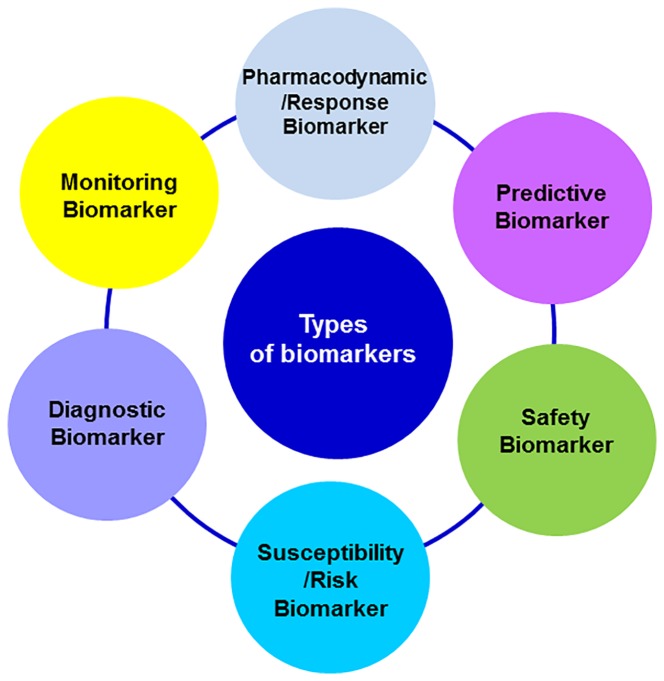
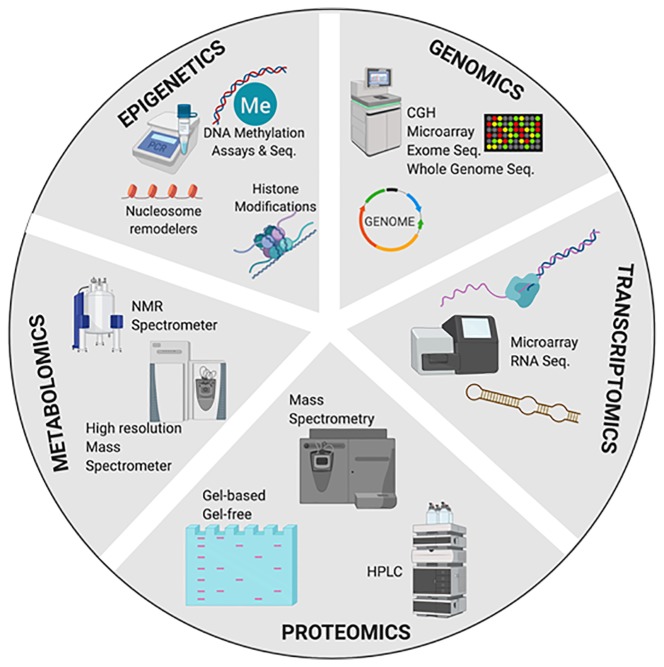
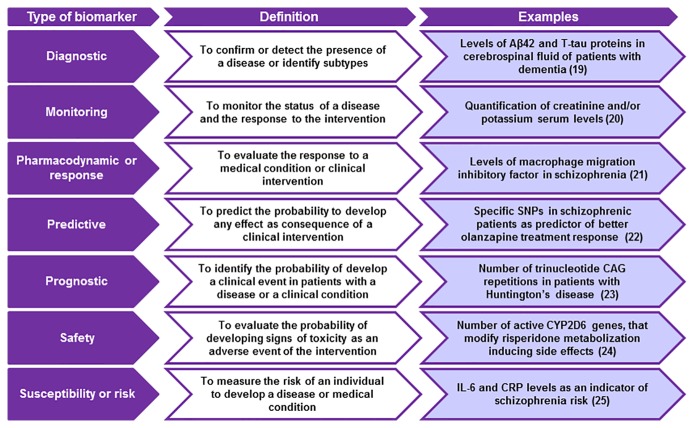
During the last years, an extraordinary effort has been made to identify biomarkers as potential tools for improving prevention, diagnosis, drug response and drug development in psychiatric disorders. Contrary to other diseases, mental illnesses are classified by diagnostic categories with a broad variety list of symptoms. Consequently, patients diagnosed from the same psychiatric illness present a great heterogeneity in their clinical presentation. This fact together with the incomplete knowledge of the neurochemical alterations underlying mental disorders, contribute to the limited efficacy of current pharmacological options. In this respect, the identification of biomarkers in psychiatry is becoming essential to facilitate diagnosis through the developing of markers that allow to stratify groups within the syndrome, which in turn may lead to more focused treatment options. In order to shed light on this issue, this review summarizes the concept and types of biomarkers including an operational definition for therapeutic development. Besides, the advances in this field were summarized and sorted into five categories, which include genetics, transcriptomics, proteomics, metabolomics, and epigenetics. While promising results were achieved, there is a lack of biomarker investigations especially related to treatment response to psychiatric conditions. This review includes a final conclusion remarking the future challenges required to reach the goal of developing valid, reliable and broadly-usable biomarkers for psychiatric disorders and their treatment. The identification of factors predicting treatment response will reduce trial-and-error switches of medications facilitating the discovery of new effective treatments, being a crucial step towards the establishment of greater personalized medicine.
在过去几年里,人们付出了巨大努力来识别生物标志物,将其作为改善精神疾病预防、诊断、药物反应和药物开发的潜在工具。与其他疾病不同,精神疾病是根据具有广泛症状列表的诊断类别进行分类的。因此,被诊断患有同一种精神疾病的患者在临床表现上存在很大的异质性。这一事实加上对精神障碍潜在神经化学改变的认识不足,导致了当前药物治疗方案的疗效有限。在这方面,精神科生物标志物的识别对于通过开发能够对综合征内的群体进行分层的标志物来促进诊断变得至关重要,这反过来可能会带来更有针对性的治疗选择。为了阐明这个问题,本综述总结了生物标志物的概念和类型,包括治疗开发的操作定义。此外,该领域的进展被总结并分为五类,包括遗传学、转录组学、蛋白质组学、代谢组学和表观遗传学。虽然取得了一些有前景的结果,但缺乏生物标志物研究,尤其是与精神疾病治疗反应相关的研究。本综述最后得出结论,指出了为精神疾病及其治疗开发有效、可靠且广泛可用的生物标志物这一目标所面临的未来挑战。识别预测治疗反应的因素将减少药物的试错切换,促进新的有效治疗方法的发现,这是迈向建立更个性化医学的关键一步。