Rahimzadeh Mohammad, Attar Abolfazl
School of Computer Engineering, Iran University of Science and Technology, Iran.
Department of Electrical Engineering Sharif University of Technology, Iran.
Inform Med Unlocked. 2020;19:100360. doi: 10.1016/j.imu.2020.100360. Epub 2020 May 26.
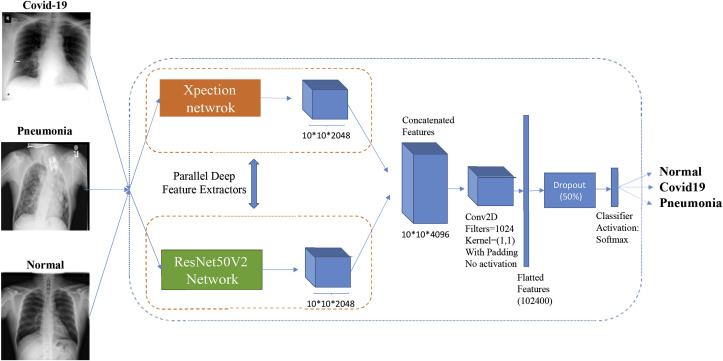
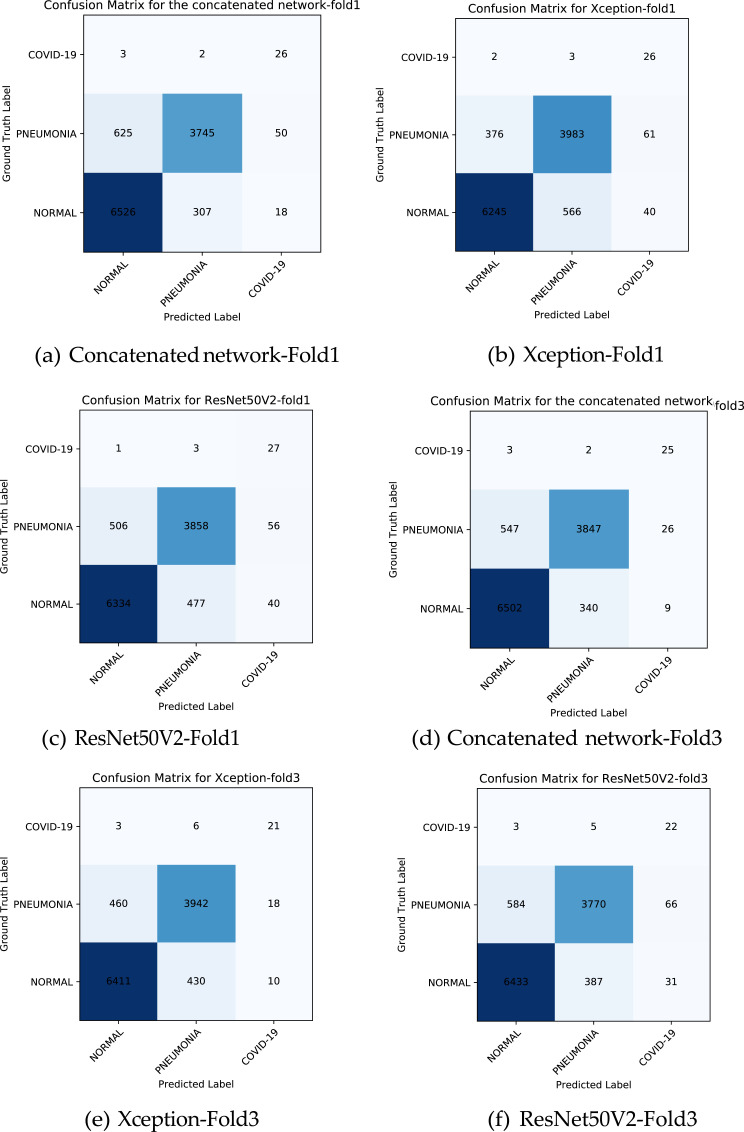
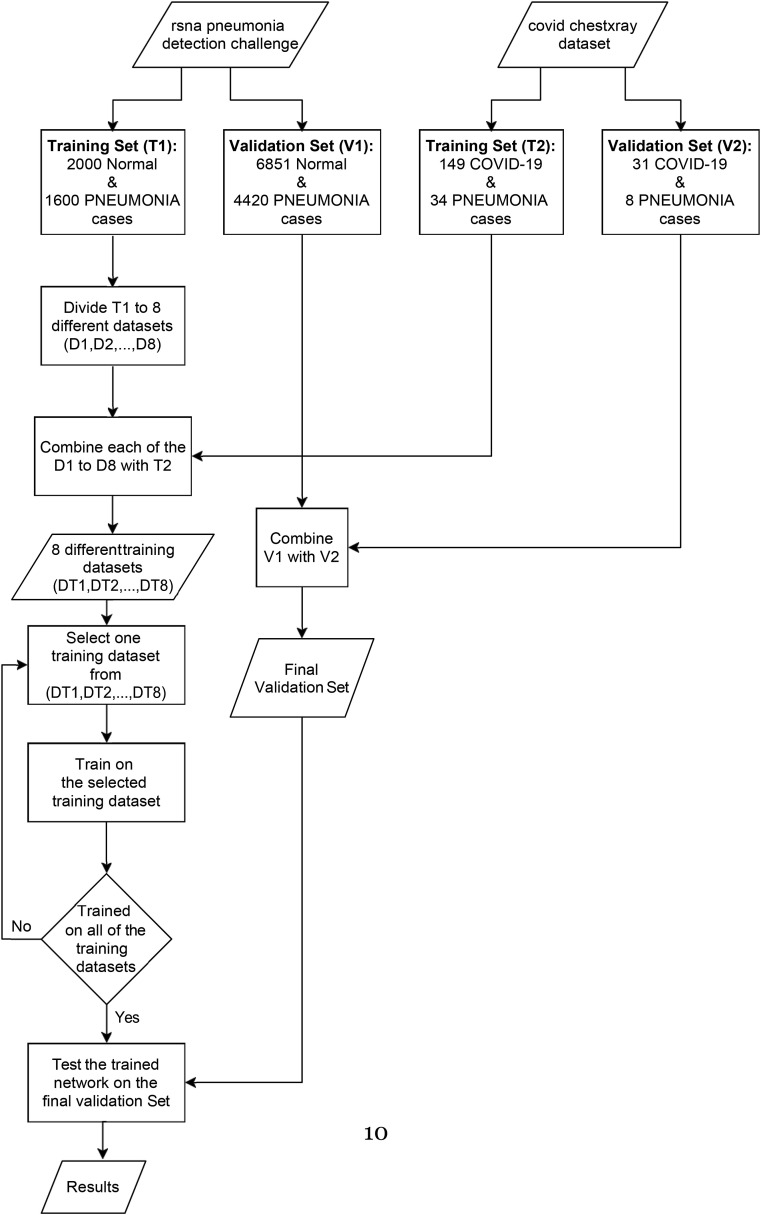
In this paper, we have trained several deep convolutional networks with introduced training techniques for classifying X-ray images into three classes: normal, pneumonia, and COVID-19, based on two open-source datasets. Our data contains 180 X-ray images that belong to persons infected with COVID-19, and we attempted to apply methods to achieve the best possible results. In this research, we introduce some training techniques that help the network learn better when we have an unbalanced dataset (fewer cases of COVID-19 along with more cases from other classes). We also propose a neural network that is a concatenation of the Xception and ResNet50V2 networks. This network achieved the best accuracy by utilizing multiple features extracted by two robust networks. For evaluating our network, we have tested it on 11302 images to report the actual accuracy achievable in real circumstances. The average accuracy of the proposed network for detecting COVID-19 cases is 99.50%, and the overall average accuracy for all classes is 91.4%.
在本文中,我们基于两个开源数据集,训练了几个采用了引入的训练技术的深度卷积网络,用于将X射线图像分为三类:正常、肺炎和新冠肺炎。我们的数据包含180张属于新冠肺炎感染者的X射线图像,并且我们尝试应用各种方法以取得尽可能好的结果。在这项研究中,当我们拥有一个不平衡数据集(新冠肺炎病例较少,其他类别病例较多)时,我们引入了一些有助于网络更好学习的训练技术。我们还提出了一种由Xception和ResNet50V2网络串联而成的神经网络。该网络通过利用两个强大网络提取的多种特征实现了最佳准确率。为了评估我们的网络,我们在11302张图像上对其进行了测试,以报告在实际情况下可实现的实际准确率。所提出的用于检测新冠肺炎病例的网络的平均准确率为99.50%,所有类别的总体平均准确率为91.4%。