Department of Information Science & Engineering, Bapuji Institute of Engineering & Technology, Davanagere, Karnataka, India.
Department of Information Technology, Faculty of Computing and Information Technology, King Abdulaziz University, Jeddah, Saudi Arabia.
Sci Rep. 2024 Oct 23;14(1):25010. doi: 10.1038/s41598-024-75555-2.
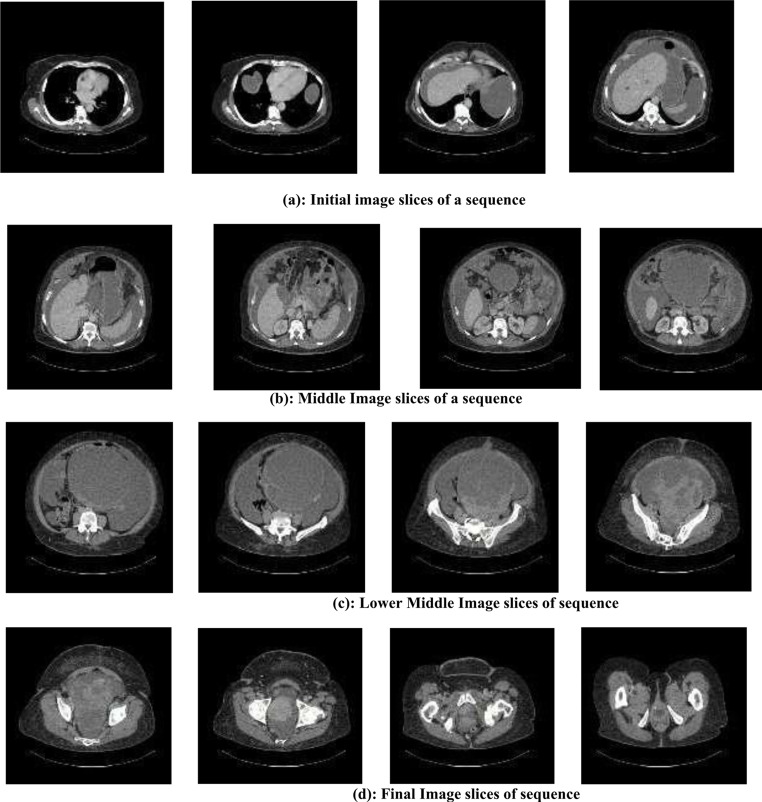
Gynaecological cancers, especially ovarian cancer, remain a critical public health issue, particularly in regions like India, where there are challenges related to cancer awareness, variable pathology, and limited access to screening facilities. These challenges often lead to the diagnosis of cancer at advanced stages, resulting in poorer outcomes for patients. The goal of this study is to enhance the accuracy of classifying ovarian tumours, with a focus on distinguishing between malignant and early-stage cases, by applying advanced deep learning methods. In our approach, we utilized three pre-trained deep learning models-Xception, ResNet50V2, and ResNet50V2FPN-to classify ovarian tumors using publicly available Computed Tomography (CT) scan data. To further improve the model's performance, we developed a novel CT Sequence Selection Algorithm, which optimises the use of CT images for a more precise classification of ovarian tumours. The models were trained and evaluated on selected TIFF images, comparing the performance of the ResNet50V2FPN model with and without the CT Sequence Selection Algorithm. Our experimental results show the Comparative evaluation against the ResNet50V2 FPN model, both with and without the CT Sequence Selection Algorithm, demonstrates the superiority of the proposed algorithm over existing state-of-the-art methods. This research presents a promising approach for improving the early detection and management of gynecological cancers, with potential benefits for patient outcomes, especially in areas with limited healthcare resources.
妇科癌症,尤其是卵巢癌,仍然是一个严重的公共卫生问题,特别是在印度等地区,这些地区在癌症意识、多变的病理学和有限的筛查设施方面存在挑战。这些挑战往往导致癌症在晚期被诊断出来,从而导致患者的预后更差。本研究的目的是通过应用先进的深度学习方法来提高卵巢肿瘤分类的准确性,特别是区分恶性和早期病例。在我们的方法中,我们使用了三个预先训练的深度学习模型——Xception、ResNet50V2 和 ResNet50V2FPN,使用公开的计算机断层扫描 (CT) 扫描数据来对卵巢肿瘤进行分类。为了进一步提高模型的性能,我们开发了一种新的 CT 序列选择算法,该算法优化了 CT 图像的使用,以更精确地对卵巢肿瘤进行分类。我们在选定的 TIFF 图像上对模型进行了训练和评估,比较了使用和不使用 CT 序列选择算法的 ResNet50V2FPN 模型的性能。我们的实验结果表明,与 ResNet50V2 FPN 模型相比,无论是使用还是不使用 CT 序列选择算法,该算法的性能都优于现有的最先进方法。这项研究提出了一种有前途的方法,可以改善妇科癌症的早期检测和管理,特别是在医疗资源有限的地区,对患者的预后有潜在的好处。