Biomedical Engineering Graduate Program, University of Calgary, Alberta, AB T2N 4N1, Canada.
Department of Radiology, Alberta Children's Hospital Research Institute and Hotchkiss Brain Institute, Cumming School of Medicine, University of Calgary, Alberta, AB T2N 4N1, Canada.
Sensors (Basel). 2020 Jun 3;20(11):3171. doi: 10.3390/s20113171.
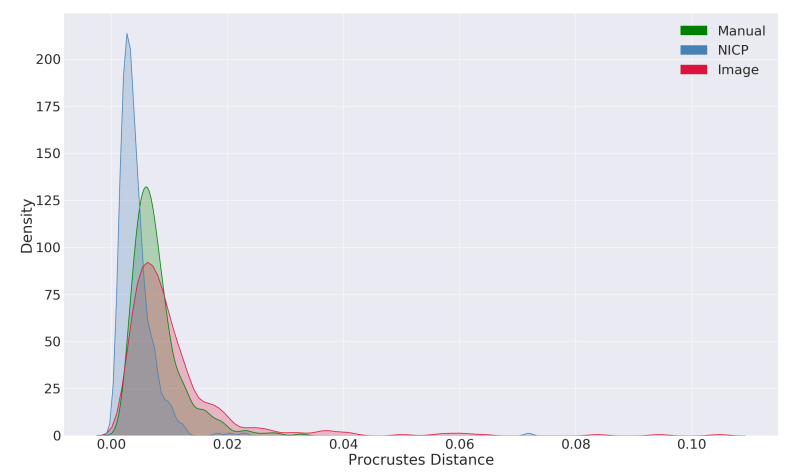
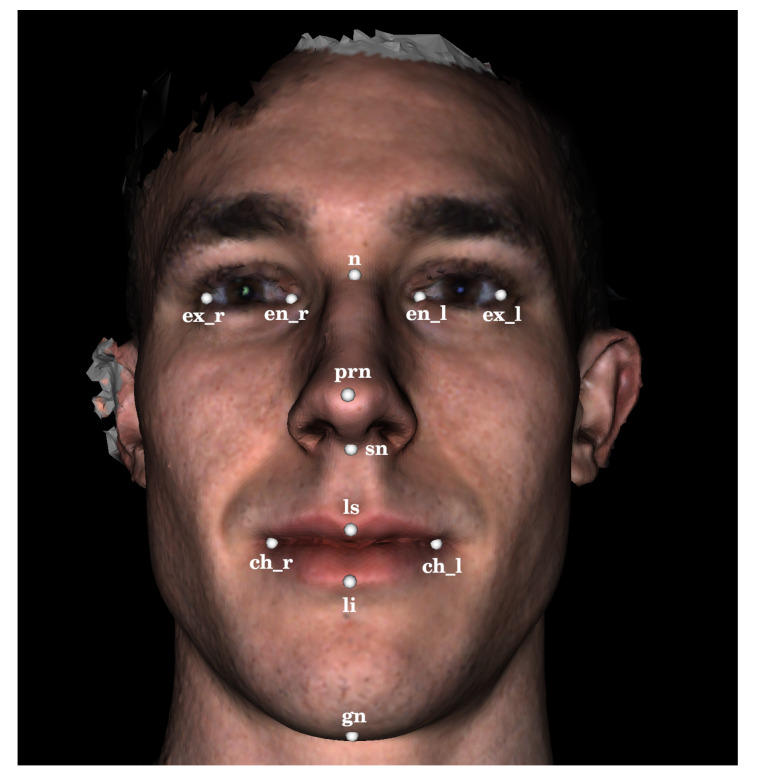
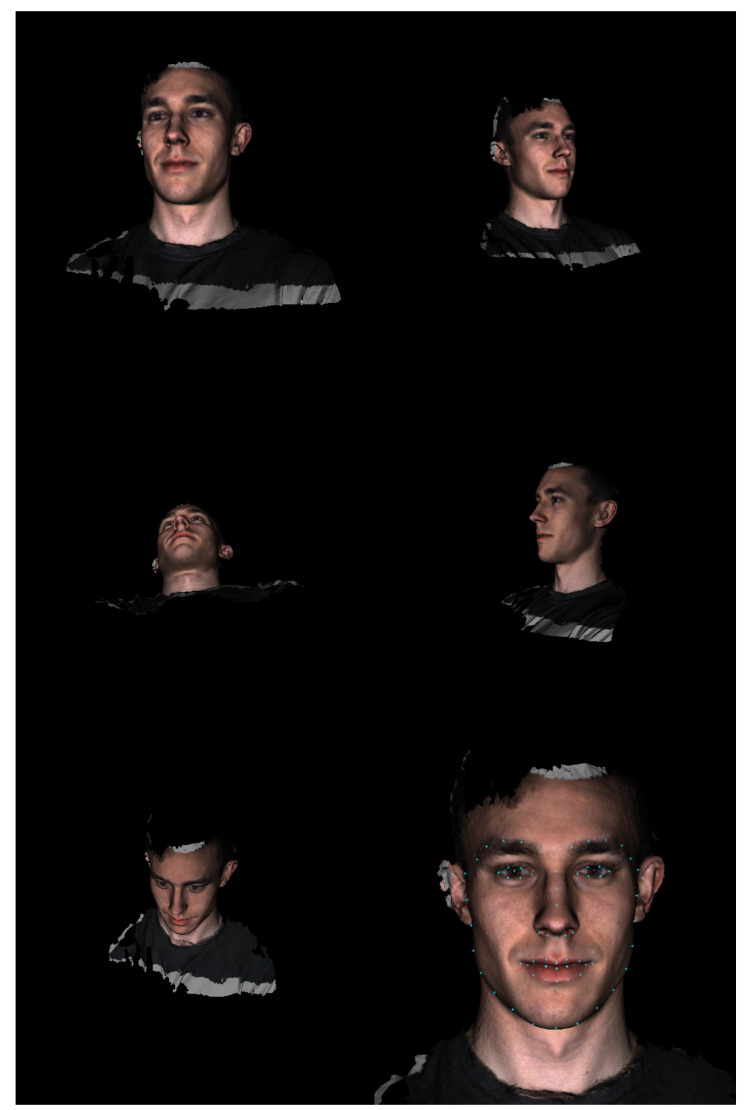
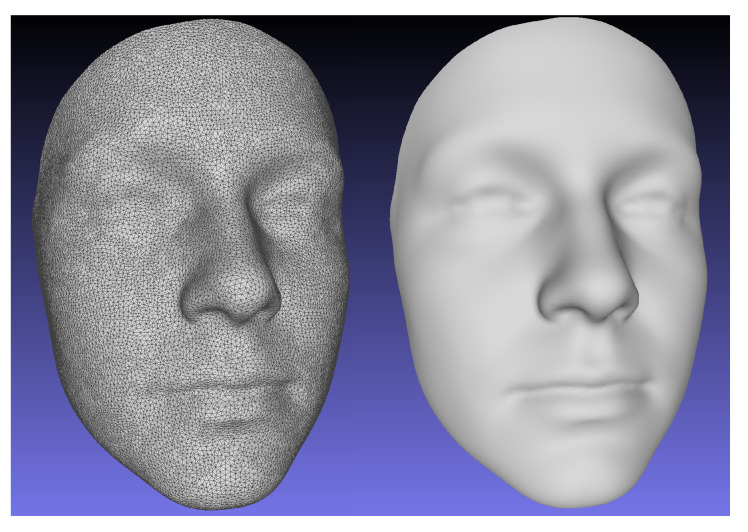
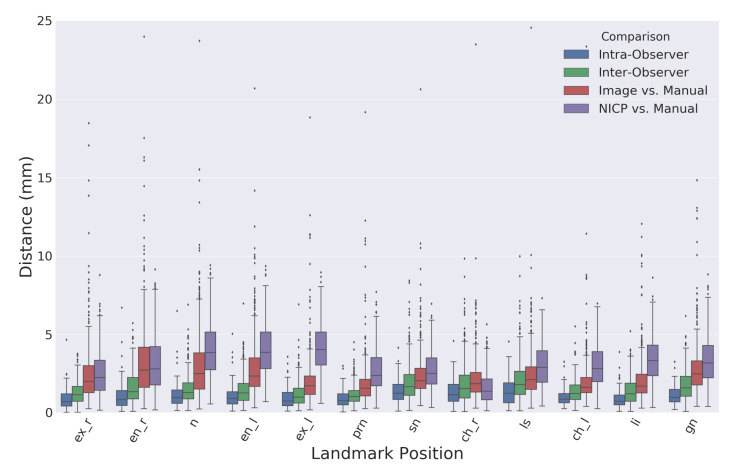
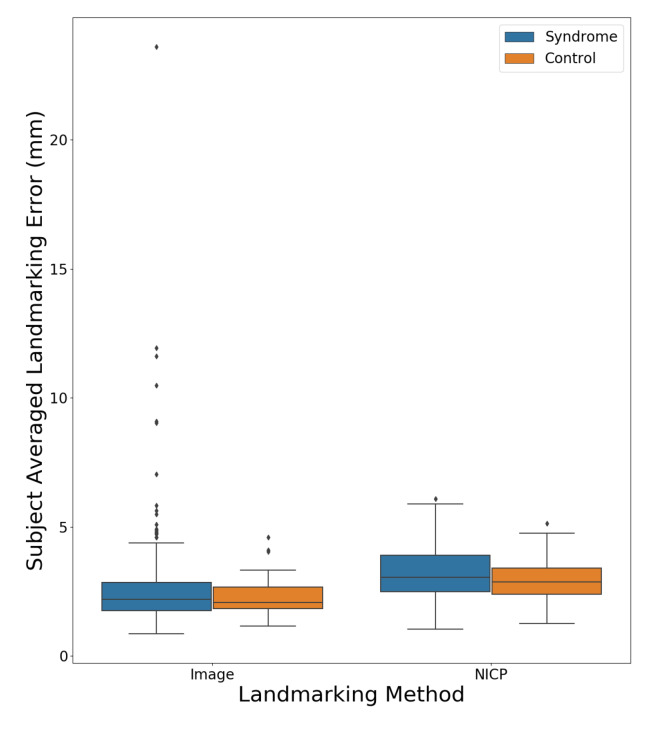
3D facial landmarks are known to be diagnostically relevant biometrics for many genetic syndromes. The objective of this study was to extend a state-of-the-art image-based 2D facial landmarking algorithm for the challenging task of 3D landmark identification on subjects with genetic syndromes, who often have moderate to severe facial dysmorphia. The automatic 3D facial landmarking algorithm presented here uses 2D image-based facial detection and landmarking models to identify 12 landmarks on 3D facial surface scans. The landmarking algorithm was evaluated using a test set of 444 facial scans with ground truth landmarks identified by two different human observers. Three hundred and sixty nine of the subjects in the test set had a genetic syndrome that is associated with facial dysmorphology. For comparison purposes, the manual landmarks were also used to initialize a non-linear surface-based registration of a non-syndromic atlas to each subject scan. Compared to the average intra- and inter-observer landmark distances of 1.1 mm and 1.5 mm respectively, the average distance between the manual landmark positions and those produced by the automatic image-based landmarking algorithm was 2.5 mm. The average error of the registration-based approach was 3.1 mm. Comparing the distributions of Procrustes distances from the mean for each landmarking approach showed that the surface registration algorithm produces a systemic bias towards the atlas shape. In summary, the image-based automatic landmarking approach performed well on this challenging test set, outperforming a semi-automatic surface registration approach, and producing landmark errors that are comparable to state-of-the-art 3D geometry-based facial landmarking algorithms evaluated on non-syndromic subjects.
3D 面部地标被认为是许多遗传综合征的诊断相关生物标志物。本研究的目的是扩展一种基于图像的最先进的 2D 面部地标算法,以应对具有遗传综合征的受试者的 3D 地标识别这一具有挑战性的任务,这些受试者通常具有中度至重度的面部畸形。本文提出的自动 3D 面部地标算法使用基于 2D 图像的面部检测和地标模型来识别 3D 面部表面扫描中的 12 个地标。使用由两名不同的人类观察者确定的地面真实地标来评估地标算法的测试集,其中包括 444 个面部扫描。测试集中的 369 名受试者患有与面部畸形相关的遗传综合征。出于比较目的,手动地标也用于初始化非综合征图谱的非线性基于表面的配准到每个受试者扫描。与手动地标位置和自动基于图像的地标算法生成的地标之间的平均距离分别为 2.5 毫米和 1.5 毫米相比,平均距离为 1.1 毫米和 1.5 毫米。基于注册的方法的平均误差为 3.1 毫米。比较每个地标方法的 Procrustes 距离与平均值的分布表明,表面注册算法对图谱形状产生系统偏差。总之,基于图像的自动地标算法在这个具有挑战性的测试集中表现良好,优于半自动表面注册方法,并产生与在非综合征受试者上评估的最先进的基于 3D 几何的面部地标算法相当的地标误差。