Ercomer, Utrecht University, The Netherlands.
Centre for Research on Self and Identity, University of Southampton, UK.
Br J Soc Psychol. 2021 Jan;60(1):171-195. doi: 10.1111/bjso.12386. Epub 2020 Jun 7.
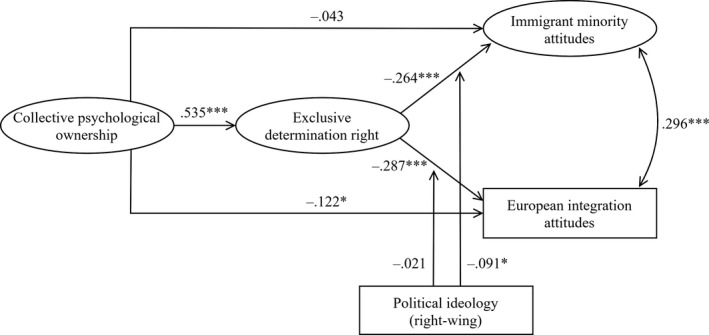
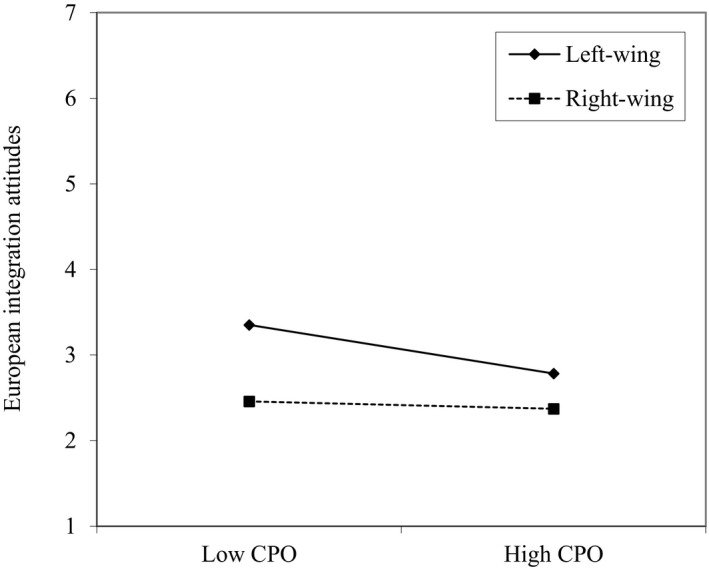
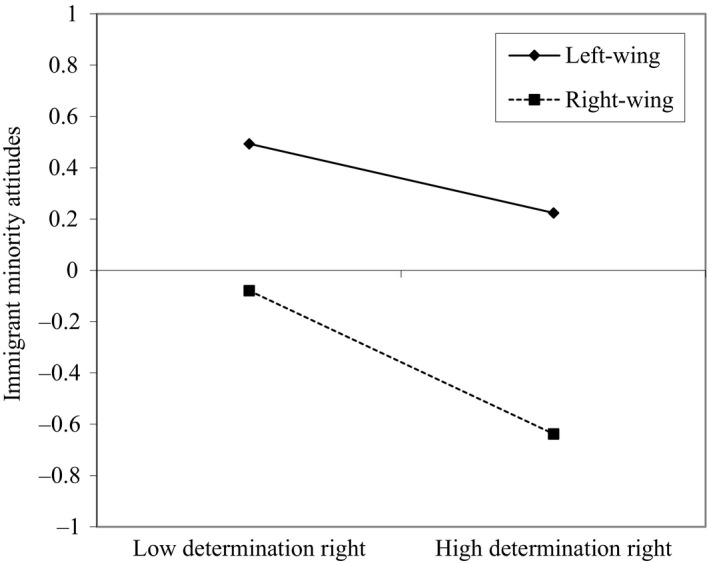
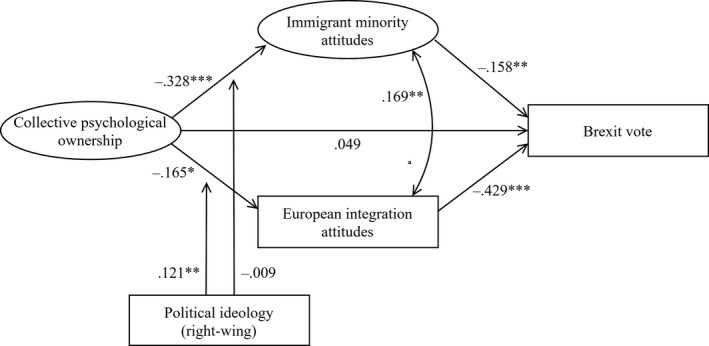
Political campaign slogans, such as 'Take back control of our country' (United Kingdom Independence Party) and 'The Netherlands ours again' (Dutch Party for Freedom), indicate that right-wing populism appeals to the belief that the country is 'ours', and therefore, 'we' have the exclusive right to determine what happens. We examined this sense of ownership of the country (i.e. collective psychological ownership [CPO]) with the related determination right in relation to exclusionary attitudes and voting behaviour. Among Dutch (Study 1, N = 572) and British (Study 2, N = 495) participants, we found that CPO explained anti-immigrant and anti-EU attitudes, and these attitudes in turn accounted for voting 'leave' in the 2016 Brexit referendum in the British sample (Study 2). Additionally, CPO was more strongly related to negative immigrant attitudes among right-wing Dutch participants, whereas it was more strongly related to negative EU attitudes and voting 'leave' among left-wing British participants. CPO contributes to the understanding of critical contemporary social attitudes and political behaviour.
政治竞选口号,如“夺回我们国家的控制权”(英国独立党)和“荷兰再次属于我们”(荷兰自由党),表明右翼民粹主义呼吁人们相信国家是“我们的”,因此,“我们”拥有决定国家命运的专属权利。我们用相关的排除权来检验对国家的这种所有权感(即集体心理所有权)与排他性态度和投票行为之间的关系。在荷兰(研究 1,N=572)和英国(研究 2,N=495)参与者中,我们发现集体心理所有权解释了反移民和反欧盟的态度,而这些态度反过来又解释了英国在 2016 年英国脱欧公投中投票“离开”的行为(研究 2)。此外,在右翼荷兰参与者中,集体心理所有权与负面的移民态度关系更密切,而在左翼英国参与者中,它与负面的欧盟态度和投票“离开”的关系更为密切。集体心理所有权有助于理解当代关键的社会态度和政治行为。