School of Computer Science and Engineering, South China University of Technology, Guangzhou, China.
Communication and Computer Network Laboratory of Guangdong, South China University of Technology, Guangzhou, China.
Comput Math Methods Med. 2020 May 18;2020:1394830. doi: 10.1155/2020/1394830. eCollection 2020.
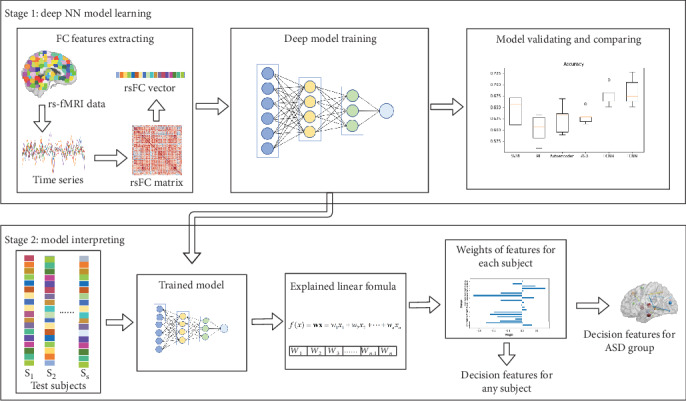
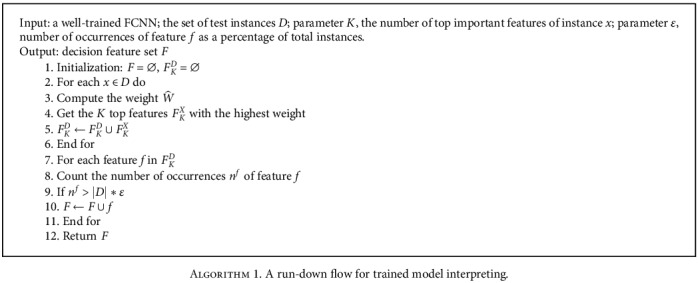
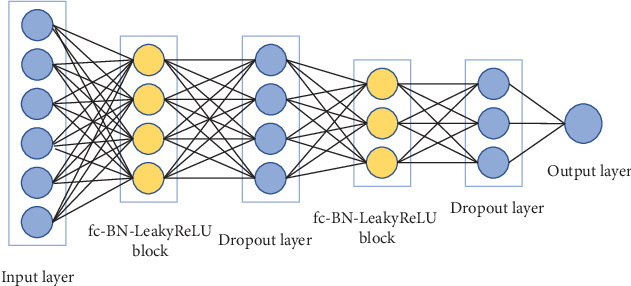
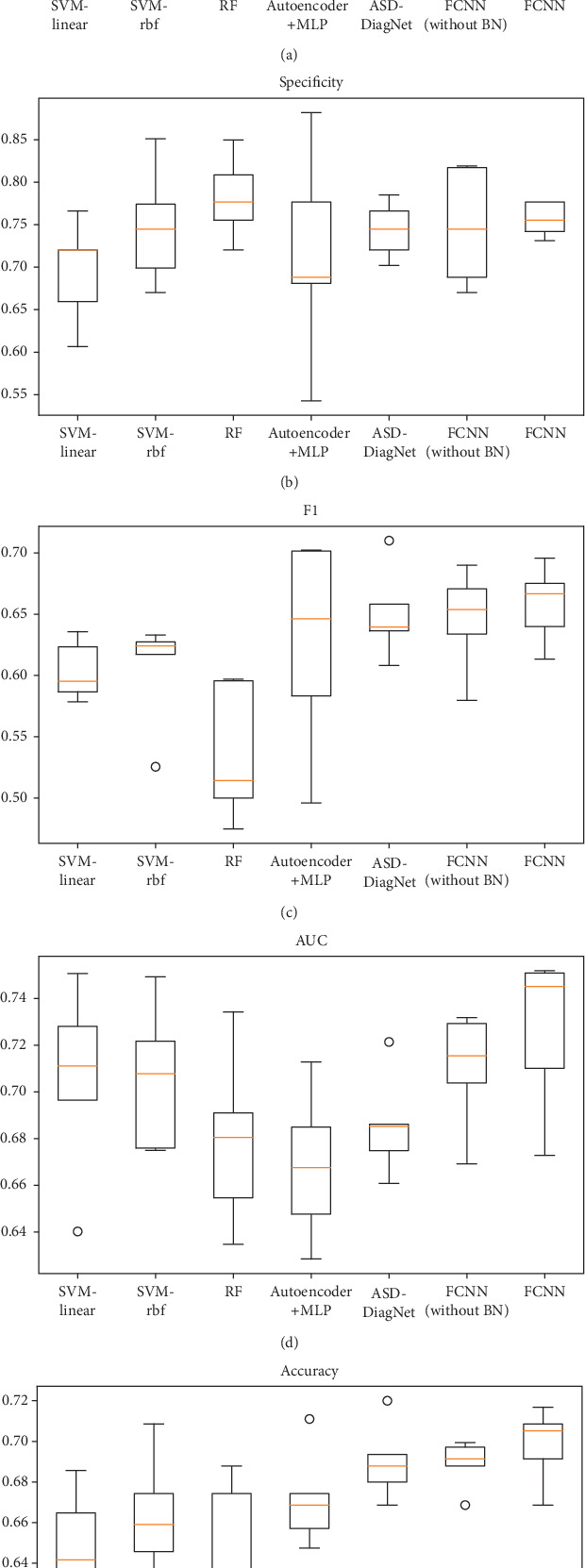
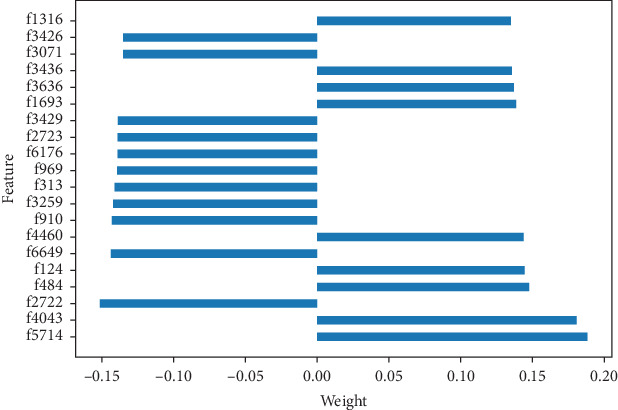
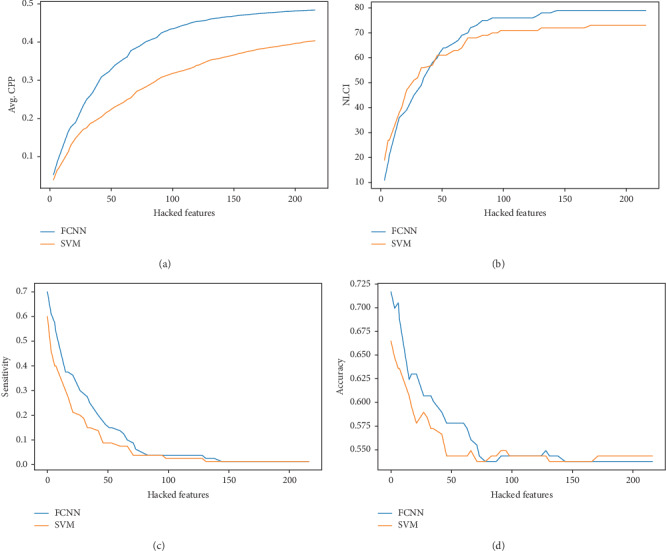
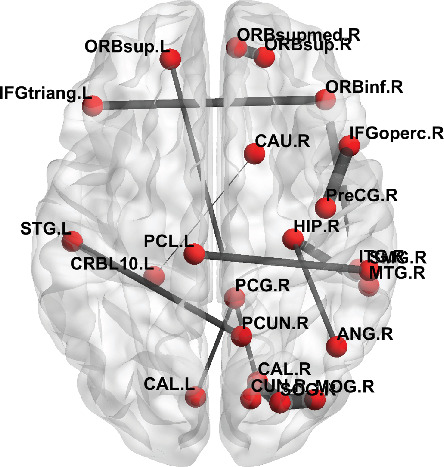
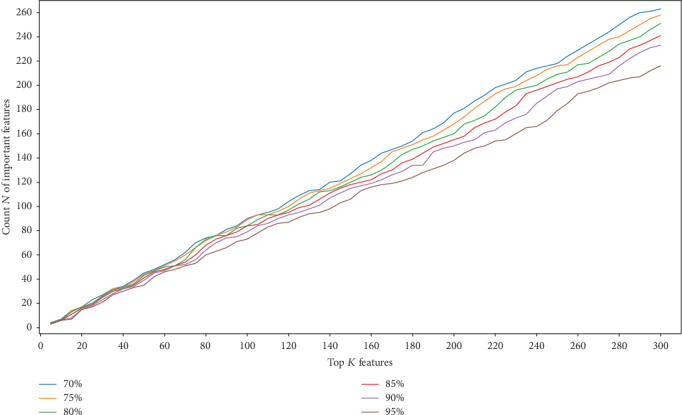
Deep neural networks have recently been applied to the study of brain disorders such as autism spectrum disorder (ASD) with great success. However, the internal logics of these networks are difficult to interpret, especially with regard to how specific network architecture decisions are made. In this paper, we study an interpretable neural network model as a method to identify ASD participants from functional magnetic resonance imaging (fMRI) data and interpret results of the model in a precise and consistent manner. First, we propose an interpretable fully connected neural network (FCNN) to classify two groups, ASD versus healthy controls (HC), based on input data from resting-state functional connectivity (rsFC) between regions of interests (ROIs). The proposed FCNN model is a piecewise linear neural network (PLNN) which uses piecewise linear function LeakyReLU as its activation function. We experimentally compared the FCNN model against widely used classification models including support vector machine (SVM), random forest, and two new classes of deep neural network models in a large dataset containing 871 subjects from ABIDE I database. The results show the proposed FCNN model achieves the highest classification accuracy. Second, we further propose an interpreting method which could explain the trained model precisely with a precise linear formula for each input sample and decision features which contributed most to the classification of ASD versus HC participants in the model. We also discuss the implications of our proposed approach for fMRI data classification and interpretation.
深度神经网络最近被成功应用于自闭症谱系障碍 (ASD) 等大脑疾病的研究。然而,这些网络的内部逻辑很难解释,特别是关于如何做出特定的网络架构决策。在本文中,我们研究了一种可解释的神经网络模型,作为一种从功能磁共振成像 (fMRI) 数据中识别 ASD 参与者的方法,并以精确和一致的方式解释模型的结果。首先,我们提出了一种可解释的全连接神经网络 (FCNN),基于感兴趣区域 (ROI) 之间的静息状态功能连接 (rsFC) 的输入数据,将两组数据进行分类,即 ASD 与健康对照组 (HC)。所提出的 FCNN 模型是一种分段线性神经网络 (PLNN),它使用分段线性函数 LeakyReLU 作为其激活函数。我们在包含来自 ABIDE I 数据库的 871 个受试者的大型数据集上,对 FCNN 模型与广泛使用的分类模型(包括支持向量机 (SVM)、随机森林和两种新的深度神经网络模型)进行了实验比较。结果表明,所提出的 FCNN 模型达到了最高的分类准确性。其次,我们进一步提出了一种解释方法,可以为每个输入样本提供精确的线性公式,并为模型中对 ASD 与 HC 参与者分类贡献最大的决策特征提供精确的解释。我们还讨论了我们提出的方法对 fMRI 数据分类和解释的意义。