Killgore William D S, Taylor Emily C, Cloonan Sara A, Dailey Natalie S
University of Arizona College of Medicine, Department of Psychiatry, Tucson, AZ, USA.
University of Arizona College of Medicine, Department of Psychiatry, Tucson, AZ, USA.
Psychiatry Res. 2020 Sep;291:113216. doi: 10.1016/j.psychres.2020.113216. Epub 2020 Jun 9.
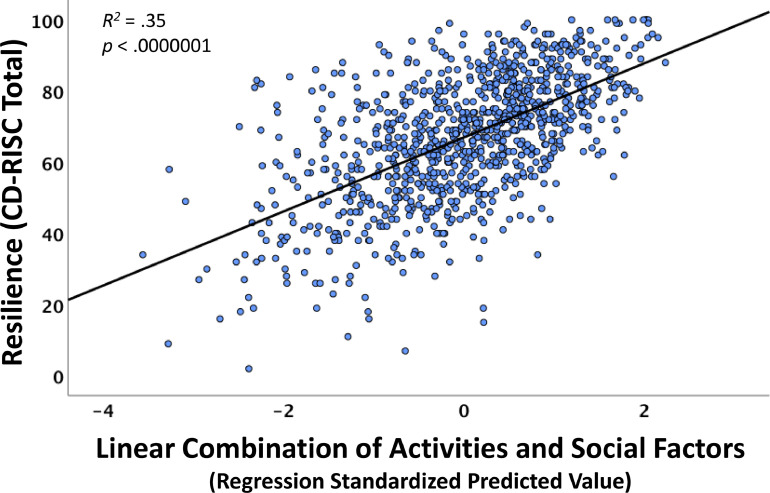
Some individuals are more psychologically resilient to adversity than others, an issue of great importance during the emerging mental health issues associated with the COVID-19 pandemic. To identify factors that may contribute to greater psychological resilience during the first weeks of the nation-wide lockdown efforts, we asked 1,004 U.S. adults to complete assessments of resilience, mental health, and daily behaviors and relationships. Average resilience was lower than published norms, but was greater among those who tended to get outside more often, exercise more, perceive more social support from family, friends, and significant others, sleep better, and pray more often. Psychological resilience in the face of the pandemic is related to modifiable factors.
一些人在心理上比其他人更能抵御逆境,在与新冠疫情相关的新出现的心理健康问题期间,这是一个非常重要的问题。为了确定在全国范围内实施封锁措施的头几周可能有助于增强心理韧性的因素,我们让1004名美国成年人完成了关于韧性、心理健康以及日常行为和人际关系的评估。平均韧性低于已公布的标准,但在那些更经常外出、锻炼更多、从家人、朋友和重要他人那里感受到更多社会支持、睡眠更好且更经常祈祷的人当中,韧性更强。面对疫情时的心理韧性与可改变的因素有关。