Wang Jie, Xue Rongrong, Ju Xueyang, Yan Hui, Gao Zhou, Esmail Abdalla Elzaki Mohammed, Hu Lin, Zeng Rensen, Song Yuanyuan
Key Laboratory of Ministry of Education for Genetics, Breeding and Multiple Utilization of Crops College of Agriculture Fujian Agriculture and Forestry University Fuzhou China.
State Key Laboratory of Ecological Pest Control for Fujian and Taiwan Crops Fujian Agriculture and Forestry University Fuzhou China.
Ecol Evol. 2020 Apr 12;10(11):4816-4827. doi: 10.1002/ece3.6235. eCollection 2020 Jun.
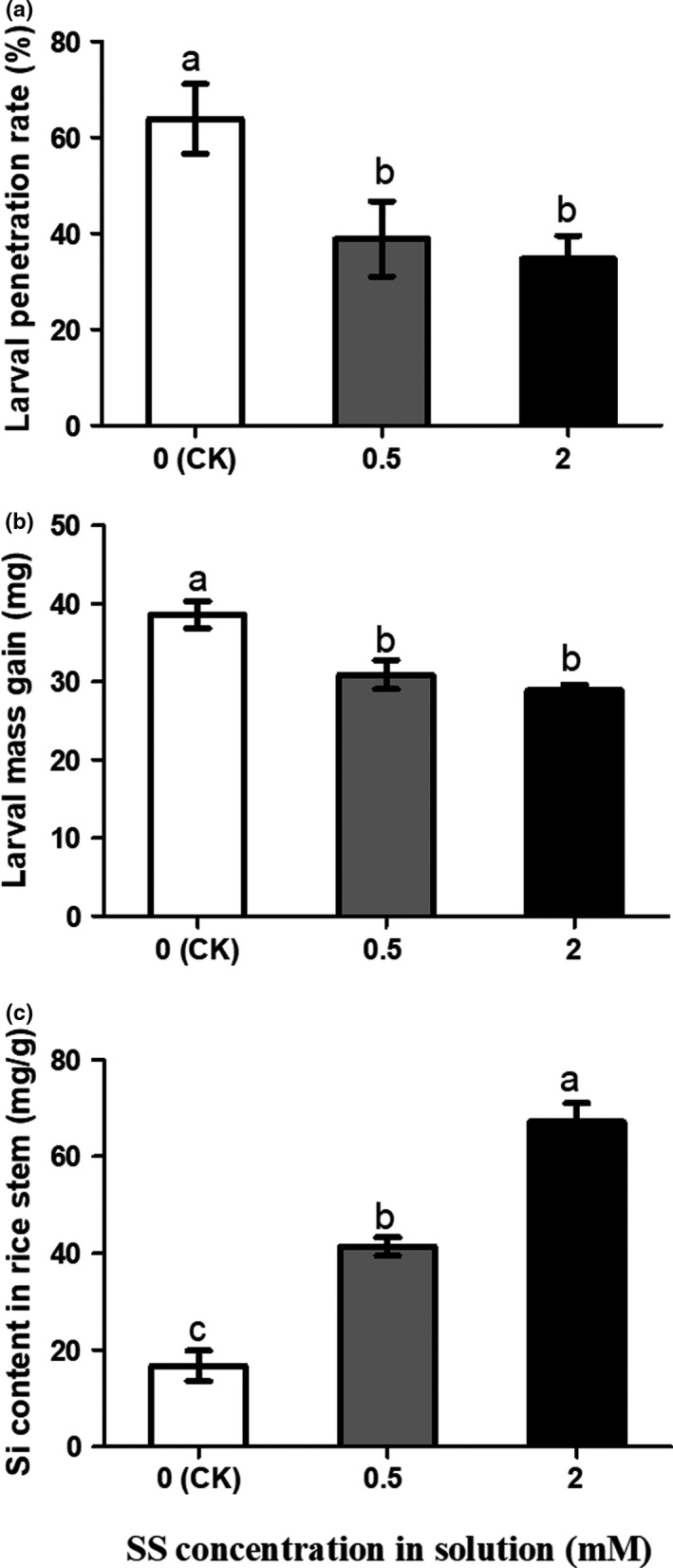
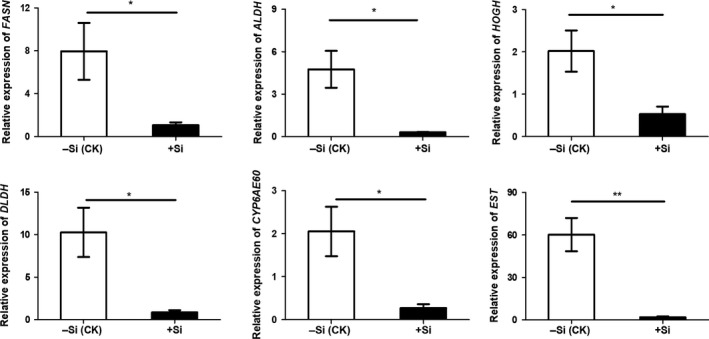
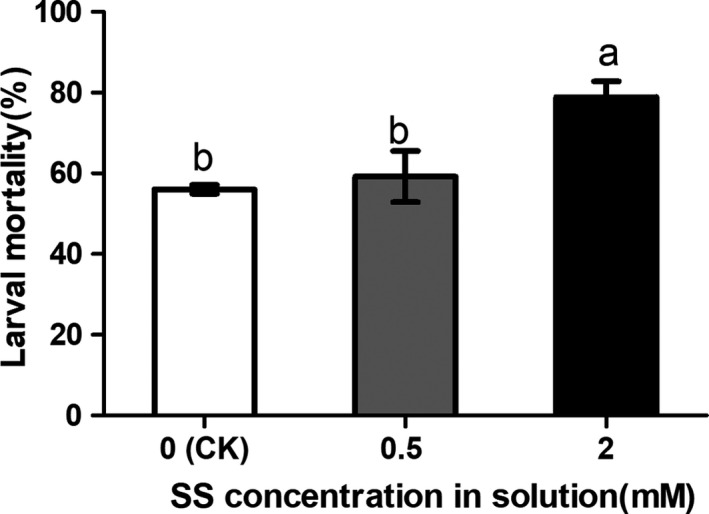
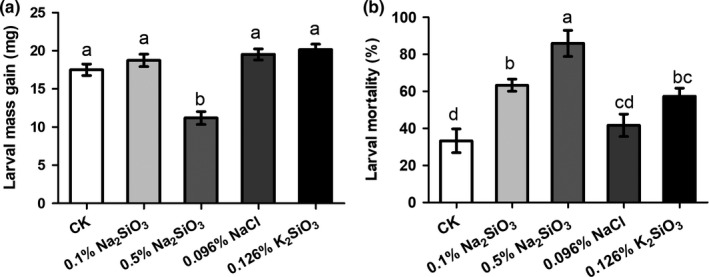
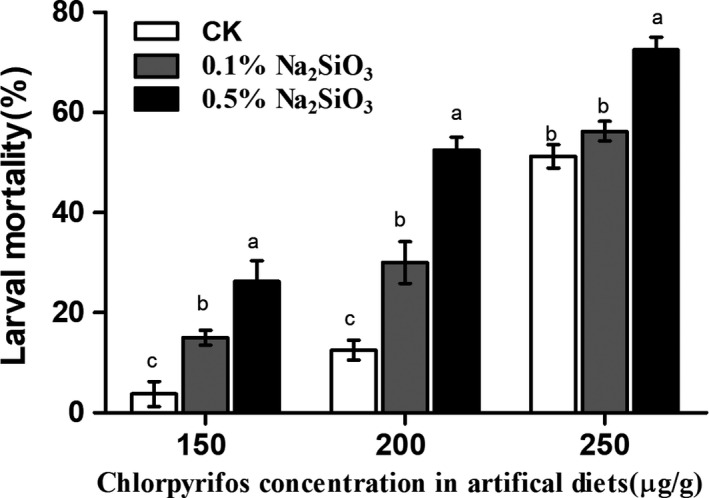
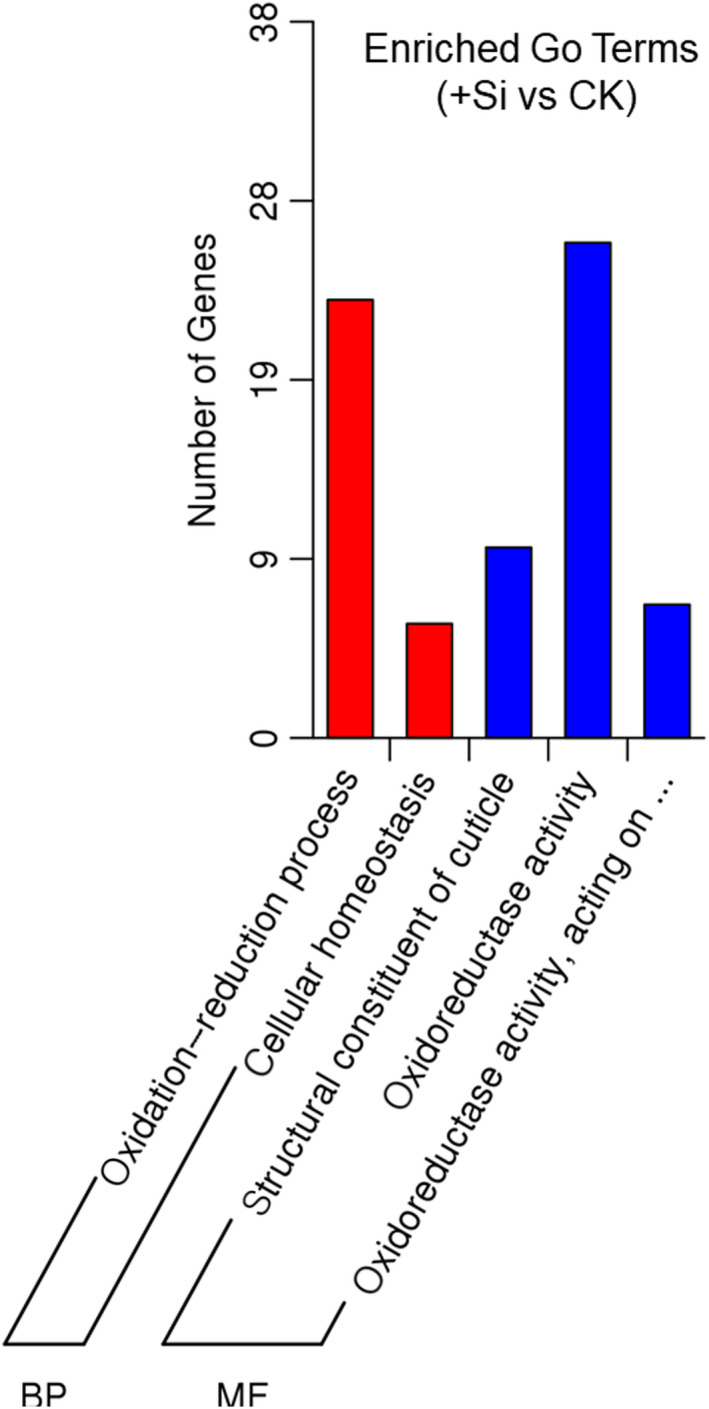
The rice striped stem borer (SSB, ) is one of the most destructive pests of rice plants. Si-mediated rice defense against various pests has been widely reported, and sodium silicate (SS) has been used as an effective source of silicon for application to plants. However, there is quite limited information about the direct effects of Si application on herbivorous insects. SSB larval performance and their insecticide tolerance were examined after they had been reared either on rice plants cultivated in nutrient solution containing 0.5 and 2.0 mM SS or on artificial diets with 0.1% and 0.5% SS. SS amendment in either rice culture medium or artificial diets significantly suppressed the enzymatic activities of acetylcholinesterase, glutathione S-transferases, and levels of cytochrome P450 protein in the midgut of larvae. Larvae fed on diets containing SS showed lower insecticide tolerance. Additionally, RNA-seq analysis showed that SS-mediated larval insecticide tolerance was closely associated with fatty acid biosynthesis and pyruvate metabolism pathways. Our results suggest that Si not only enhances plant resistance against insect herbivore, but also impairs the insect's capacity to detoxify the insecticides. This should be considered as another important aspect in Si-mediated plant-insect interaction and may provide a novel approach of pest management.
水稻二化螟是水稻最具破坏性的害虫之一。硅介导的水稻对各种害虫的防御作用已被广泛报道,硅酸钠已被用作向植物施用的有效硅源。然而,关于施用硅对食草昆虫的直接影响的信息相当有限。在含有0.5和2.0 mM硅酸钠的营养液中培养的水稻植株上或含有0.1%和0.5%硅酸钠的人工饲料上饲养水稻二化螟幼虫后,检测其幼虫生长性能及其对杀虫剂的耐受性。在水稻培养基或人工饲料中添加硅酸钠显著抑制了水稻二化螟幼虫中肠乙酰胆碱酯酶、谷胱甘肽S-转移酶的酶活性以及细胞色素P450蛋白水平。取食含硅酸钠饲料的幼虫对杀虫剂的耐受性较低。此外,RNA测序分析表明,硅酸钠介导的幼虫对杀虫剂的耐受性与脂肪酸生物合成和丙酮酸代谢途径密切相关。我们的研究结果表明,硅不仅增强了植物对食草昆虫的抗性,还损害了昆虫对杀虫剂的解毒能力。这应被视为硅介导的植物-昆虫相互作用的另一个重要方面,并可能为害虫管理提供一种新方法。