Indian Institute of Science Education and Research (IISER) Tirupati, Tirupati 517 507, India.
J Biosci. 2020;45(1). doi: 10.1007/s12038-020-00053-2.
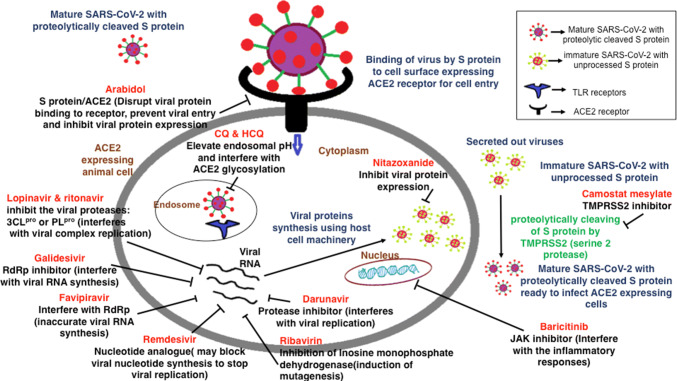
COVID-19 has become one of the biggest health concern, along with huge economic burden. With no clear remedies to treat the disease, doctors are repurposing drugs like chloroquine and remdesivir to treat COVID-19 patients. In parallel, research institutes in collaboration with biotech companies have identified strategies to use viral proteins as vaccine candidates for COVID-19. Although this looks promising, they still need to pass the test of challenge studies in animal models. As various models for SARS-CoV-2 are under testing phase, biotech companies have bypassed animal studies and moved to Phase I clinical trials. In view of the present outbreak, this looks a justified approach, but the problem is that in the absence of animal studies, we can never predict the outcomes in humans. Since animal models are critical for vaccine development and SARS-CoV-2 has different transmission dynamics, in this review we compare different animal models of SARS-CoV-2 with humans for their pathogenic, immune response and transmission dynamics that make them ideal models for vaccine testing for COVID-19. Another issue of using animal model is the ethics of using animals for research; thus, we also discuss the pros and cons of using animals for vaccine development studies.
COVID-19 已成为最大的健康关注点之一,同时也带来了巨大的经济负担。由于没有明确的治疗方法,医生正在重新利用氯喹和瑞德西韦等药物来治疗 COVID-19 患者。与此同时,研究机构与生物技术公司合作,已经确定了利用病毒蛋白作为 COVID-19 疫苗候选物的策略。尽管这看起来很有希望,但它们仍需要通过动物模型的挑战性研究的检验。由于各种 SARS-CoV-2 模型都处于测试阶段,生物技术公司已经绕过动物研究,进入了 I 期临床试验。鉴于目前的疫情爆发,这种方法似乎是合理的,但问题是,由于缺乏动物研究,我们永远无法预测人类的结果。由于动物模型对于疫苗开发至关重要,而 SARS-CoV-2 的传播动态不同,因此在这篇综述中,我们将比较 SARS-CoV-2 的不同动物模型与人类在发病机制、免疫反应和传播动态方面的差异,这些差异使它们成为 COVID-19 疫苗测试的理想模型。使用动物模型的另一个问题是使用动物进行研究的伦理问题;因此,我们还讨论了使用动物进行疫苗开发研究的利弊。