
2019 年欧洲选举期间推特上虚假新闻的传播范围有限。
The limited reach of fake news on Twitter during 2019 European elections.
机构信息
ISC CNR, Rome, Italy.
IIT CNR, Pisa, Italy.
出版信息
PLoS One. 2020 Jun 18;15(6):e0234689. doi: 10.1371/journal.pone.0234689. eCollection 2020.
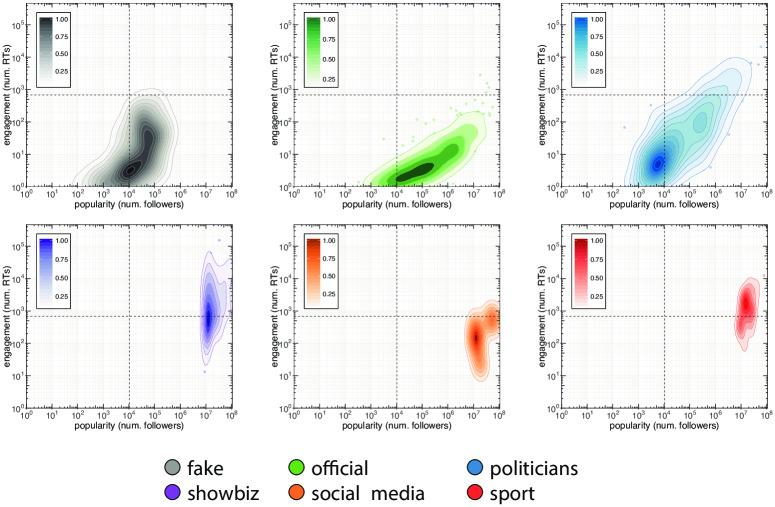
The advent of social media changed the way we consume content, favoring a disintermediated access to, and production of information. This scenario has been matter of critical discussion about its impact on society, magnified in the case of the Arab Springs or heavily criticized during Brexit and the 2016 U.S. elections. In this work we explore information consumption on Twitter during the 2019 European Parliament electoral campaign by analyzing the interaction patterns of official news outlets, disinformation outlets, politicians, people from the showbiz and many others. We extensively explore interactions among different classes of accounts in the months preceding the elections, held between 23rd and 26th of May, 2019. We collected almost 400,000 tweets posted by 863 accounts having different roles in the public society. Through a thorough quantitative analysis we investigate the information flow among them, also exploiting geolocalized information. Accounts show the tendency to confine their interaction within the same class and the debate rarely crosses national borders. Moreover, we do not find evidence of an organized network of accounts aimed at spreading disinformation. Instead, disinformation outlets are largely ignored by the other actors and hence play a peripheral role in online political discussions.
社交媒体的出现改变了我们获取内容的方式,更倾向于不受中介干预地获取和生产信息。这种情况引发了关于其对社会影响的激烈讨论,在阿拉伯之春事件中有所体现,在英国脱欧和 2016 年美国大选中也受到了严厉批评。在这项工作中,我们通过分析官方新闻媒体、虚假信息媒体、政客、娱乐圈人士和其他许多人的互动模式,研究了 2019 年欧洲议会选举期间在 Twitter 上的信息消费。我们在 2019 年 5 月 23 日至 26 日举行的选举前几个月,广泛研究了不同类别的账户之间的互动。我们收集了近 40 万个由 863 个在公共社会中具有不同角色的账户发布的推文。通过深入的定量分析,我们调查了它们之间的信息流,还利用了地理位置信息。账户显示出在同一类别内进行互动的倾向,而且辩论很少跨越国界。此外,我们没有发现旨在传播虚假信息的有组织的账户网络的证据。相反,虚假信息媒体在很大程度上被其他行为体忽视,因此在在线政治讨论中扮演边缘角色。


 Zotero 插件