Section of Biological Physics, Department of Physics, Chalmers University of Technology, Göteborg, Sweden.
Boreskov Institute of Catalysis, Russian Academy of Sciences, Novosibirsk, Russia.
Eur Biophys J. 2020 Jul;49(5):395-400. doi: 10.1007/s00249-020-01441-0. Epub 2020 Jun 17.
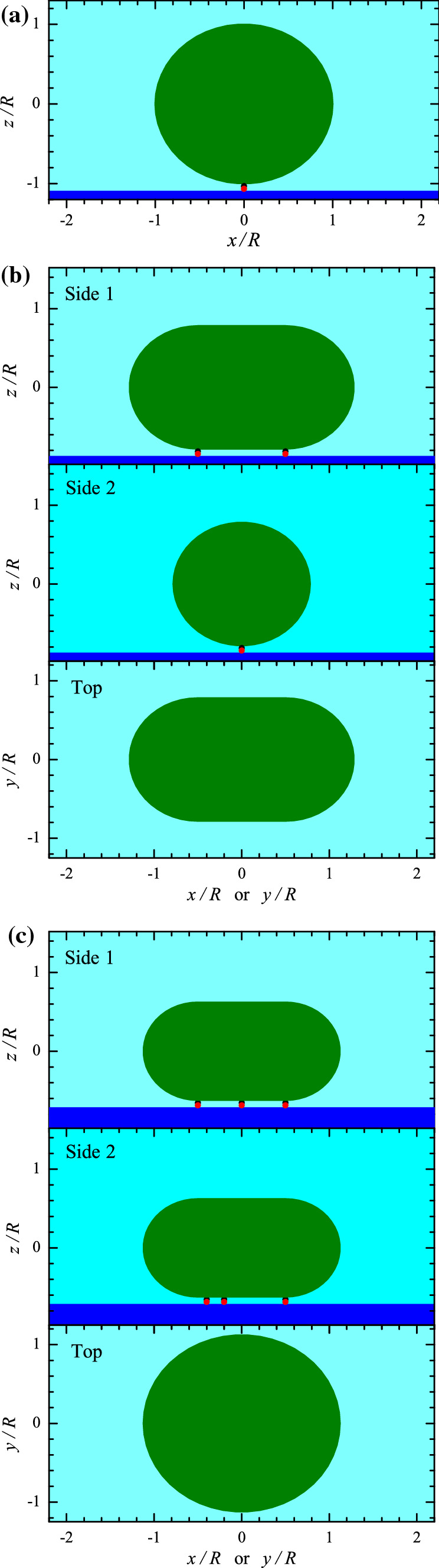
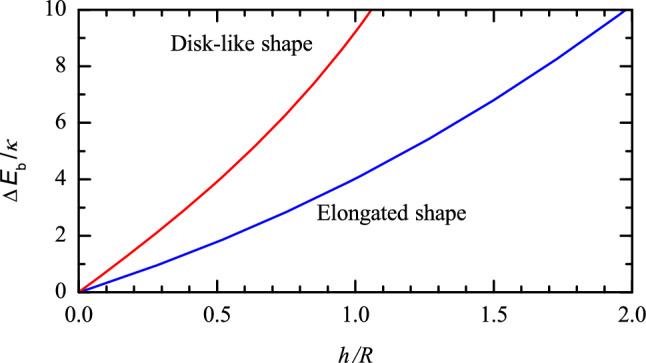
The interaction of exosomes (cell-secreted [Formula: see text]100 nm-sized extracellular vesicles) or membrane-enveloped virions with cellular lipid membranes is often mediated by relatively weak ligand-receptor bonds. Interactions of this type can be studied using vesicles and observing their attachment to receptors located in a lipid bilayer formed at a solid surface. The contact region between a vesicle and the supported lipid bilayer and accordingly the number of ligand-receptor pairs there can be increased by deforming a vesicle. Herein, I (i) estimate theoretically the corresponding deformation energy assuming a disk-like or elongated shape of vesicles, (ii) present the equations allowing one to track such deformations by employing total internal reflection fluorescence microscopy and surface plasmon resonance, and (iii) briefly discuss some related experimental studies.
外泌体(细胞分泌的[化学式:见正文]100nm 大小的细胞外囊泡)或膜包裹的病毒粒子与细胞膜的相互作用通常由相对较弱的配体-受体键介导。可以使用囊泡并观察它们与位于固体表面形成的脂质双层中的受体的附着来研究这种类型的相互作用。通过变形囊泡,可以增加囊泡与支撑脂质双层之间的接触区域,并且相应地增加那里的配体-受体对的数量。在此,我(i)假设囊泡呈盘状或长形,从理论上估算相应的变形能,(ii)给出允许通过全内反射荧光显微镜和表面等离子体共振来跟踪这种变形的方程,(iii)简要讨论一些相关的实验研究。