Gerald S. Berenson Endowed Chair in Preventive Cardiology, Tulane University School of Medicine, New Orleans, LA, USA.
Tulane University School of Medicine, New Orleans, LA, USA.
J Natl Med Assoc. 2020 Jun;112(3):315-323. doi: 10.1016/j.jnma.2020.05.018. Epub 2020 Jun 18.
Cardiovascular disease related mortality is the leading cause of death in the United States, with hypertension being the most prevalent and potent risk factor. For decades hypertension has disproportionately affected African Americans, who also have a higher burden of associated comorbidities including diabetes and heart failure.
Current literature including guideline reports and newer studies on hypertension in African Americans in PubMed were reviewed. We also reviewed newer publications on the relationship between COVID-19 and cardiovascular disease.
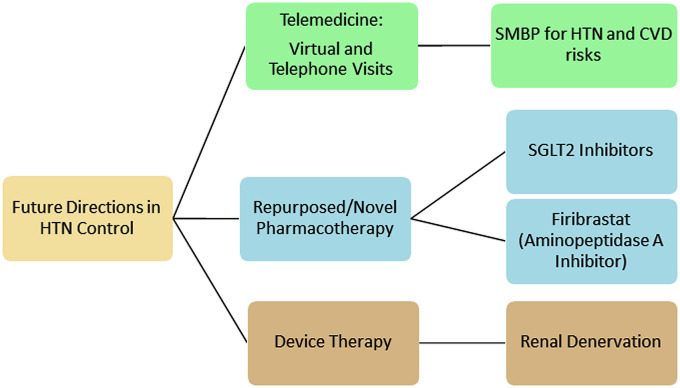
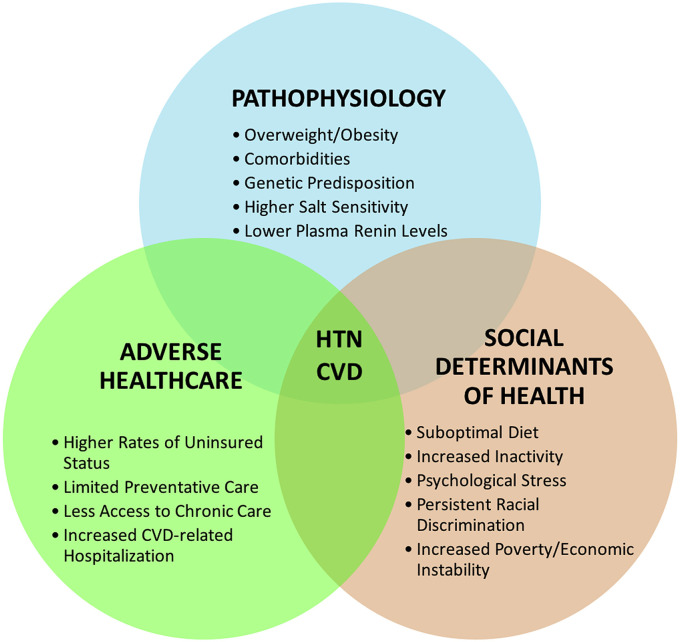
While APOL1 has been theorized in the epidemiology of hypertension, the increased prevalence and associated risks are primarily due to environmental and lifestyle factors. These factors include poor diet, adverse lifestyle, and social determinants. Hypertension control can be achieved by lifestyle modifications such as low sodium diet, weight loss, and adequate physical activity. When lifestyle modifications alone do not adequately control hypertension, a common occurrence among African Americans who suffer with greater prevalence of resistant hypertension, pharmacological intervention is indicated. The efficacy of renal denervation, and the use of sodium-glucose cotransporter 2 and aminopeptidase A inhibitors, have been studied for treatment of resistant hypertension. Furthermore, the recent COVID-19 crisis has been particularly devastating among African Americans who demonstrate increased incidence and poorer health outcomes related to the disease.
The disparities in outcomes, which are largely attributable to a greater prevalence of comorbidities such as hypertension and obesity, in addition to adverse environmental and socioeconomic factors, highlight the necessity of specialized clinical approaches and programs for African Americans to address longstanding barriers to equitable care.
心血管疾病相关死亡率是美国的主要死亡原因,高血压是最普遍和最有力的风险因素。几十年来,高血压一直不成比例地影响着非裔美国人,他们还面临着更高的相关合并症负担,包括糖尿病和心力衰竭。
我们查阅了包括指南报告和 PubMed 中关于非裔美国人高血压的最新研究在内的现有文献。我们还查阅了关于 COVID-19 与心血管疾病之间关系的最新出版物。
虽然 APOL1 在高血压的流行病学中被认为是一个理论,但高血压的患病率增加和相关风险主要归因于环境和生活方式因素。这些因素包括不良饮食、不良生活方式和社会决定因素。通过生活方式改变,如低盐饮食、减肥和适当的体育活动,可以控制高血压。当生活方式改变不足以充分控制高血压时,在非裔美国人中经常发生这种情况,他们患有更多的难治性高血压,需要药物干预。肾去神经术、钠-葡萄糖共转运蛋白 2 和氨肽酶 A 抑制剂的疗效已被研究用于治疗难治性高血压。此外,最近的 COVID-19 危机对非裔美国人尤其具有破坏性,他们的发病率更高,与该疾病相关的健康结果更差。
这些结果的差异在很大程度上归因于高血压和肥胖等合并症的更高患病率,以及不利的环境和社会经济因素,这突显了为非裔美国人制定专门的临床方法和方案的必要性,以解决长期存在的公平护理障碍。