Institute of Psychology, University of Wrocław, Wrocław, Poland.
Department of Human Biology, University of Wrocław, Wrocław, Poland.
Sci Rep. 2020 Jun 22;10(1):10068. doi: 10.1038/s41598-020-66915-9.
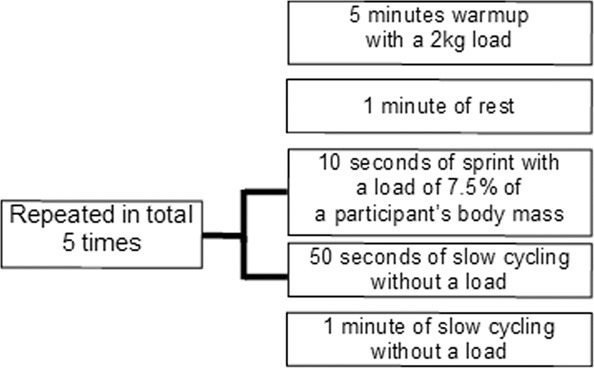
The digit ratio (2D:4D) is said to be a potential marker of exposure to prenatal sex steroids. Some studies suggest that the 2D:4D is also linked with the testosterone response to challenging situations due to organizational effect of prenatal hormonal milieu on adult endocrine functioning. However, up to date, there were only four studies (conducted on small samples) that examined the 2D:4D and the testosterone response to a challenging situation (i.e. physical exertion or aggressive context). Here, we examined the relationship between the 2D:4D and the testosterone change under an acute exercise among 97 men. We found that the digit ratios (the right 2D:4D, the left 2D:4D, and the right minus left 2D:4D) were neither predictors of pre-exercise testosterone, nor the change in testosterone level after a cycling task. Our results add a contradictory to previous studies evidence in a discussion on the links of the 2D:4D and the testosterone change.
手指长度比(2D:4D)被认为是产前性激素暴露的潜在标志物。一些研究表明,由于产前荷尔蒙环境对成年内分泌功能的组织效应,2D:4D 也与应对挑战情况的睾丸激素反应有关。然而,迄今为止,只有四项研究(在小样本上进行)检查了 2D:4D 与应对挑战情况(即体力消耗或攻击情境)时的睾丸激素反应之间的关系。在这里,我们在 97 名男性中检查了急性运动下 2D:4D 与睾丸激素变化之间的关系。我们发现,手指比率(右 2D:4D、左 2D:4D 和右减去左 2D:4D)既不能预测运动前的睾丸激素水平,也不能预测自行车任务后睾丸激素水平的变化。我们的结果在讨论 2D:4D 与睾丸激素变化的联系时,对之前研究证据提出了矛盾。