Cuevas-Sierra Amanda, Riezu-Boj José Ignacio, Guruceaga Elizabeth, Milagro Fermín Ignacio, Martínez José Alfredo
Department of Nutrition, Food Science, and Physiology, and Center for Nutrition Research, University of Navarra, 31008 Pamplona, Spain.
Navarra Institute for Health Research (IdiSNA), 31008 Pamplona, Spain.
Microorganisms. 2020 Jun 22;8(6):938. doi: 10.3390/microorganisms8060938.
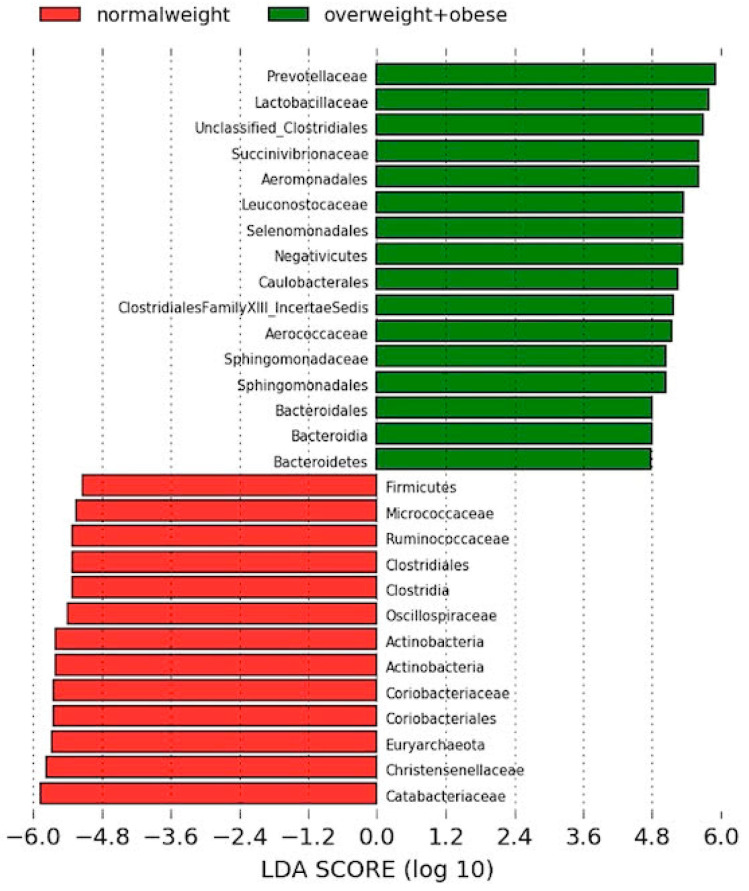
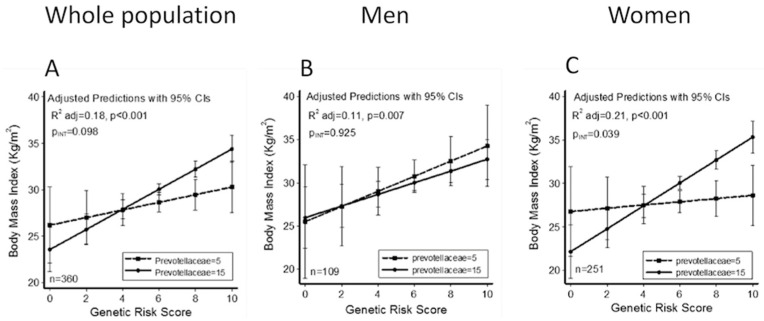
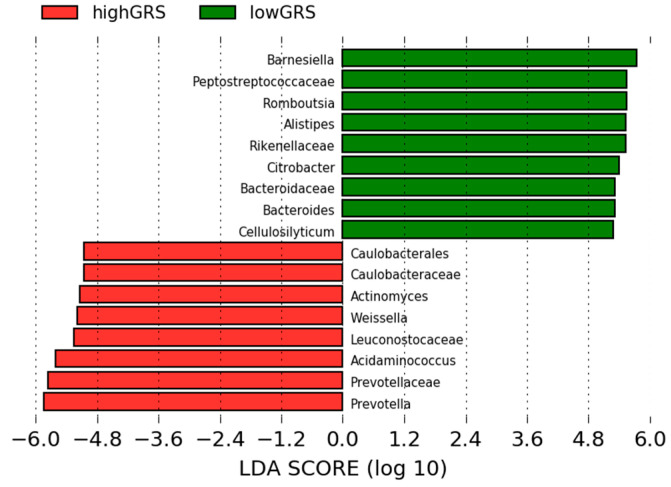
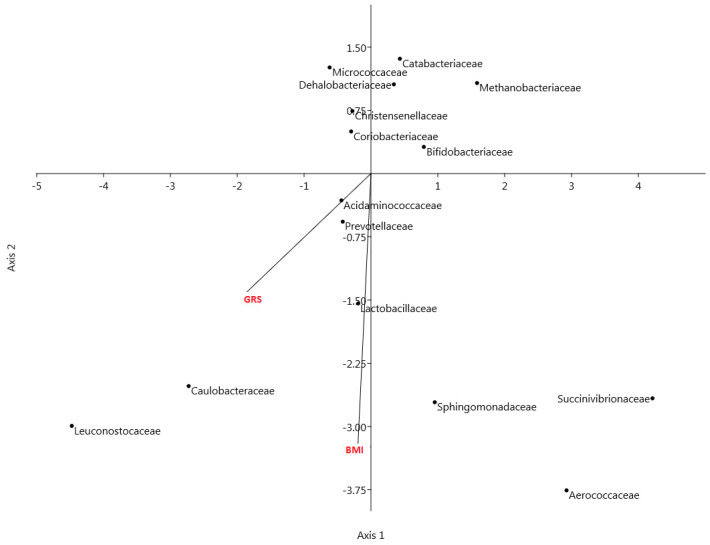
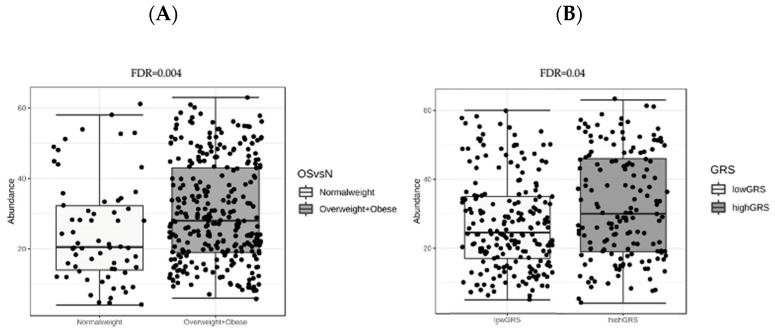
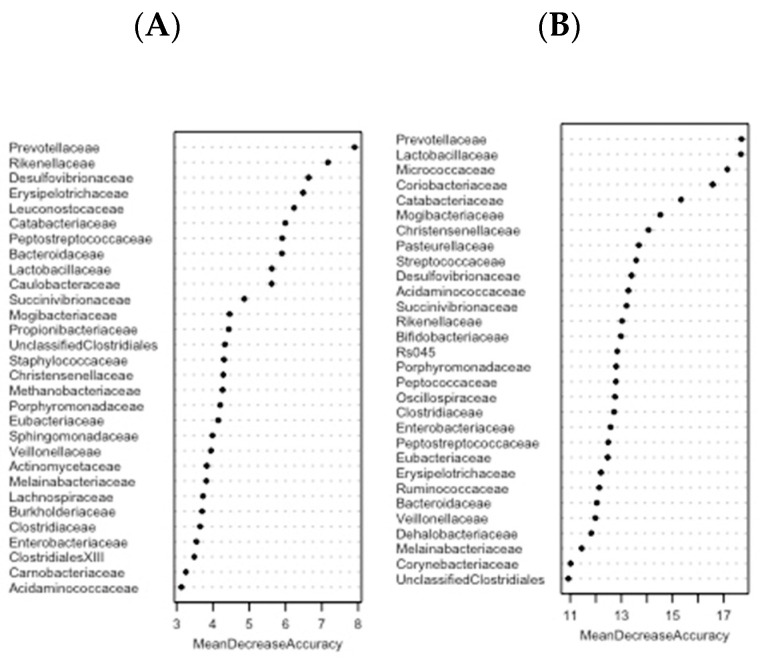
The gut microbiome has been recognized as a tool for understanding adiposity accumulation and for providing personalized nutrition advice for the management of obesity and accompanying metabolic complications. The genetic background is also involved in human energy homeostasis. In order to increase the value of nutrigenetic dietary advice, the interplay between genetics and microbiota must be investigated. The purpose of the present study was to evaluate interactive associations between gut microbiota composition and 95 obesity-related single nucleotide polymorphisms (SNPs) searched in the literature. Oral mucosa and fecal samples from 360 normal weight, overweight and obese subjects were collected. Next generation genotyping of these 95 SNPs and fecal 16S rRNA sequencing were performed. A genetic risk score (GRS) was constructed with 10 SNPs statistically or marginally associated with body mass index (BMI). Several microbiome statistical analyses at family taxonomic level were applied (LEfSe, Canonical Correspondence Analysis, MetagenomeSeq and Random Forest), and Prevotellaceae family was found in all of them as one of the most important bacterial families associated with BMI and GRS. Thus, in this family it was further analyzed the interactive association between BMI and GRS with linear regression models. Interestingly, women with higher abundance of Prevotellaceae and higher GRS were more obese, compared to women with higher GRS and lower abundance of Prevotellaceae. These findings suggest relevant interrelationships between Prevotellaceae and the genetic background that may determine interindividual BMI differences in women, which opens the way to new precision nutrition-based treatments for obesity.
肠道微生物群已被视为一种工具,可用于理解肥胖积累情况,并为肥胖及相关代谢并发症的管理提供个性化营养建议。遗传背景也参与人体能量平衡。为了提高营养遗传学饮食建议的价值,必须研究遗传学与微生物群之间的相互作用。本研究的目的是评估肠道微生物群组成与文献中搜索到的95个肥胖相关单核苷酸多态性(SNP)之间的交互关联。收集了360名体重正常、超重和肥胖受试者的口腔黏膜和粪便样本。对这95个SNP进行下一代基因分型,并进行粪便16S rRNA测序。用10个与体重指数(BMI)有统计学或边缘关联的SNP构建了遗传风险评分(GRS)。应用了几种在家族分类水平上的微生物群统计分析方法(线性判别分析效应大小、典范对应分析、宏基因组序列分析和随机森林),在所有这些分析中,普雷沃菌科均被发现是与BMI和GRS相关的最重要细菌家族之一。因此,在这个家族中,用线性回归模型进一步分析了BMI与GRS之间的交互关联。有趣的是,与普雷沃菌科丰度较低但GRS较高的女性相比,普雷沃菌科丰度较高且GRS较高的女性更肥胖。这些发现表明普雷沃菌科与遗传背景之间存在相关的相互关系,这可能决定了女性个体之间的BMI差异,为基于精准营养的肥胖新治疗方法开辟了道路。