
在蚀刻牙本质上使用菠萝蛋白酶和木瓜蛋白酶作为去蛋白剂后复合树脂的微拉伸粘结强度:一项研究。
Microtensile Bond Strength of Composite Resin Following the Use of Bromelain and Papain as Deproteinizing Agents on Etched Dentin: An Study.
作者信息
Khatib Mohd Sibghatullah, Devarasanahalli Swapna V, Aswathanarayana Ranjini M, Venkateswara Ashwath H, Nadig Roopa R
机构信息
Department of Conservative Dentistry and Endodontics, Dayananda Sagar College of Dental Sciences and Hospital, Bengaluru, Karnataka, India.
Department of Research and Development, The Himalaya Drug Company, Bengaluru, Karnataka, India.
出版信息
Int J Clin Pediatr Dent. 2020 Jan-Feb;13(1):43-47. doi: 10.5005/jp-journals-10005-1743.
AIM AND OBJECTIVES
The aim of this study was to evaluate and compare the deproteinizing effect of sodium hypochlorite, bromelain, and papain on microtensile bond strength of composite resin to etched dentin.
MATERIALS AND METHODS
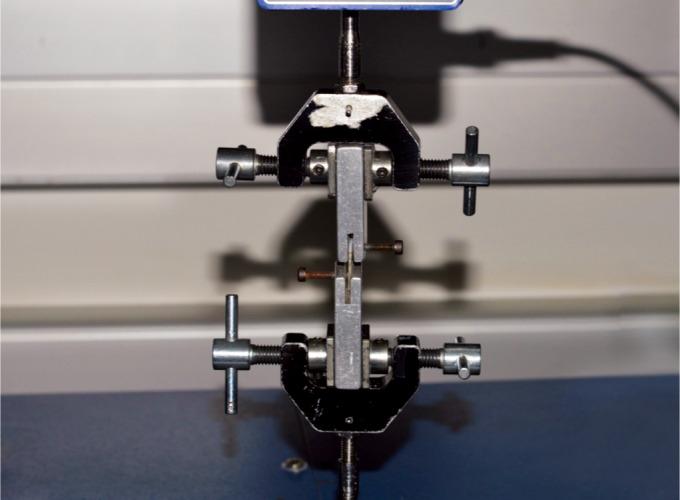
Eighty freshly extracted permanent molars were wet grounded into a flat surface using a diamond disk to expose the superficial dentinal surface. Teeth were etched with 37% phosphoric acid for 15 seconds and rinsed with water and blot dried. Teeth were divided into four groups ( = 20) based on the method of dentin deproteinization. Group I: only etching; group II: deproteinized with 5.25% sodium hypochlorite for 1 minute; group III: deproteinized with 8% bromelain enzyme for 1 minute; and group IV: deproteinized with 8% papain enzyme for 1 minute. All the samples were washed off with distilled water to remove deproteinizing agents. Sample surfaces were blot dried and bonding of the dentin surface was performed and restored with light cure bulk fill composite. Samples were stored in distilled water (37°C/24 hours) and thermocycled. Then, the teeth were longitudinally sectioned and individually fixed to a sectioning block using acrylic resin. The block was mounted on hard tissue microtome and sectioned to get one to three slabs of 1 mm thick sections. The beam was then attached to a custom-made jig using screws subjected to the Instron universal testing machine. A tensile load was applied at a crosshead speed of 0.5 mm/minute until the beam fractured.
RESULTS
Higher mean bond strength was recorded in group IV followed by group III, group II, and group I, respectively. Group III presented a statistically significant highest mean score compared to other study groups with group I and group II ( < 0.001), followed by group IV having significantly higher mean score compared to group I and group II ( < 0.001) and finally a significant difference was observed between group II and group I ( < 0.001). However, the mean microtensile bond strength score did not differ significantly between group III and group IV ( = 0.20).
CONCLUSION
Within the limitations of this present study, the following conclusions were drawn. The microtensile bond strength of dentine tested in various deproteinizing agents is as follows: 8% bromelain > 8% papain > 5.25% NaOCl > control group. Naturally occurring deproteinizing agents, such as bromelain and papain, used in this study have resulted in greater bond strength values when compared to that of traditionally used chemical agent such as NaOCl.
HOW TO CITE THIS ARTICLE
Khatib MS, Devarasanahalli SV, Aswathanarayana RM, Microtensile Bond Strength of Composite Resin Following the Use of Bromelain and Papain as Deproteinizing Agents on Etched Dentin: An Study. Int J Clin Pediatr Dent 2020;13(1):43-47.
目的与目标
本研究旨在评估和比较次氯酸钠、菠萝蛋白酶和木瓜蛋白酶对复合树脂与酸蚀牙本质微拉伸粘结强度的脱蛋白效果。
材料与方法
80颗新鲜拔除的恒牙用金刚石圆盘湿磨成平面,以暴露牙本质表层。牙齿用37%磷酸酸蚀15秒,用水冲洗并吸干。根据牙本质脱蛋白方法将牙齿分为四组(每组n = 20)。第一组:仅酸蚀;第二组:用5.25%次氯酸钠脱蛋白1分钟;第三组:用8%菠萝蛋白酶脱蛋白1分钟;第四组:用8%木瓜蛋白酶脱蛋白1分钟。所有样本用蒸馏水冲洗以去除脱蛋白剂。样本表面吸干后进行牙本质表面粘结,并用光固化大块充填复合树脂修复。样本储存在蒸馏水中(37°C/24小时)并进行热循环。然后,将牙齿纵向切片,并用丙烯酸树脂单独固定在切片块上。将切片块安装在硬组织切片机上,切成1毫米厚的一至三块薄片。然后用螺丝将薄片固定在定制夹具上,置于英斯特朗万能试验机上。以0.5毫米/分钟的十字头速度施加拉伸载荷,直至薄片断裂。
结果
第四组的平均粘结强度最高,其次分别是第三组、第二组和第一组。与第一组和第二组相比,第三组的平均得分在统计学上显著最高(P < 0.001),其次,与第一组和第二组相比,第四组的平均得分显著更高(P < 0.001),最后,第二组和第一组之间观察到显著差异(P < 0.001)。然而,第三组和第四组之间的平均微拉伸粘结强度得分没有显著差异(P = 0.20)。
结论
在本研究的局限性范围内,得出以下结论。在各种脱蛋白剂中测试的牙本质微拉伸粘结强度如下:8%菠萝蛋白酶 > 8%木瓜蛋白酶 > 5.25%次氯酸钠 > 对照组。与传统使用的化学试剂如次氯酸钠相比,本研究中使用的天然脱蛋白剂如菠萝蛋白酶和木瓜蛋白酶产生了更高的粘结强度值。
如何引用本文
Khatib MS, Devarasanahalli SV, Aswathanarayana RM, 用菠萝蛋白酶和木瓜蛋白酶作为脱蛋白剂处理酸蚀牙本质后复合树脂的微拉伸粘结强度:一项研究。国际临床儿科牙科学杂志2020;13(1):43 - 47。



 Zotero 插件