Faculty of Health and Medicine, Division of Health Research, Lancaster University, UK.
Manchester Metropolitan University, UK.
Gerontologist. 2021 Nov 15;61(8):e435-e448. doi: 10.1093/geront/gnaa071.
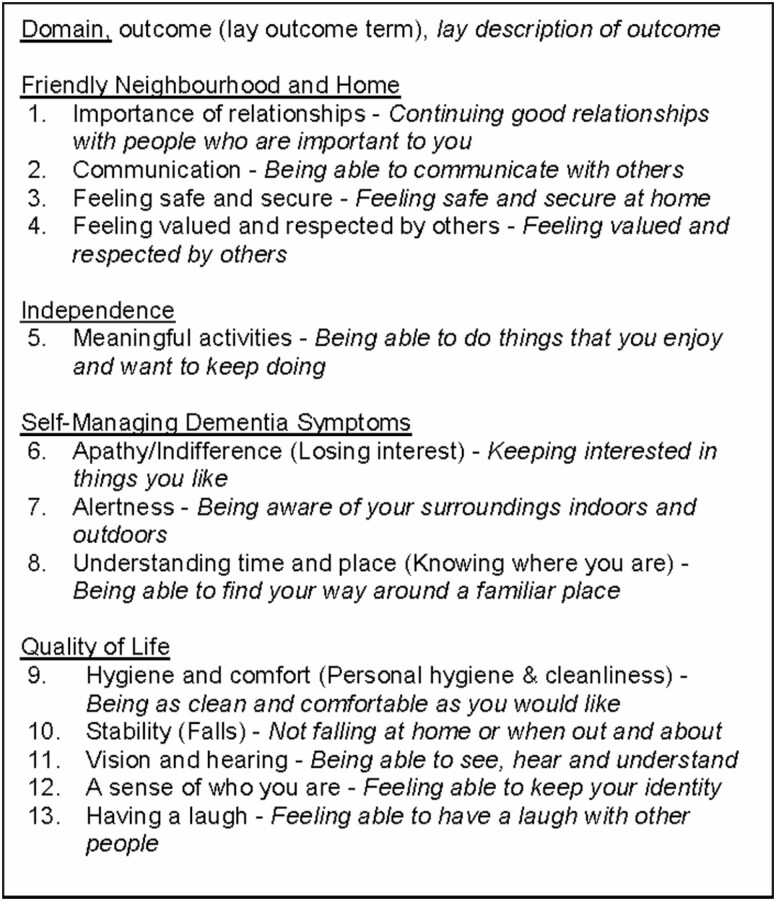
It is questionable whether existing outcome measurement instruments (OMIs) in dementia research reflect what key stakeholders' value. We attained consensus from more than 300 key stakeholders, including people living with dementia, and identified 13 core outcome items for use in nonpharmacological and community-based interventions for people with dementia living at home. In this systematic review, we review OMIs that have previously been used in dementia care research to determine how, or even if, the 13 core outcome items can be measured.
We extracted self-reported OMIs from trials, reviews, and reports of instrument development. Searches were undertaken in the ALOIS database, MEDLINE, PsycINFO, CINAHL, SocINDEX, and COSMIN databases. We aimed to assess the psychometric properties of OMI items for face validity with the core outcome items, content validity, internal consistency, and responsiveness. We held a coresearch workshop involving people living with dementia and care partners in order to ratify the findings.
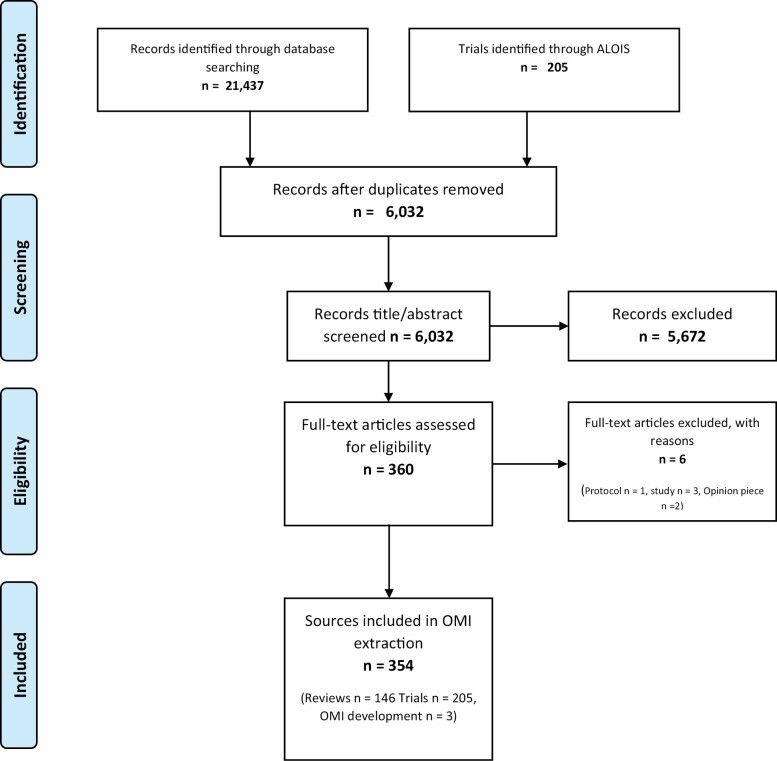
In total 347 OMIs were located from 354 sources. Of these, 76 OMIs met the inclusion criteria. No OMIs were deemed to have sufficient face validity for the core outcome set (COS) items, and no OMIs proceeded to further assessment. The "best" available OMI is the Engagement and Independence in Dementia Questionnaire.
This study provides a practical resource for those designing dementia research trials. Being able to measure the COS items would herald a paradigm shift for dementia research, be responsive to what key stakeholders value and enhance the ability to make comparisons.
现有的痴呆症研究结局测量工具(OMIs)是否能反映关键利益相关者的价值观尚存在疑问。我们让 300 多名关键利益相关者(包括痴呆症患者)达成了共识,并确定了 13 项核心结局指标,用于评估居家痴呆症患者的非药物和社区干预措施。在本系统评价中,我们回顾了之前在痴呆症护理研究中使用的 OMIs,以确定 13 项核心结局指标是否可以用这些 OMIs 进行测量,以及如何进行测量。
我们从试验、综述和仪器开发报告中提取了自我报告的 OMIs。在 ALOIS 数据库、MEDLINE、PsycINFO、CINAHL、SocINDEX 和 COSMIN 数据库中进行了检索。我们旨在评估 OMI 项目与核心结局指标的表面有效性、内容有效性、内部一致性和反应性的心理测量特性。我们还举办了一个核心研究研讨会,让痴呆症患者和护理伙伴参与,以确认研究结果。
共从 354 个来源中找到了 347 个 OMIs。其中,76 个 OMIs符合纳入标准。没有 OMIs 被认为具有足够的核心结局集(COS)项目的表面有效性,也没有 OMIs 进行进一步的评估。“最佳”可用的 OMI 是《痴呆症中的参与和独立性问卷》。
本研究为那些设计痴呆症研究试验的人提供了一个实用的资源。能够测量 COS 项目将为痴呆症研究带来范式转变,对关键利益相关者的价值观做出回应,并增强进行比较的能力。