University of Warwick, Warwick Medical School, Coventry, UK; University Hospitals Coventry & Warwickshire NHS Trust, Coventry, UK.
Institute of Food Sciences, CNR, Avellino, Italy.
Nutr Metab Cardiovasc Dis. 2020 Jul 24;30(8):1227-1235. doi: 10.1016/j.numecd.2020.05.013. Epub 2020 May 29.
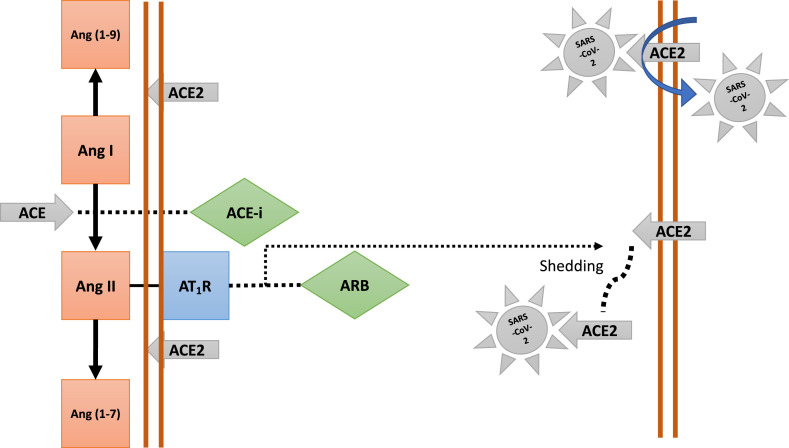
The presence of cardiovascular co-morbidities and the known effects of coronaviruses on the cardiovascular system have called attention to the potential implications for patients with cardiovascular risk factors. This evidence-based viewpoint will address two questions: (a) are individuals with underlying cardiovascular risk factors (e.g. high blood pressure or diabetes) or overt disease (e.g. coronary heart disease, heart failure, kidney disease) more likely to develop severe Covid-19 and to die than those without underlying conditions? (b) does the regular use of angiotensin-converting enzyme inhibitors (ACE-i) or angiotensin-receptor blockers (ARB) make patients more likely to get infected and to die of Covid-19? With a necessary cautionary note that the evidence around the links between Covid-19 and cardiovascular disease is accruing at a fast pace, to date we can conclude that: (a) the greater susceptibility of individuals with underlying cardiovascular conditions to develop more severe Covid-19 with higher mortality rate is likely to be confounded, in part, by age and the type of co-morbidities. Patients with heart failure or chronic kidney disease might show an excess risk; (b) neither ACE-i nor ARB are associated with greater risk of SARS-Cov2 infection, or severity or risk of death in patients with Covid-19. Patients on these drugs should not stop them, unless under strict medical supervision and with the addition of a suitable replacement medicine.
心血管合并症的存在以及已知的冠状病毒对心血管系统的影响引起了人们对心血管危险因素患者潜在影响的关注。本循证观点将回答两个问题:(a) 是否存在潜在心血管危险因素(如高血压或糖尿病)或明显疾病(如冠心病、心力衰竭、肾病)的个体比没有潜在疾病的个体更容易发生严重的 COVID-19 并因此死亡?(b) 血管紧张素转换酶抑制剂(ACE-i)或血管紧张素受体阻滞剂(ARB)的常规使用是否会使患者更容易感染 COVID-19 并因此死亡?需要注意的是,关于 COVID-19 与心血管疾病之间联系的证据正在快速积累,迄今为止,我们可以得出结论:(a) 潜在心血管疾病患者更容易发生更严重的 COVID-19 并伴有更高的死亡率,这可能部分归因于年龄和合并症的类型。心力衰竭或慢性肾病患者可能会表现出更高的风险;(b) ACE-i 和 ARB 均与 SARS-CoV-2 感染风险增加、COVID-19 患者的严重程度或死亡风险增加无关。除非在严格的医疗监督下并添加合适的替代药物,否则不应停止使用这些药物。