Gomez-Soria Isabel, Peralta-Marrupe Patricia, Plo Fernando
University of Zaragoza Ringgold standard institution Zaragoza, Aragón, Spain.
Royal Devon and Exeter Hospital Ringgold standard institution Barrack Road, Exeter EX2 5DW United Kingdom of Great Britain and Northern Ireland.
Dement Neuropsychol. 2020 Apr-Jun;14(2):110-117. doi: 10.1590/1980-57642020dn14-020003.
Non-pharmacological cognitive interventions in mild cognitive impairment have demonstrated promising results in preventing or delaying cognitive impairment and functional disability. Cognitive stimulation seems to improve and maintain cognitive and social activity.
This study aimed to evaluate the impact of a cognitive stimulation program in mild cognitive impairment (MCI) at the cognitive level on activities of daily living (ADLs), and levels of anxiety and depression.
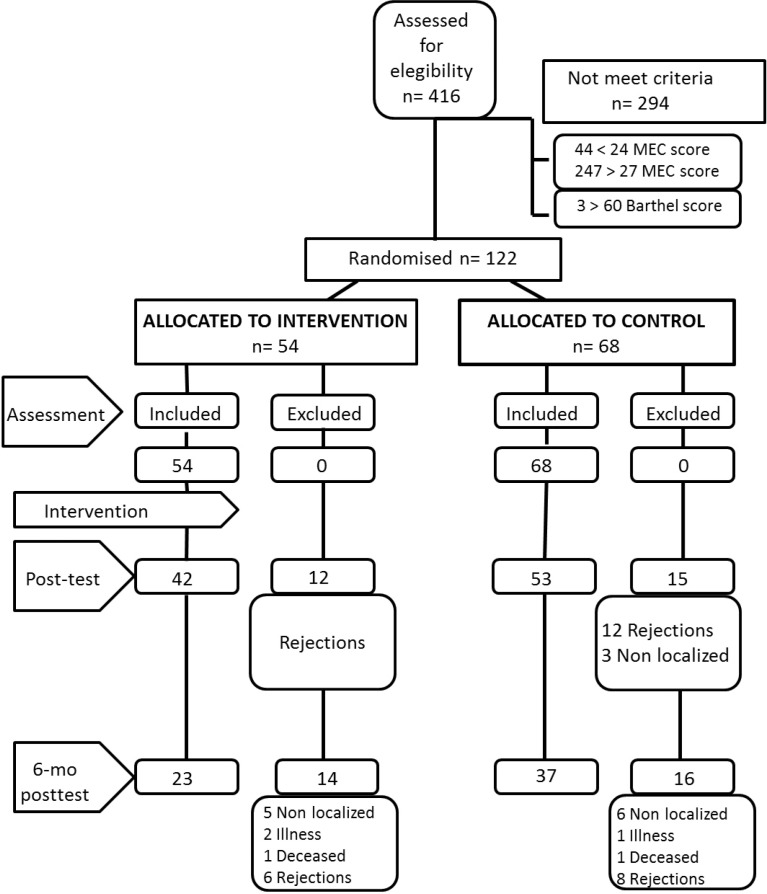
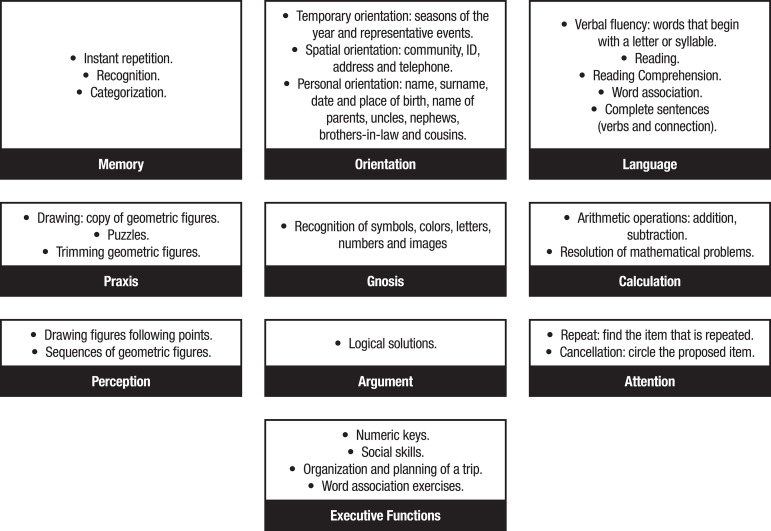
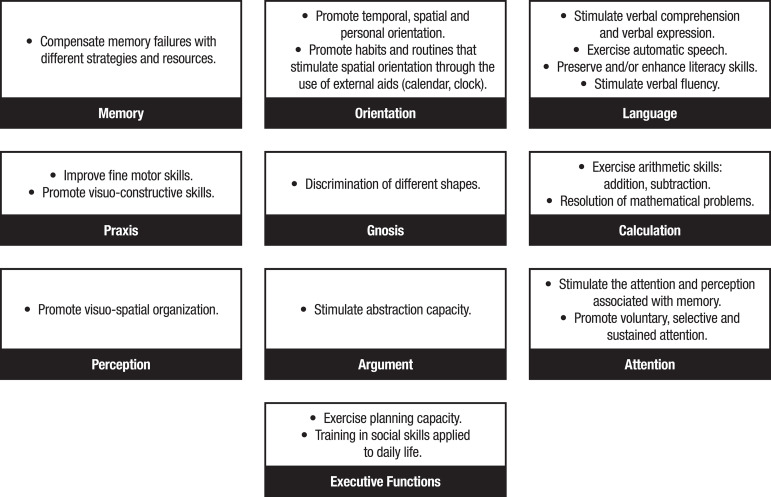
A randomized controlled single-blind trial involving 122 non-institutionalized elderly with a MEC-35 score of 24-27 was conducted. The intervention group (n=54) received the intervention (10-week cognitive stimulation program) and was compared with a control group (n=68) that received no intervention. Follow-up assessments were conducted post-test and at 6 months post-test. The primary outcome was cognitive function determined by changes in scores on the Spanish version (MEC-35) of the Mini-Mental State Examination, while the secondary outcomes were measured by the Barthel Index, Lawton and Brody Scale, Goldberg Questionnaire (anxiety sub-scale) and the Yesavage Geriatric Depression Scale (15-item version).
The intervention group showed a significant improvement in cognitive function at both timepoints, post-test and 6-month follow-up. The Barthel Index was higher in the intervention group, but only on the post-test analysis. The intervention did not improve the performance of instrumental ADLs or depression or anxiety levels.
The findings showed cognitive improvements in an elderly population with MCI in the short and medium-term and improved basic ADLs in the short term. Clinicaltrials.gov Identifier: NCT03831061.
轻度认知障碍的非药物认知干预在预防或延缓认知障碍和功能残疾方面已显示出有前景的结果。认知刺激似乎能改善和维持认知及社交活动。
本研究旨在评估认知刺激项目对轻度认知障碍(MCI)患者认知水平、日常生活活动(ADL)以及焦虑和抑郁水平的影响。
进行了一项随机对照单盲试验,纳入122名非机构化老年人,其MEC - 35评分在24 - 27之间。干预组(n = 54)接受干预(为期10周的认知刺激项目),并与未接受干预的对照组(n = 68)进行比较。在测试后和测试后6个月进行随访评估。主要结局是通过简易精神状态检查西班牙语版(MEC - 35)评分变化确定的认知功能,次要结局通过巴氏指数、Lawton和Brody量表、戈德堡问卷(焦虑子量表)以及Yesavage老年抑郁量表(15项版本)进行测量。
干预组在测试后和6个月随访这两个时间点的认知功能均有显著改善。干预组的巴氏指数更高,但仅在测试后分析中如此。该干预并未改善工具性ADL的表现或抑郁及焦虑水平。
研究结果表明,患有MCI的老年人群在短期和中期认知功能得到改善,且短期内基本ADL有所改善。Clinicaltrials.gov标识符:NCT03831061。