Center for Computational Surgery, Houston Methodist Research Institute, Houston, TX, USA.
Department of Surgery, Houston Methodist Hospital, Houston, TX, USA.
BMC Cancer. 2020 Jun 29;20(1):605. doi: 10.1186/s12885-020-07084-w.
Bone metastasis is the most frequent complication in prostate cancer patients and associated outcome remains fatal. Radium223 (Rad223), a bone targeting radioisotope improves overall survival in patients (3.6 months vs. placebo). However, clinical response is often followed by relapse and disease progression, and associated mechanisms of efficacy and resistance are poorly understood. Research efforts to overcome this gap require a substantial investment of time and resources. Computational models, integrated with experimental data, can overcome this limitation and drive research in a more effective fashion.
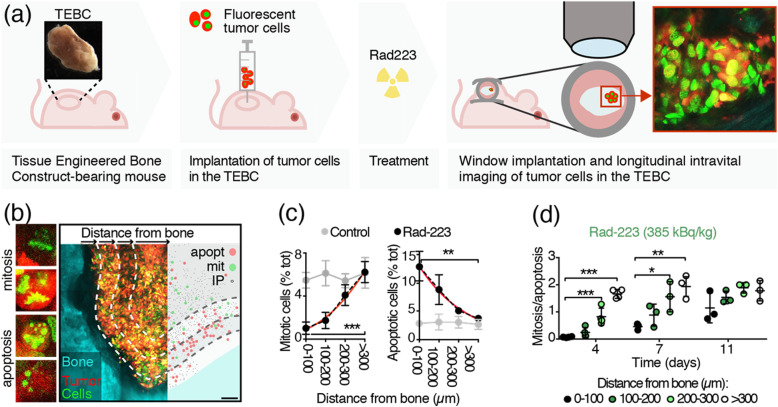
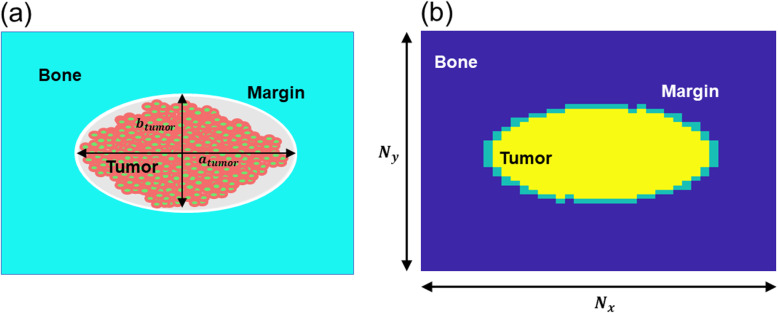
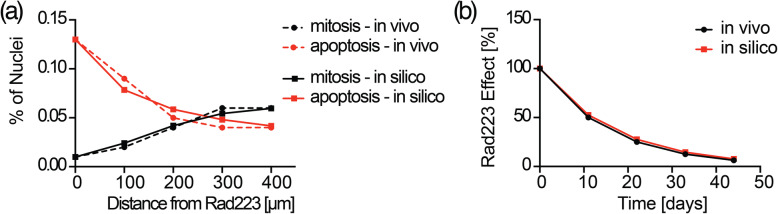
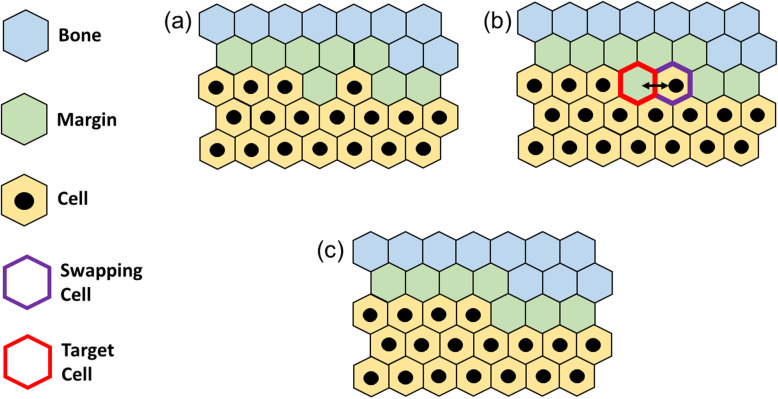
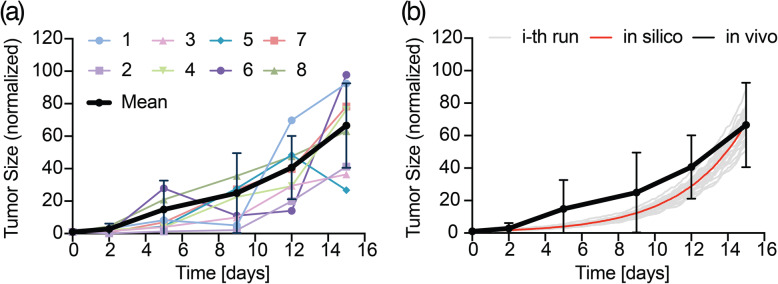
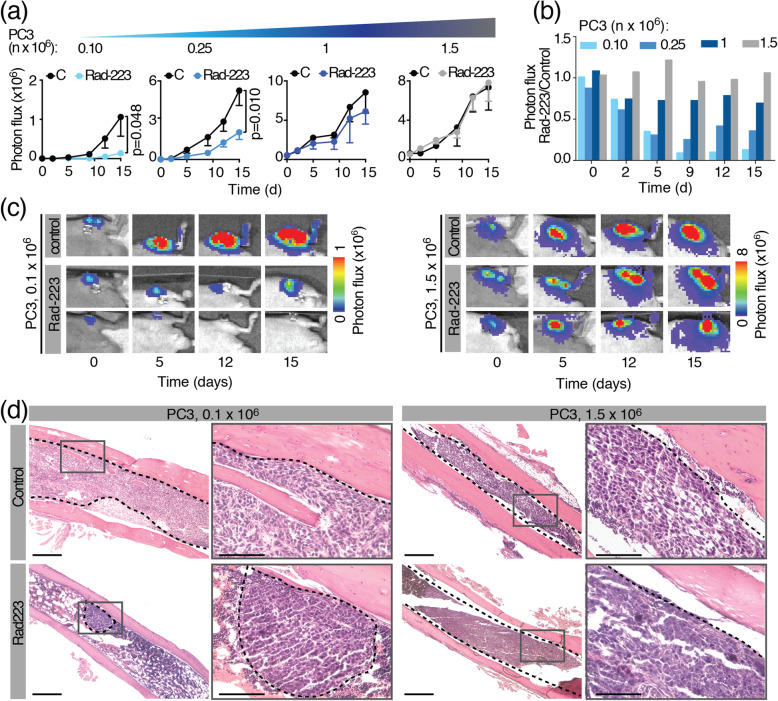
Accordingly, we developed a predictive agent-based model of prostate cancer bone metastasis progression and response to Rad223 as an agile platform to maximize its efficacy. The driving coefficients were calibrated on ad hoc experimental observations retrieved from intravital microscopy and the outcome further validated, in vivo.
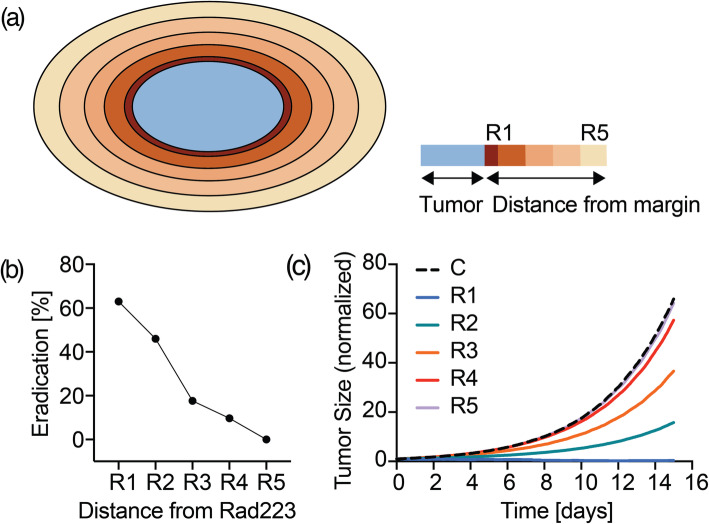
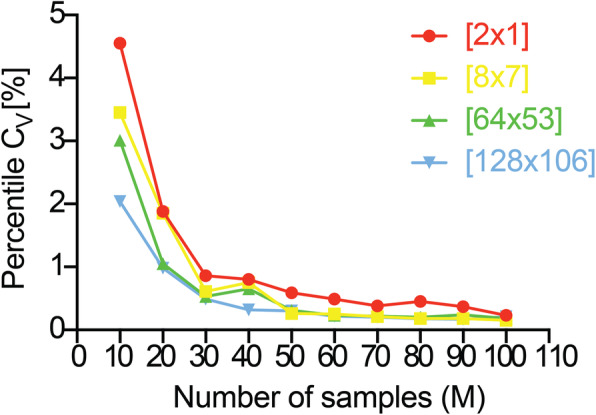
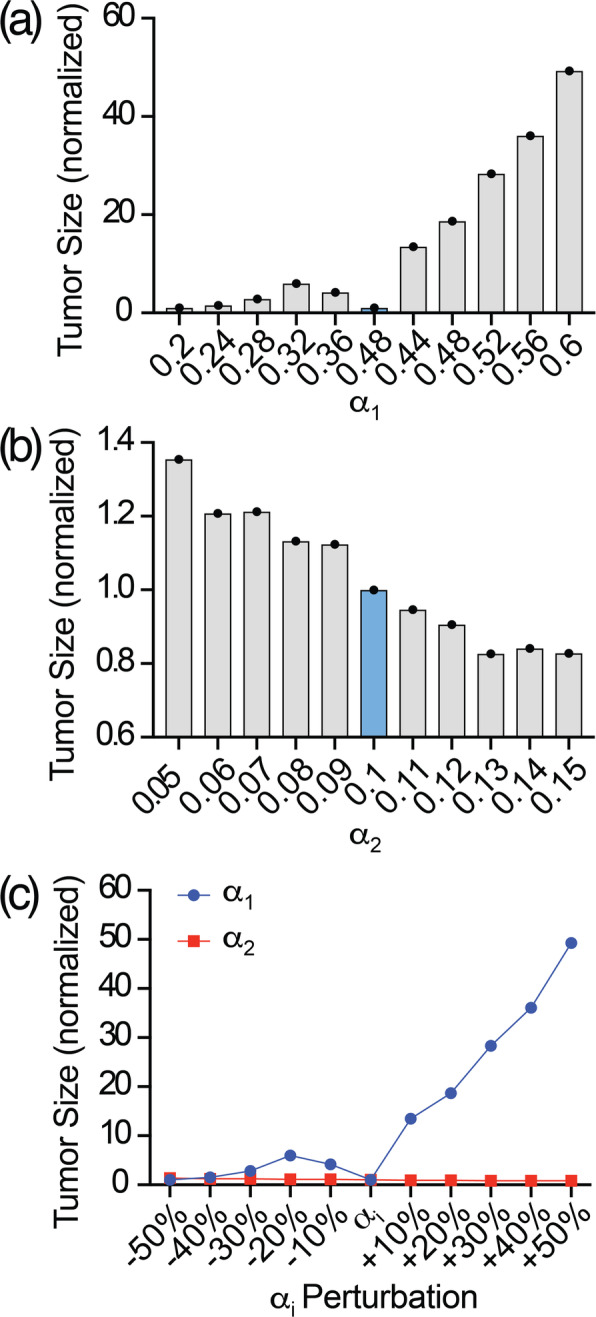
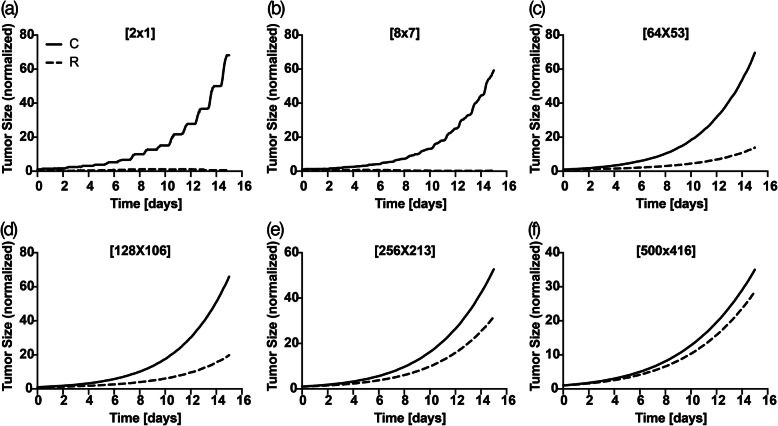
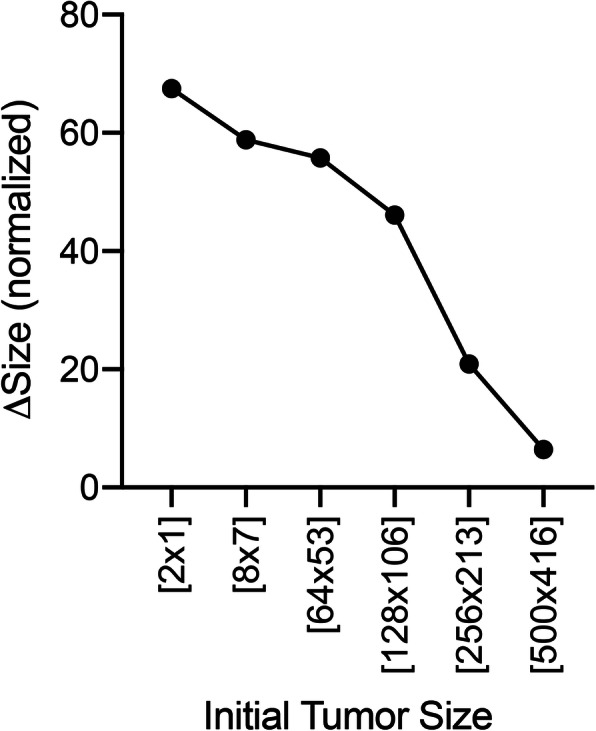
In this work we offered a detailed description of our data-integrated computational infrastructure, tested its accuracy and robustness, quantified the uncertainty of its driving coefficients, and showed the role of tumor size and distance from bone on Rad223 efficacy. In silico tumor growth, which is strongly driven by its mitotic character as identified by sensitivity analysis, matched in vivo trend with 98.3% confidence. Tumor size determined efficacy of Rad223, with larger lesions insensitive to therapy, while medium- and micro-sized tumors displayed up to 5.02 and 152.28-fold size decrease compared to control-treated tumors, respectively. Eradication events occurred in 65 ± 2% of cases in micro-tumors only. In addition, Rad223 lost any therapeutic effect, also on micro-tumors, for distances bigger than 400 μm from the bone interface.
This model has the potential to be further developed to test additional bone targeting agents such as other radiopharmaceuticals or bisphosphonates.
骨转移是前列腺癌患者最常见的并发症,相关结局仍然是致命的。镭 223(Rad223)是一种靶向骨骼的放射性同位素,可提高患者的总生存率(3.6 个月对安慰剂)。然而,临床反应通常伴随着复发和疾病进展,其疗效和耐药的相关机制尚未得到充分理解。克服这一差距的研究工作需要大量的时间和资源投入。将实验数据与计算模型相结合,可以克服这一限制,并以更有效的方式推动研究。
因此,我们开发了一种预测性基于代理的前列腺癌骨转移进展和对 Rad223 反应的模型,作为最大限度提高其疗效的敏捷平台。在体内进行验证的同时,通过对从活体显微镜获得的特定实验观察结果进行校准,对驱动系数进行了校准。
在这项工作中,我们详细描述了我们的数据集成计算基础设施,测试了其准确性和稳健性,量化了其驱动系数的不确定性,并展示了肿瘤大小和与骨骼的距离对 Rad223 疗效的影响。通过敏感性分析确定的肿瘤有丝分裂特征强烈驱动了体内肿瘤生长,其在体内的趋势与 98.3%的置信区间相匹配。肿瘤大小决定了 Rad223 的疗效,较大的病变对治疗不敏感,而中大和微肿瘤与对照治疗的肿瘤相比,分别减少了 5.02 倍和 152.28 倍。只有在微肿瘤中,65±2%的情况下会发生根除事件。此外,对于距离骨骼界面大于 400μm 的肿瘤,Rad223 也会失去任何治疗效果。
该模型具有进一步发展的潜力,可以测试其他骨靶向药物,如其他放射性药物或双膦酸盐。