Department of Microbiology and Virology, Faculty of Medicine, Mashhad University of Medical Sciences, Mashhad, Iran.
Antimicrobial Resistance Research Center, Buali Research Institute, Mashhad University of Medical Sciences, Mashhad, Iran.
BMC Public Health. 2020 Jun 29;20(1):1020. doi: 10.1186/s12889-020-08962-5.
Although many species of mycoplasmas regard as normal flora, but some species causes serious genital disease. In Iran several epidemiological studies have documented the prevalence of Mycoplasma hominis, M. genitalium and Ureaplasma urealyticum in genital disorders. This meta-analysis is going to represent the prevalence of M. hominis, M. genitalium and U. urealyticum among Iranian couples and the correlation between mycoplasmas infection and infertility.
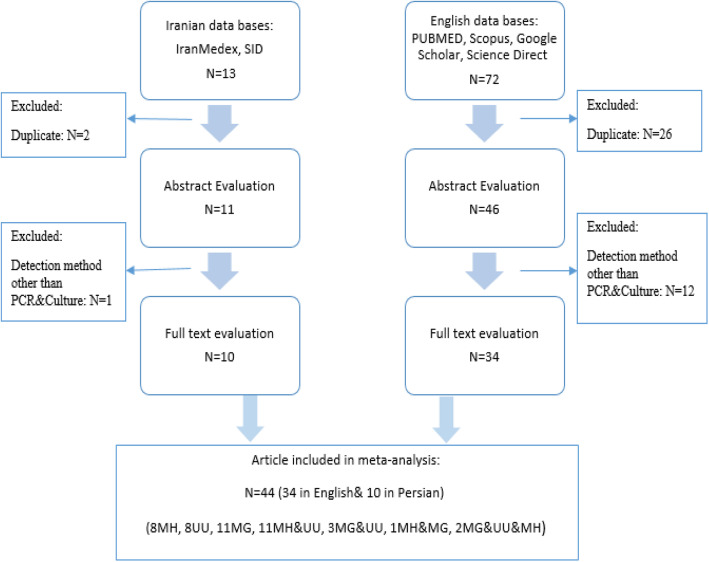
We search online databases from January 2000 to June 2019. We used following MeSH keywords (Prevalence, M. hominis, M. genitalium, U. urealyticum, male, female, fertility, Infertility, genitourinary tract infection and Iran) with all possible combinations with "OR" and "AND". Finally, forty-four articles from 2670 were chosen for data extraction and analysis by software using STATA version 14.0.
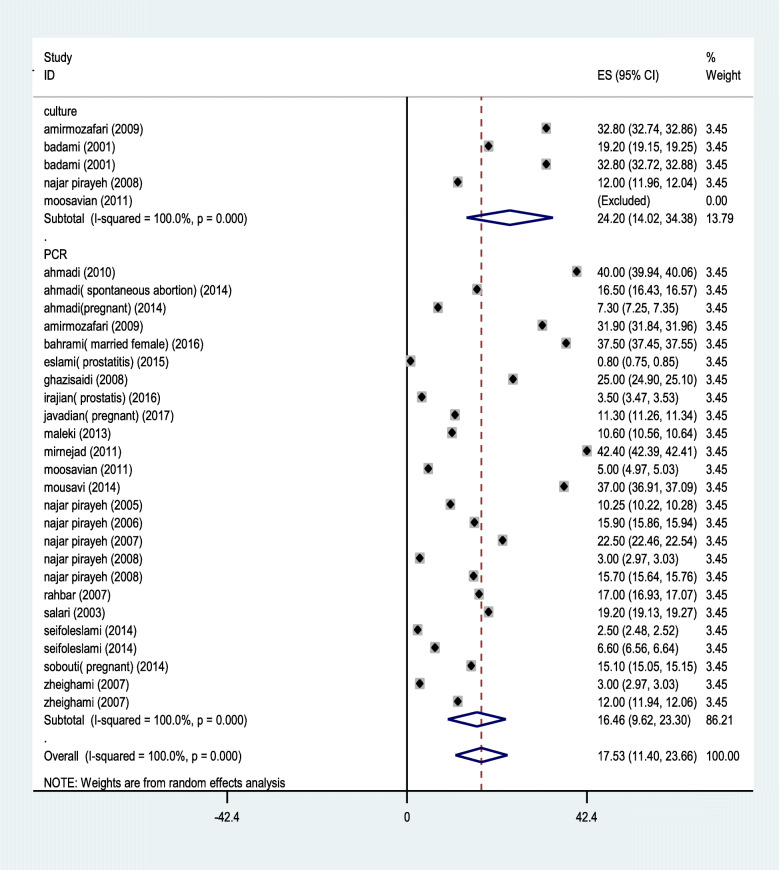
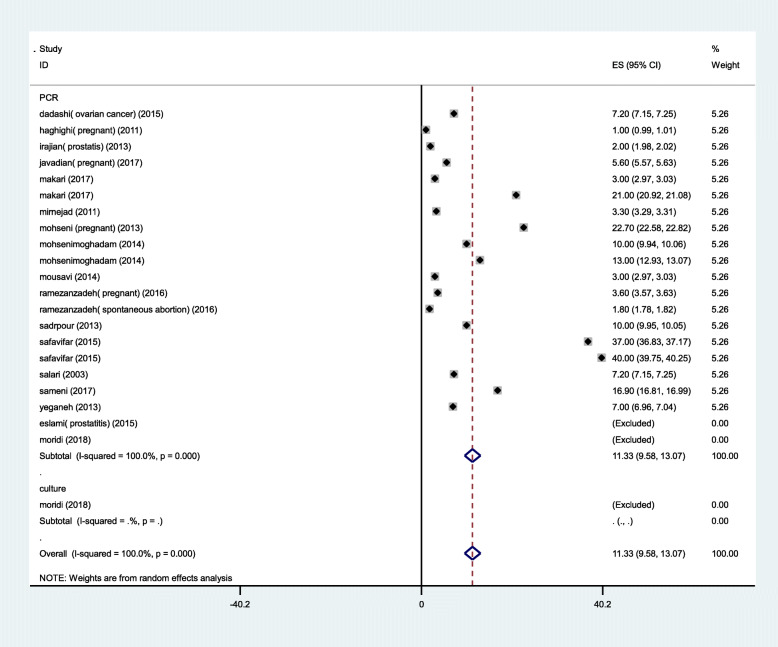
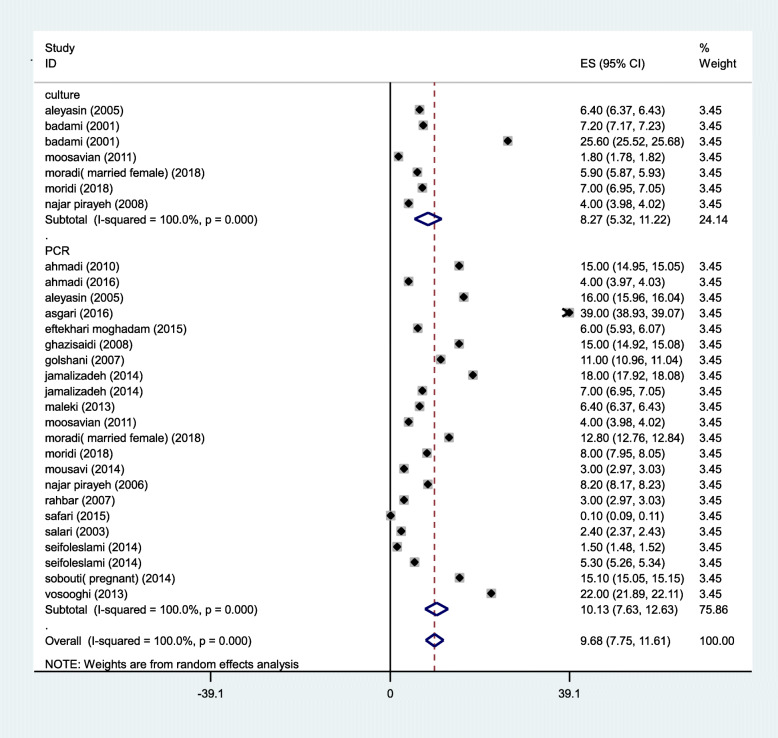
This meta-analysis revealed that the prevalence of U. urealyticum was 17.53% in Iran and the prevalence of M. genitalium and M. hominis were 11.33 and 9.68% respectively. The rate of M. genitalium, M. hominis and U. urealyticum infection in women with symptoms of genitourinary tract infection was higher than men with genitourinary tract infection (6.46% vs 5.4, 7.67% vs 5.88 and 21.04% vs 12.13%, respectively). As expected, the prevalence of M. genitalium, U. urealyticum and M. hominis among infertile women (12.73, 19.58 and 10.81%) were higher than fertile women (3%, 10. 85% and 4. 35%). Similarly, the prevalence of M. hominis and U. urealyticum among infertile men (14 and 21.18%) were higher than fertile men (4 and 3%). Based on this analysis, the rate of U. urealyticum was higher than M. genitalium and M. hominis among infertile men and women compared to the fertile group. The prevalence rate of M. genitalium, M. hominis and U. urealyticum in central provinces is higher than other parts of Iran.
This meta-analysis reemphasizes a significant relationship between the infertility rate and U. urealyticum, M. genitalium and M. hominis infections. Our finding help to plan the prevalence map of M. hominis, M. genitalium and U. urealyticum in Iran but further studies are needed to suggest routine screening of the pathogens.
虽然许多种支原体被视为正常菌群,但有些种会导致严重的生殖器疾病。在伊朗,几项流行病学研究记录了人型支原体、生殖支原体和脲原体在生殖器疾病中的流行情况。这项荟萃分析旨在描述伊朗夫妇中人型支原体、生殖支原体和脲原体的流行情况,以及支原体感染与不孕之间的关系。
我们从 2000 年 1 月至 2019 年 6 月在在线数据库中进行了搜索。我们使用了以下 MeSH 关键词(患病率、人型支原体、生殖支原体、脲原体、男性、女性、生育力、不孕、泌尿生殖道感染和伊朗),并与“OR”和“AND”进行了所有可能的组合。最后,使用 STATA 版本 14.0 软件从 2670 篇文章中选择了 44 篇进行数据提取和分析。
这项荟萃分析显示,脲原体在伊朗的流行率为 17.53%,生殖支原体和人型支原体的流行率分别为 11.33%和 9.68%。有泌尿生殖道感染症状的女性中生殖支原体、人型支原体和脲原体感染的发生率高于有泌尿生殖道感染的男性(分别为 6.46%对 5.4%、7.67%对 5.88%和 21.04%对 12.13%)。如预期的那样,不孕妇女中人型支原体、脲原体和生殖支原体的流行率(分别为 12.73%、19.58%和 10.81%)高于生育妇女(3%、10.85%和 4.35%)。同样,不孕男性中人型支原体和脲原体的流行率(分别为 14%和 21.18%)高于生育男性(分别为 4%和 3%)。基于这项分析,在不孕男性和女性中,脲原体的流行率高于生殖支原体和人型支原体,而在生育组中则相反。在伊朗,中央省份的生殖支原体、人型支原体和脲原体的流行率高于其他地区。
这项荟萃分析再次强调了不孕率与脲原体、生殖支原体和人型支原体感染之间的显著关系。我们的研究结果有助于制定伊朗人型支原体、生殖支原体和脲原体的流行地图,但需要进一步研究来建议对病原体进行常规筛查。