Departamento de Infectómica y Patogénesis Molecular, Centro de Investigación y de Estudios Avanzados del IPN, Ciudad de México, Mexico.
Facultad de Estudios Superiores Iztacala, Universidad Nacional Autónoma de México, Tlanepantla, Estado de México, Mexico.
Genome Biol Evol. 2020 Oct 1;12(10):1734-1750. doi: 10.1093/gbe/evaa129.
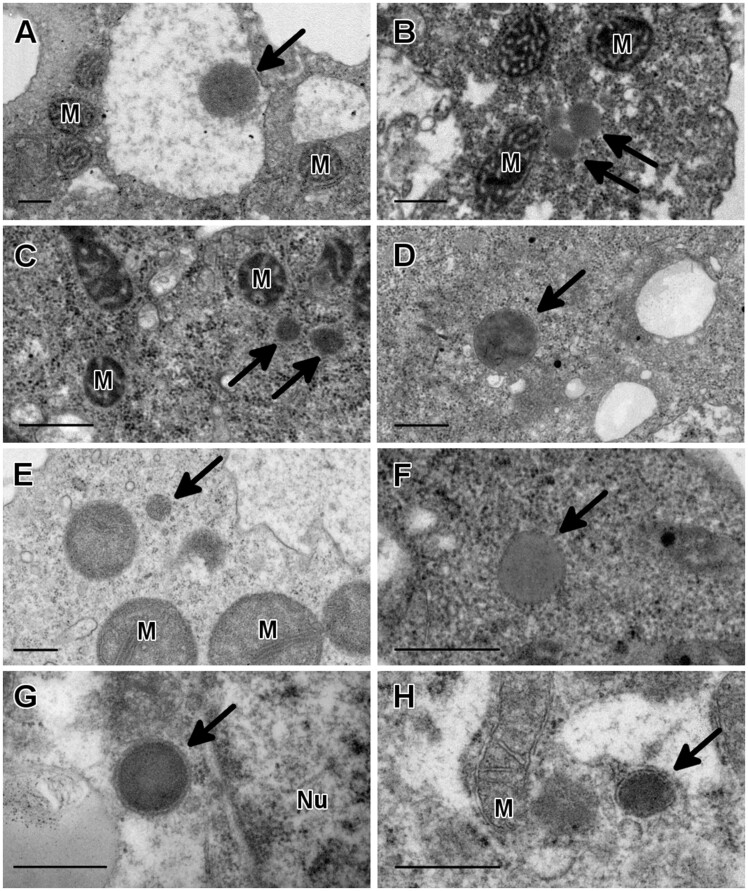
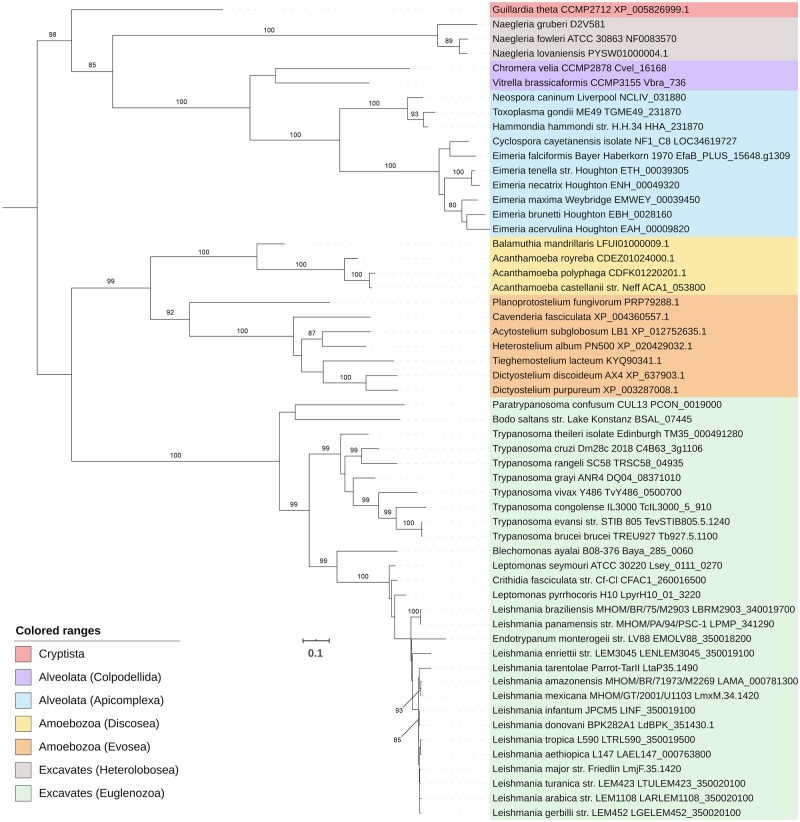
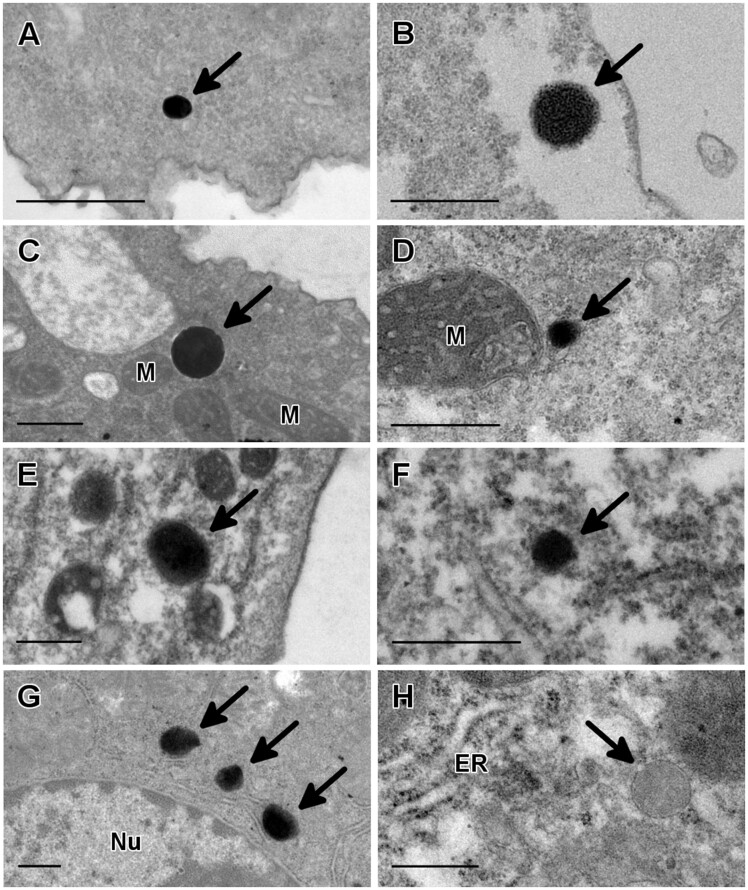
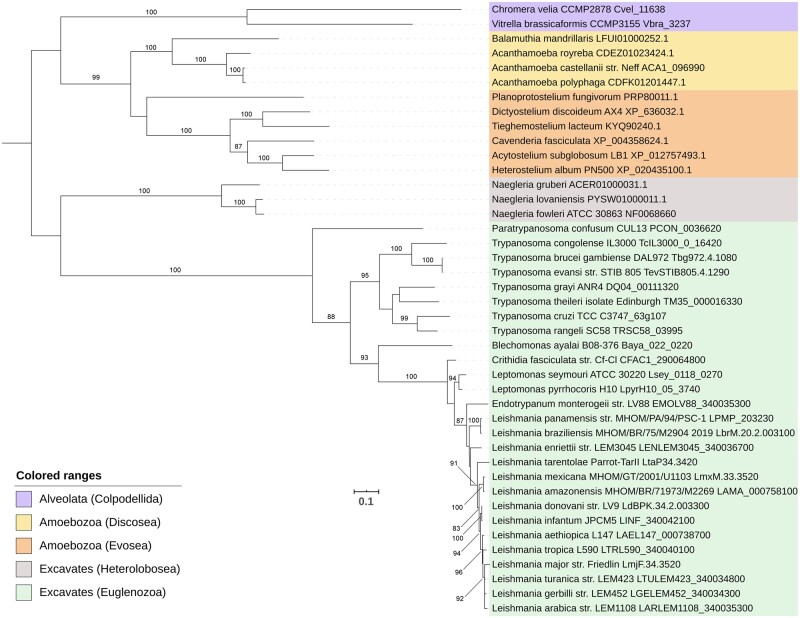
Peroxisomes perform various metabolic processes that are primarily related to the elimination of reactive oxygen species and oxidative lipid metabolism. These organelles are present in all major eukaryotic lineages, nevertheless, information regarding the presence of peroxisomes in opportunistic parasitic protozoa is scarce and in many cases it is still unknown whether these organisms have peroxisomes at all. Here, we performed ultrastructural, cytochemical, and bioinformatic studies to investigate the presence of peroxisomes in three genera of free-living amoebae from two different taxonomic groups that are known to cause fatal infections in humans. By transmission electron microscopy, round structures with a granular content limited by a single membrane were observed in Acanthamoeba castellanii, Acanthamoeba griffini, Acanthamoeba polyphaga, Acanthamoeba royreba, Balamuthia mandrillaris (Amoebozoa), and Naegleria fowleri (Heterolobosea). Further confirmation for the presence of peroxisomes was obtained by treating trophozoites in situ with diaminobenzidine and hydrogen peroxide, which showed positive reaction products for the presence of catalase. We then performed comparative genomic analyses to identify predicted peroxin homologues in these organisms. Our results demonstrate that a complete set of peroxins-which are essential for peroxisome biogenesis, proliferation, and protein import-are present in all of these amoebae. Likewise, our in silico analyses allowed us to identify a complete set of peroxins in Naegleria lovaniensis and three novel peroxin homologues in Naegleria gruberi. Thus, our results indicate that peroxisomes are present in these three genera of free-living amoebae and that they have a similar peroxin complement despite belonging to different evolutionary lineages.
过氧化物酶体执行各种代谢过程,主要与活性氧物质的消除和氧化脂质代谢有关。这些细胞器存在于所有主要的真核生物谱系中,然而,关于机会性寄生原生动物中过氧化物酶体的存在的信息很少,在许多情况下,仍然不知道这些生物体是否存在过氧化物酶体。在这里,我们进行了超微结构、细胞化学和生物信息学研究,以调查在两个不同分类群的三种自由生活变形虫属中过氧化物酶体的存在情况,这两种变形虫属已知会导致人类致命感染。通过透射电子显微镜观察,在棘阿米巴castellanii、棘阿米巴griffini、棘阿米巴polyphaga、棘阿米巴royreba、巴尔马西亚曼德里拉里斯(变形虫)和纳格尔里亚 fowleri(异变形虫)中观察到具有颗粒状内容物的圆形结构,这些结构被单一膜限制。进一步通过用二氨基联苯胺和过氧化氢原位处理滋养体来证实过氧化物酶体的存在,这显示了存在过氧化氢酶的阳性反应产物。然后,我们进行了比较基因组分析,以鉴定这些生物体中预测的过氧化物酶同源物。我们的结果表明,一套完整的过氧化物酶体——对于过氧化物酶体的生物发生、增殖和蛋白质导入是必不可少的——存在于所有这些变形虫中。同样,我们的计算机分析允许我们在纳格尔里亚 lovaniensis 中鉴定出一套完整的过氧化物酶体和在纳格尔里亚 gruberi 中鉴定出三个新的过氧化物酶体同源物。因此,我们的结果表明,过氧化物酶体存在于这三种自由生活的变形虫属中,尽管它们属于不同的进化谱系,但它们具有相似的过氧化物酶体成分。