Julia da Silva Pessoa Vieira Carla, José Ferreira da Silva David, Rigotti Kubiszeski Janaína, Ceschini Machado Laís, Pena Lindomar José, Vieira de Morais Bronzoni Roberta, da Luz Wallau Gabriel
Health Sciences Institute, Federal University of Mato Grosso, Sinop 78550-728, MT, Brazil.
Aggeu Magalhães Institute, Oswaldo Cruz Foundation, Recife 50670-420, PE, Brazil.
Trop Med Infect Dis. 2020 Jun 26;5(2):105. doi: 10.3390/tropicalmed5020105.
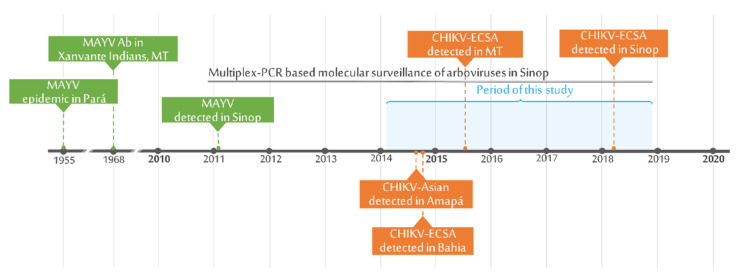
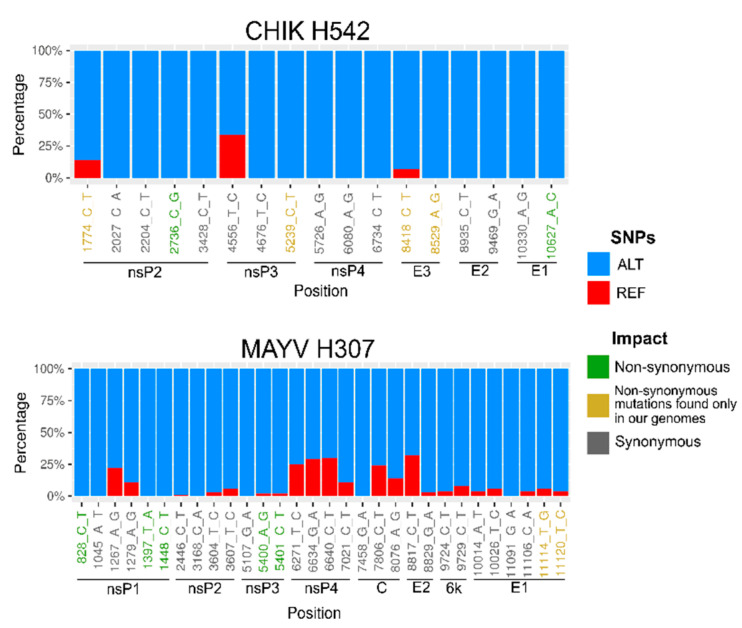
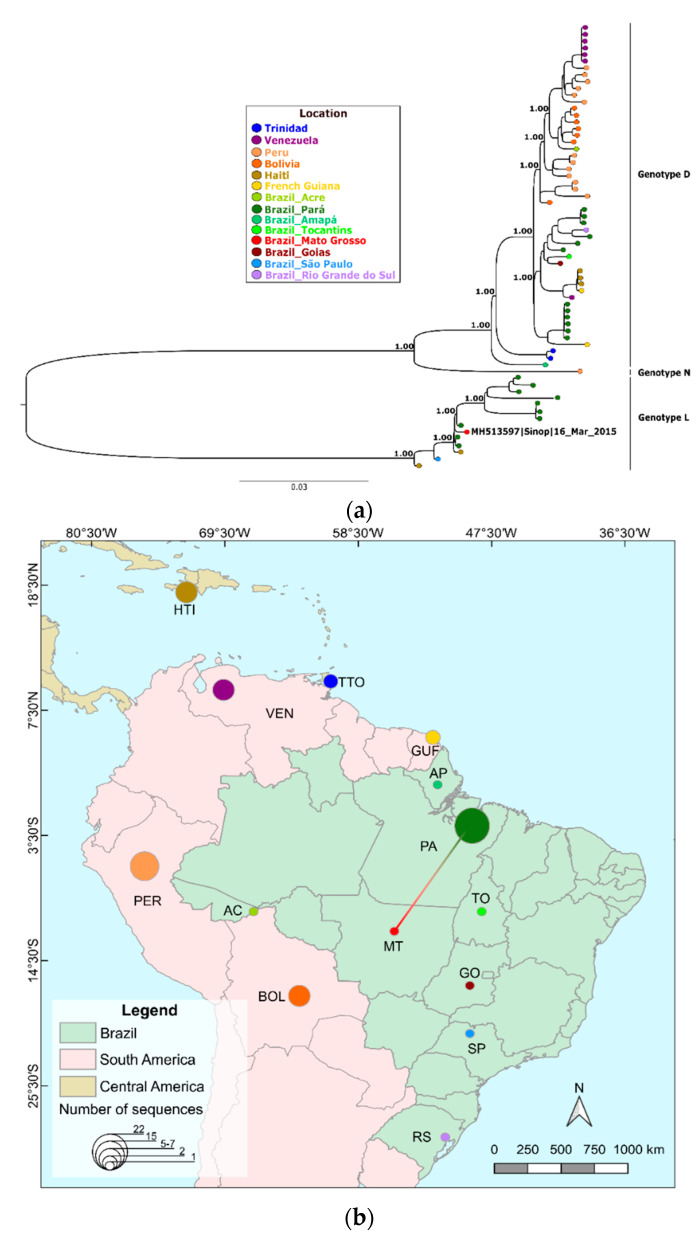
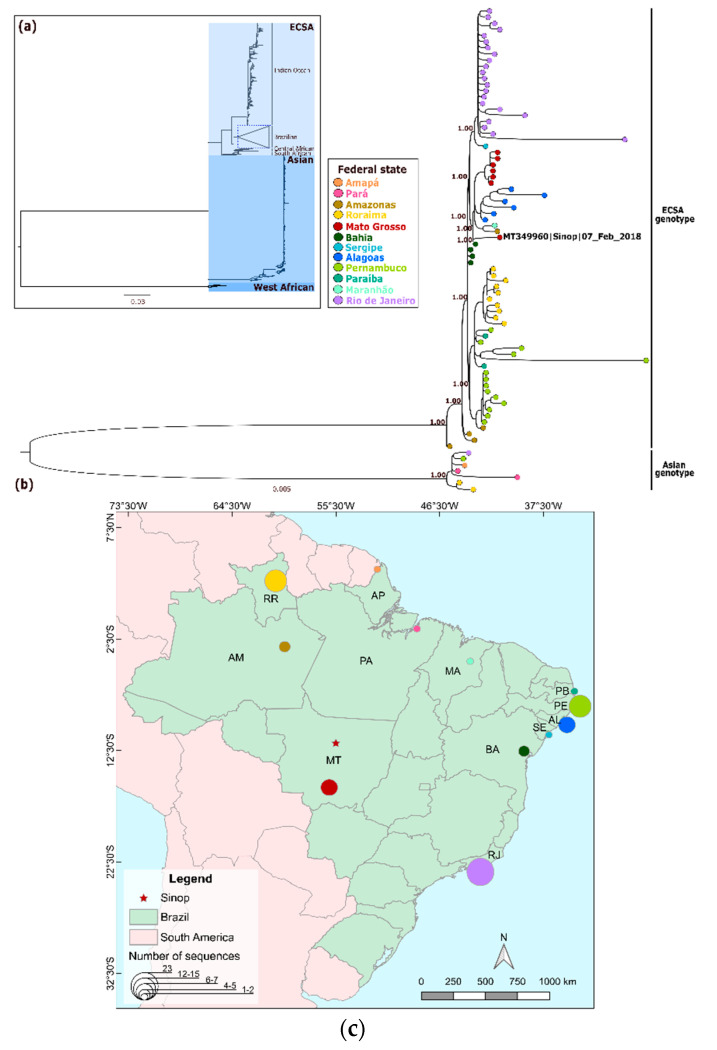
Anthropic changes on the edges of the tropical forests may facilitate the emergence of new viruses from the sylvatic environment and the simultaneous circulation of sylvatic and urban viruses in the human population. In this study, we investigated the presence of arboviruses (arthropod-borne viruses) in the sera of 354 patients, sampled from February 2014 to October 2018 in Sinop city. We sequenced the complete genomes of one chikungunya virus (CHIKV)-positive and one out of the 33 Mayaro virus (MAYV)-positive samples. The CHIKV genome obtained here belongs to the East/Central/South African (ECSA) genotype and the MAYV genome belongs to the L genotype. These genomes clustered with other viral strains from different Brazilian states, but the CHIKV strain circulating in Sinop did not cluster with other genomes from the Mato Grosso state, suggesting that at least two independent introductions of this virus occurred in Mato Grosso. Interestingly, the arrival of CHIKV in Sinop seems to not have caused a surge in human cases in the following years, as observed in the rest of the state, suggesting that cross immunity from MAYV infection might be protecting the population from CHIKV infection. These findings reinforce the need for continued genomic surveillance in order to evaluate how simultaneously circulating alphaviruses infecting the human population will unfold.
热带森林边缘的人为变化可能会促使新病毒从森林环境中出现,并导致森林病毒和城市病毒在人群中同时传播。在本研究中,我们调查了2014年2月至2018年10月在锡诺普市采集的354例患者血清中虫媒病毒(节肢动物传播病毒)的存在情况。我们对1例基孔肯雅病毒(CHIKV)阳性样本和33例马亚罗病毒(MAYV)阳性样本中的1例进行了全基因组测序。此处获得的CHIKV基因组属于东非/中非/南非(ECSA)基因型,MAYV基因组属于L基因型。这些基因组与来自巴西不同州的其他病毒株聚类,但在锡诺普市传播的CHIKV毒株并未与来自马托格罗索州的其他基因组聚类,这表明该病毒在马托格罗索州至少有两次独立传入。有趣的是,与该州其他地区不同,CHIKV在锡诺普市出现后,在接下来的几年里似乎并未导致人类病例激增,这表明MAYV感染产生的交叉免疫可能保护了人群免受CHIKV感染。这些发现强化了持续进行基因组监测的必要性,以便评估同时传播的感染人群的甲病毒将如何发展。