Webb Emily M, Compton Austin, Rai Pallavi, Chuong Christina, Paulson Sally L, Tu Zhijian, Weger-Lucarelli James
Department of Entomology, Fralin Life Sciences Institute, Virginia Polytechnic Institute and State University, Blacksburg, VA, United States.
Department of Biochemistry, Fralin Life Sciences Institute, Virginia Polytechnic Institute and State University, Blacksburg, VA, United States.
Front Microbiol. 2023 Jun 12;14:1189176. doi: 10.3389/fmicb.2023.1189176. eCollection 2023.
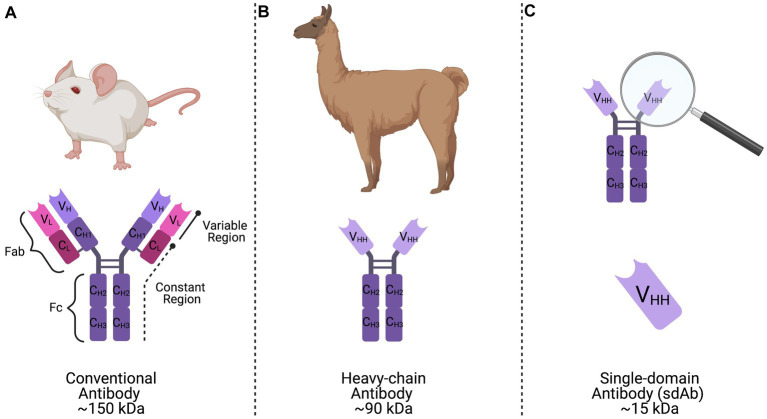
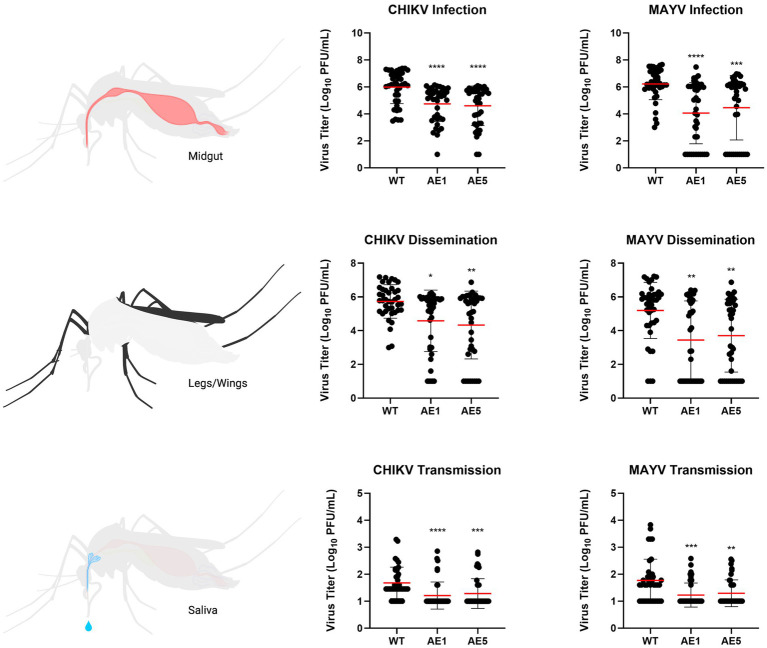
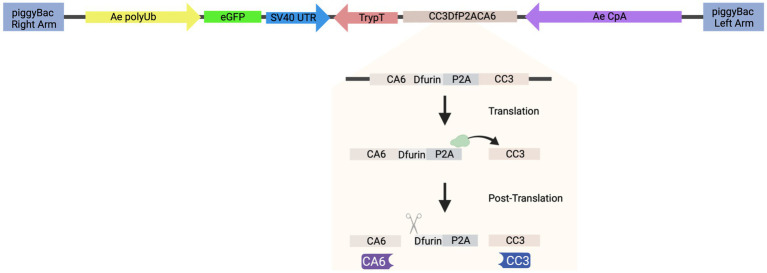
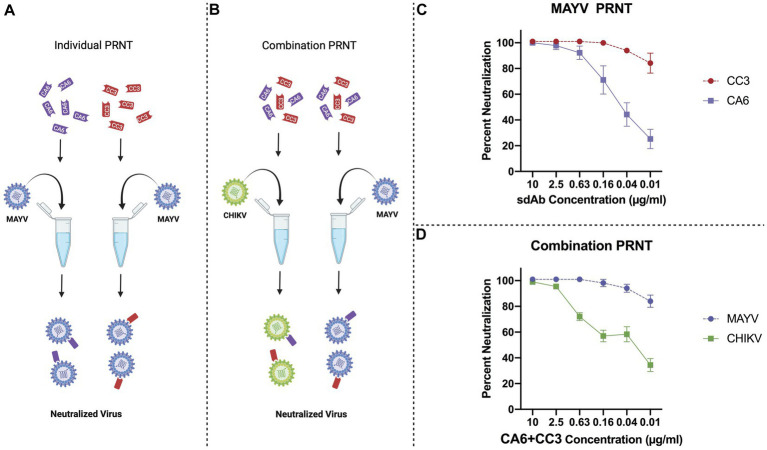
Chikungunya virus (CHIKV) and Mayaro virus (MAYV) are closely related alphaviruses that cause acute febrile illness accompanied by an incapacitating polyarthralgia that can persist for years following initial infection. In conjunction with sporadic outbreaks throughout the sub-tropical regions of the Americas, increased global travel to CHIKV- and MAYV-endemic areas has resulted in imported cases of MAYV, as well as imported cases and autochthonous transmission of CHIKV, within the United States and Europe. With increasing prevalence of CHIKV worldwide and MAYV throughout the Americas within the last decade, a heavy focus has been placed on control and prevention programs. To date, the most effective means of controlling the spread of these viruses is through mosquito control programs. However, current programs have limitations in their effectiveness; therefore, novel approaches are necessary to control the spread of these crippling pathogens and lessen their disease burden. We have previously identified and characterized an anti-CHIKV single-domain antibody (sdAb) that potently neutralizes several alphaviruses including Ross River virus and Mayaro virus. Given the close antigenic relationship between MAYV and CHIKV, we formulated a single defense strategy to combat both emerging arboviruses: we generated transgenic mosquitoes that express two camelid-derived anti-CHIKV sdAbs. Following an infectious bloodmeal, we observed significant reduction in CHIKV and MAYV replication and transmission potential in sdAb-expressing transgenic compared to wild-type mosquitoes; thus, this strategy provides a novel approach to controlling and preventing outbreaks of these pathogens that reduce quality of life throughout the tropical regions of the world.
基孔肯雅病毒(CHIKV)和马亚罗病毒(MAYV)是密切相关的甲病毒,它们会引发急性发热疾病,并伴有使人衰弱的多关节痛,这种疼痛在初次感染后可能会持续数年。随着美洲亚热带地区零星爆发疫情,前往CHIKV和MAYV流行地区的全球旅行增加,导致美国和欧洲出现了MAYV输入病例,以及CHIKV输入病例和本地传播。在过去十年中,随着CHIKV在全球范围内以及MAYV在美洲各地的流行率不断上升,人们将重点大量放在了控制和预防计划上。迄今为止,控制这些病毒传播的最有效方法是通过蚊虫控制计划。然而,目前的计划在有效性方面存在局限性;因此,需要新的方法来控制这些致残病原体的传播并减轻其疾病负担。我们之前已经鉴定并表征了一种抗CHIKV单域抗体(sdAb),它能有效中和包括罗斯河病毒和马亚罗病毒在内的几种甲病毒。鉴于MAYV和CHIKV之间密切的抗原关系,我们制定了一种单一防御策略来对抗这两种新兴虫媒病毒:我们培育了表达两种骆驼科来源的抗CHIKV sdAb的转基因蚊子。在进行感染性血餐喂养后,我们观察到与野生型蚊子相比,表达sdAb的转基因蚊子体内CHIKV和MAYV的复制及传播潜力显著降低;因此,该策略为控制和预防这些病原体的爆发提供了一种新方法,这些病原体降低了世界热带地区人们的生活质量。