Department of Medical Biology, University of Split School of Medicine, Soltanska 2, 21000, Split, Croatia.
Department of Clinical Nutrition, Faculty of Health Studies, University of Rijeka, 51000, Rijeka, Croatia.
Sci Rep. 2020 Jun 30;10(1):10670. doi: 10.1038/s41598-020-67719-7.
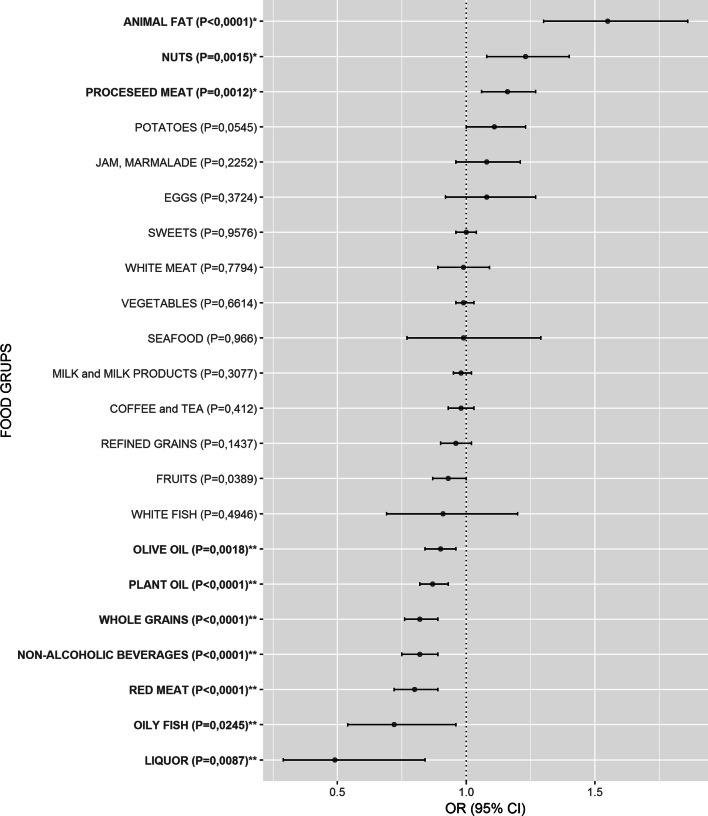
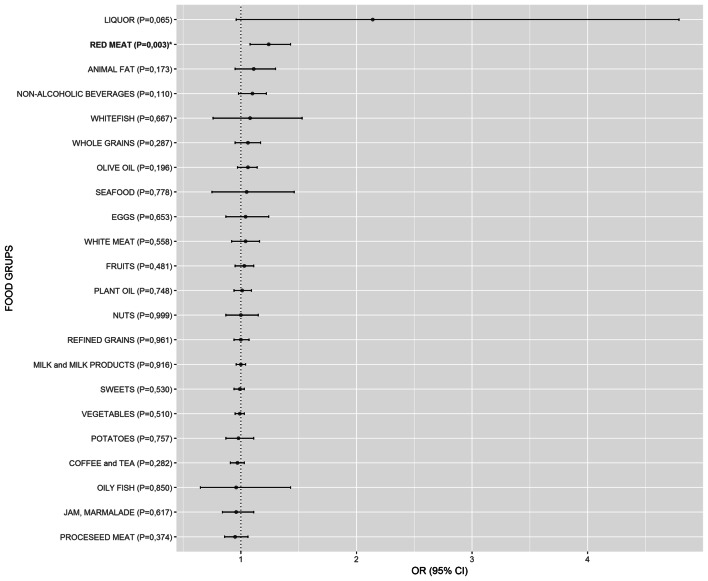
Food is considered as important environmental factor that plays a role in development of Hashimoto's thyroiditis (HT). The goal of our study was to identify food groups, assessed by food frequency questionnaire, that differ in consumption frequency between 491 patients with HT and 433 controls. We also analysed association of food groups with the wealth of HT-related clinical traits and symptoms. We found significantly increased consumption of animal fat (OR 1.55, p < 0.0001) and processed meat (OR 1.16, p = 0.0012) in HT cases, whereas controls consumed significantly more frequently red meat (OR 0.80, p < 0.0001), non-alcoholic beverages (OR 0.82, p < 0.0001), whole grains (OR 0.82, p < 0.0001) and plant oil (OR 0.87, p < 0.0001). We also observed association of plant oil consumption with increased triiodothyronine levels in HT patients (β = 0.07, p < 0.0001), and, association of olive oil consumption with decreased systolic blood pressure (β = - 0.16, p = 0.001) in HT patients on levothyroxine (LT4) therapy. Analysis of food consumption between HT patients with and without LT4 therapy suggest that patients do not tend to modify their diet upon HT diagnosis in our population. Our study may be of relevance to nutritionists, nutritional therapists and clinicians involved in developing dietary recommendations for HT patients.
食物被认为是一个重要的环境因素,在桥本甲状腺炎(HT)的发展中起着作用。我们的研究目的是确定通过食物频率问卷评估的食物组,其在 491 名 HT 患者和 433 名对照者中的消耗频率存在差异。我们还分析了食物组与 HT 相关临床特征和症状丰富度的相关性。我们发现 HT 病例中动物脂肪(OR 1.55,p<0.0001)和加工肉类(OR 1.16,p=0.0012)的消耗显著增加,而对照组则更频繁地消耗红肉(OR 0.80,p<0.0001)、非酒精饮料(OR 0.82,p<0.0001)、全谷物(OR 0.82,p<0.0001)和植物油(OR 0.87,p<0.0001)。我们还观察到植物油的消耗与 HT 患者三碘甲状腺原氨酸水平的升高有关(β=0.07,p<0.0001),并且橄榄油的消耗与 HT 患者(β=-0.16,p=0.001)在服用左甲状腺素(LT4)治疗时的收缩压降低有关。对有和没有 LT4 治疗的 HT 患者的食物消耗分析表明,在我们的人群中,患者在诊断为 HT 后并不倾向于改变他们的饮食。我们的研究可能对营养学家、营养治疗师和参与为 HT 患者制定饮食建议的临床医生具有重要意义。