Bitar Nathalie, Dugré Jules R, Marchand Serge, Potvin Stéphane
Research Center of the Institute of Mental Health of Montreal, Montreal, Canada.
Department of Psychiatry, Faculty of Medicine, University of Montreal, Montreal, Canada.
J Pain Res. 2020 Jun 8;13:1335-1347. doi: 10.2147/JPR.S248056. eCollection 2020.
While the concomitant administration of painful and rewarding stimuli tends to reduce the perception of one another, recent evidence shows that pleasant pain relief is experience after the interruption of noxious stimuli. On neurobiological grounds, these opponent processes should translate into decreased activity in brain reward regions during nociceptive stimulation and increased activity in these regions after its interruption. While growing evidence supports the latter assumption, evidence is lacking in humans in support of the former.
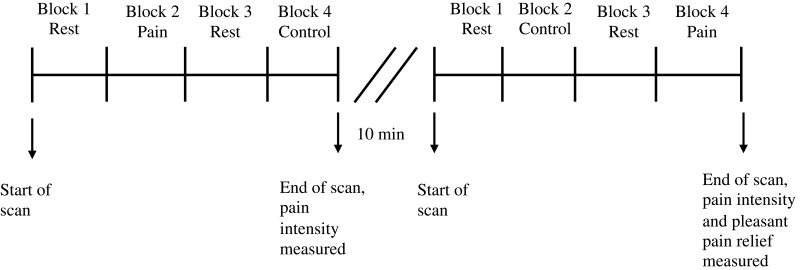
Twenty-six healthy individuals underwent a functional magnetic resonance imaging (fMRI) session during which they were administered a cold pain stimulation, using a novel paradigm which consisted in a cold gel applied on the right foot of participants.
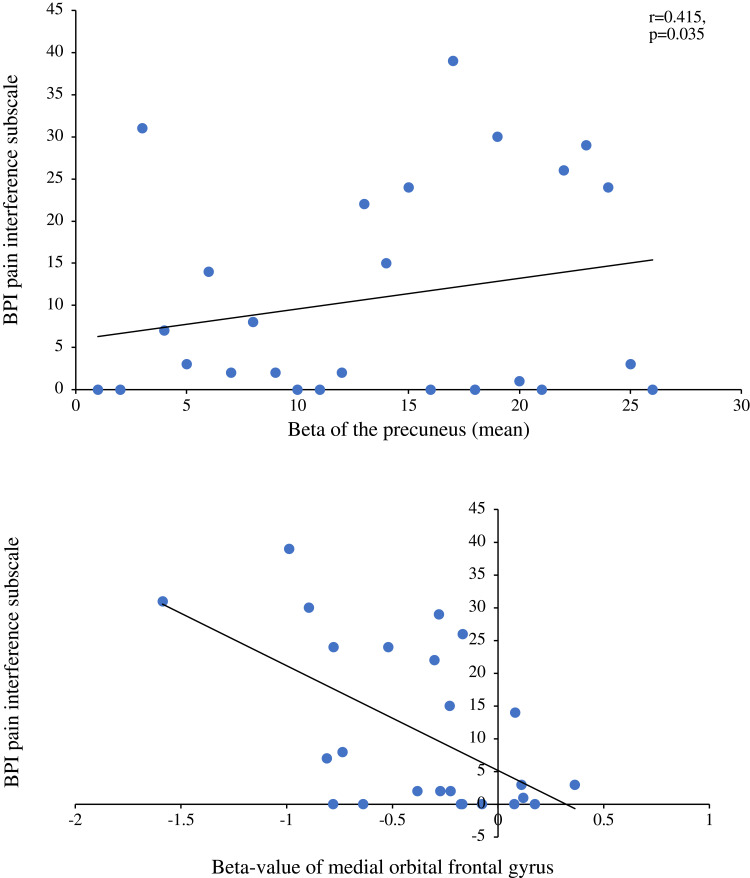
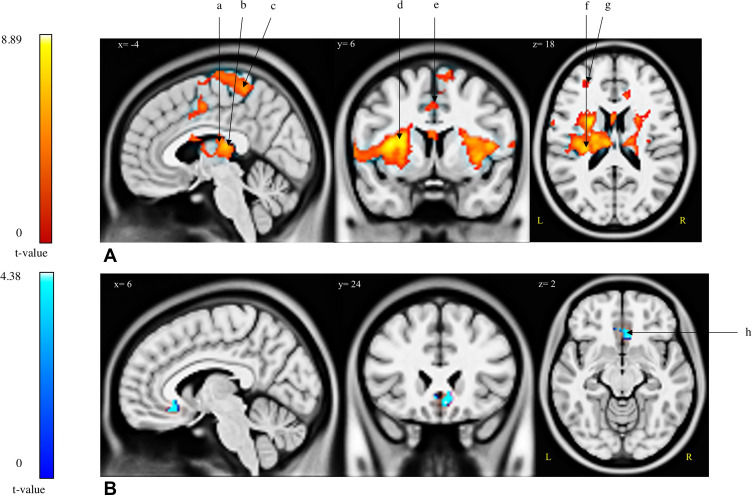
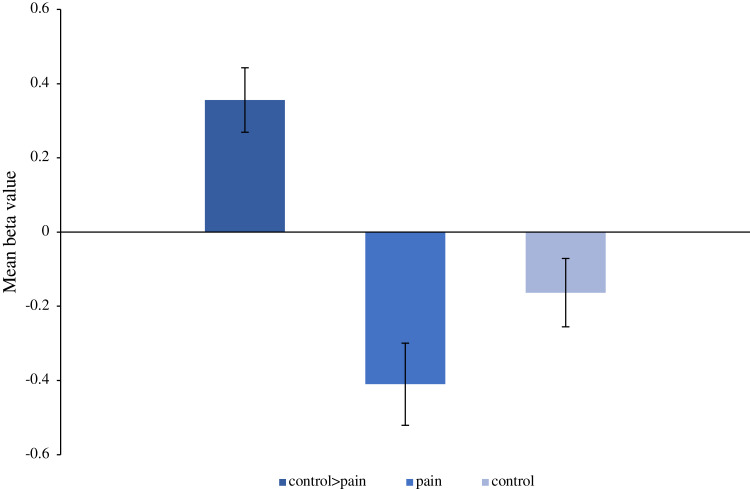
After the interruption of noxious stimulation, participants experienced significant levels of pleasant pain relief. During cold pain stimulation, brain activations were observed in key regions of the pain matrix (eg, thalamus, primary somatosensory cortex and insula). Conversely, the medial orbitofrontal cortex was found to be de-activated. Medial orbitofrontal de-activations were negatively correlated with subclinical pain symptoms.
Our results show that a key brain reward region (eg, medial orbitofrontal cortex) is de-activated during cold pain stimulation, a result which is consistent with one of the central assumptions of the opponent-process theory. On methodological grounds, our results show that the cold gel applied to the foot can be used to trigger activations in the pain matrix, and that the interruption of the cold pressor test elicits significant levels of pleasant pain relief. fMRI studies on pain-reward interactions in chronic pain patients are warranted.
虽然同时给予疼痛刺激和奖赏刺激往往会降低彼此的感知,但最近的证据表明,在有害刺激中断后会体验到愉快的疼痛缓解。从神经生物学角度来看,这些对抗过程应转化为伤害性刺激期间大脑奖赏区域的活动减少,以及刺激中断后这些区域的活动增加。虽然越来越多的证据支持后一种假设,但在人类中缺乏支持前一种假设的证据。
26名健康个体接受了功能磁共振成像(fMRI)检查,在此期间他们接受了冷痛刺激,采用了一种新的范式,即给参与者的右脚涂抹冷凝胶。
在有害刺激中断后,参与者体验到了显著程度的愉快疼痛缓解。在冷痛刺激期间,在疼痛矩阵的关键区域(如丘脑、初级体感皮层和岛叶)观察到大脑激活。相反,发现内侧眶额皮层被去激活。内侧眶额皮层的去激活与亚临床疼痛症状呈负相关。
我们的结果表明,在冷痛刺激期间,一个关键的大脑奖赏区域(如内侧眶额皮层)被去激活,这一结果与对抗过程理论的核心假设之一一致。从方法学角度来看,我们的结果表明,涂抹在脚上的冷凝胶可用于触发疼痛矩阵中的激活,并且冷加压试验的中断会引起显著程度的愉快疼痛缓解。有必要对慢性疼痛患者进行关于疼痛-奖赏相互作用的功能磁共振成像研究。