Mehta Akul Y, Veeraiah Ravi Kumar H, Dutta Sucharita, Goth Christoffer K, Hanes Melinda S, Gao Chao, Stavenhagen Kathrin, Kardish Robert, Matsumoto Yasuyuki, Heimburg-Molinaro Jamie, Boyce Michael, Pohl Nicola L B, Cummings Richard D
Department of Surgery, Beth Israel Deaconess Medical Center, Harvard Medical School, National Center for Functional Glycomics, CLS 11087 - 3 Blackfan Circle, Boston, MA 02115, USA.
Department of Chemistry, Indiana University, 120A Simon Hall, 212 South Hawthorne Drive, Bloomington, IN 47405, USA.
Cell Chem Biol. 2020 Sep 17;27(9):1207-1219.e9. doi: 10.1016/j.chembiol.2020.06.007. Epub 2020 Jun 30.
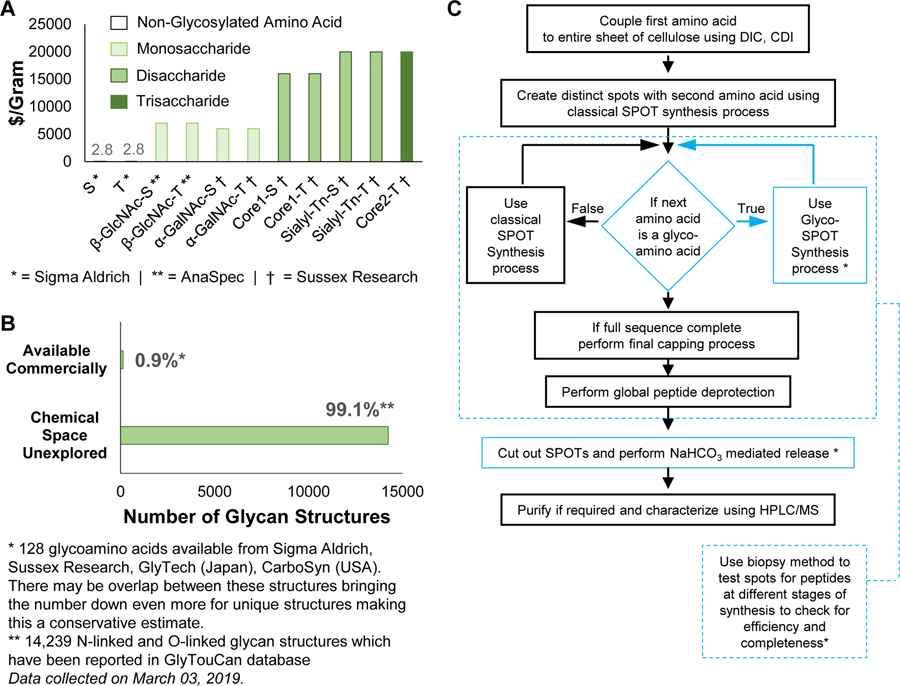
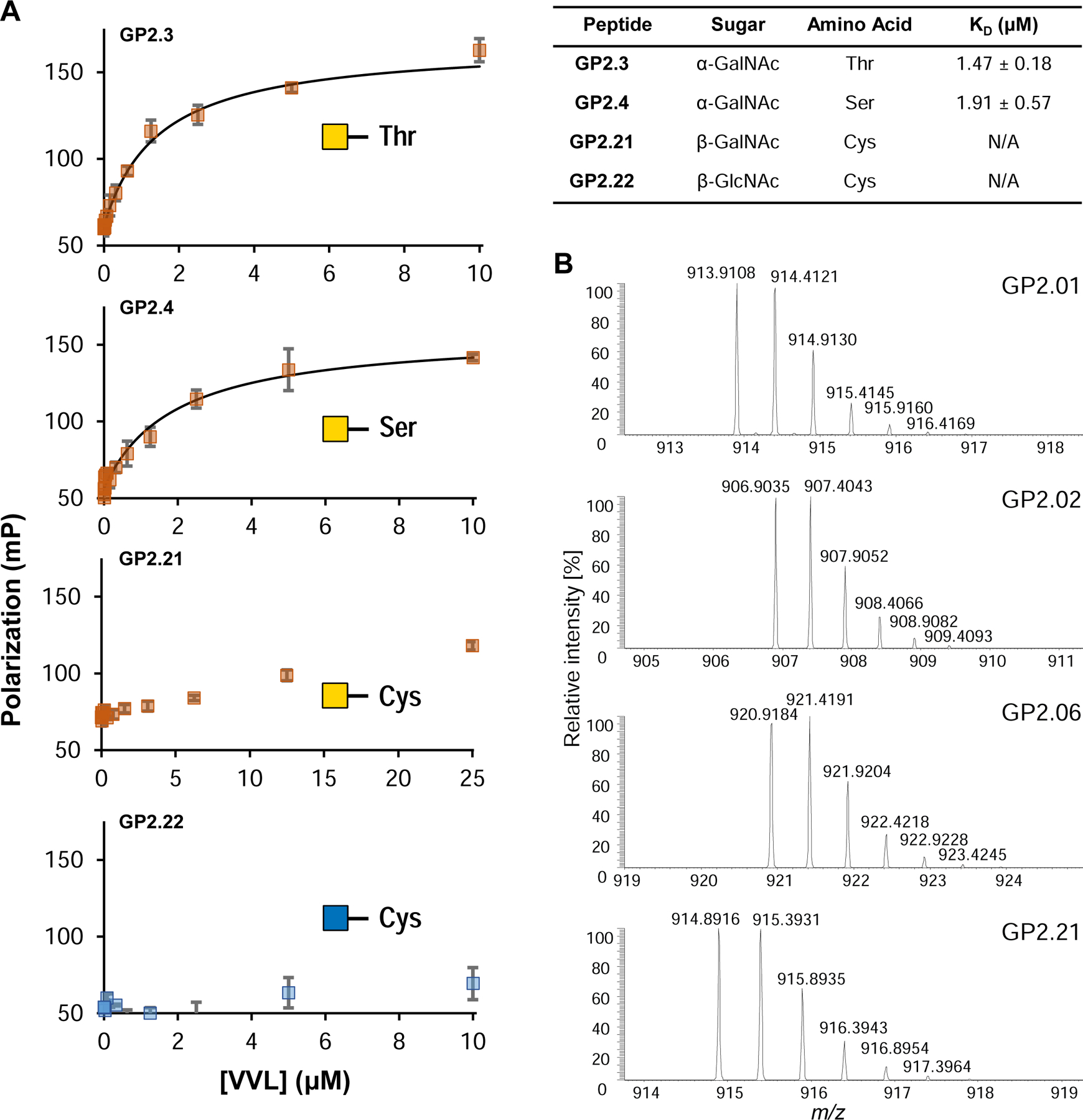
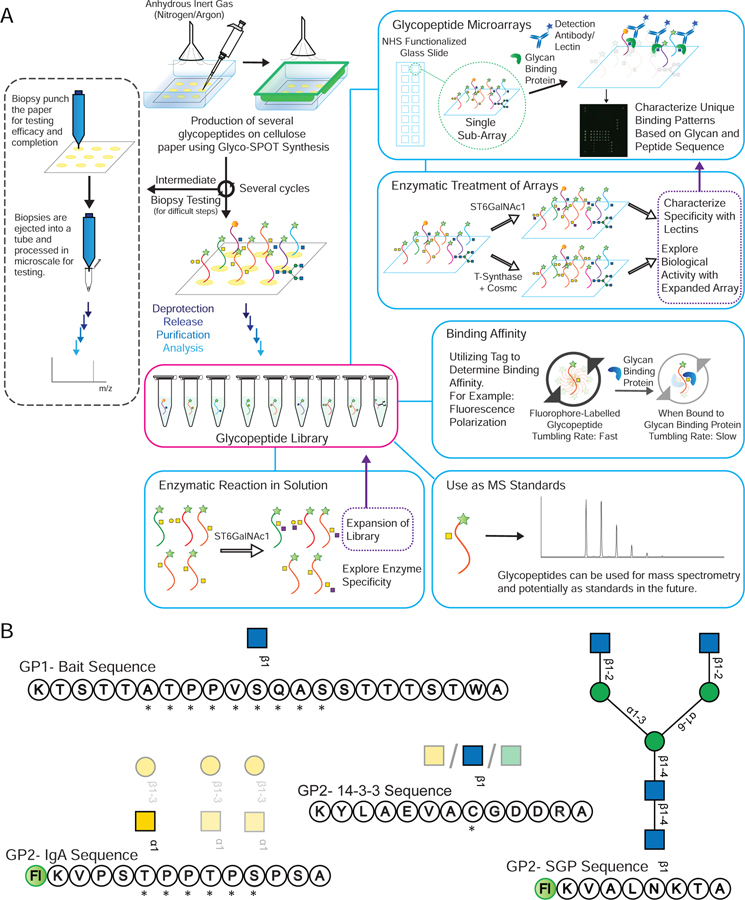
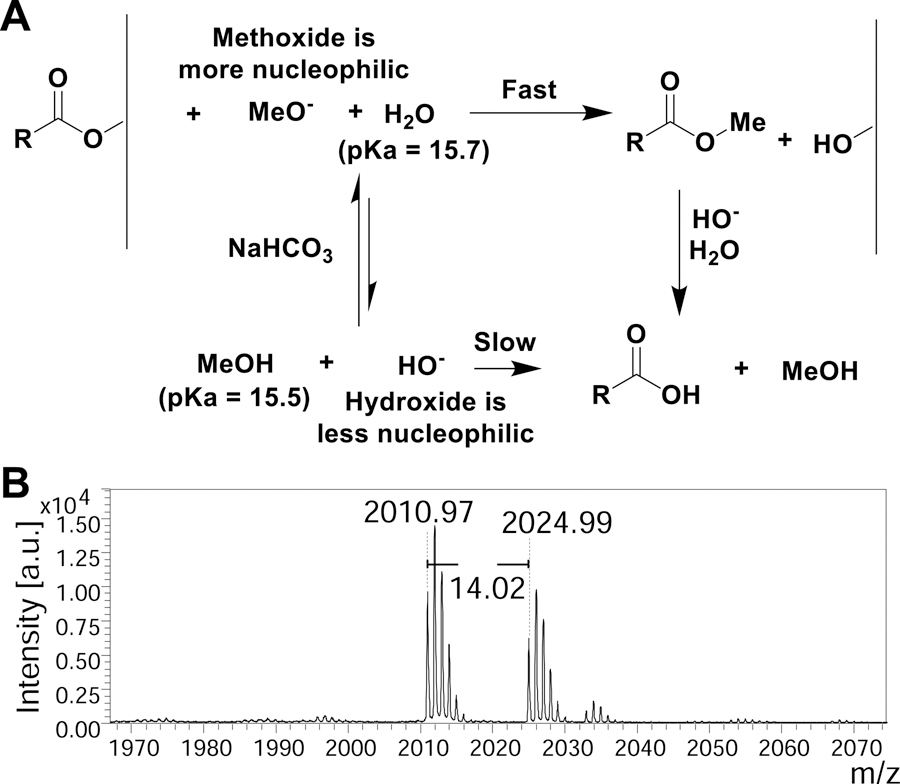
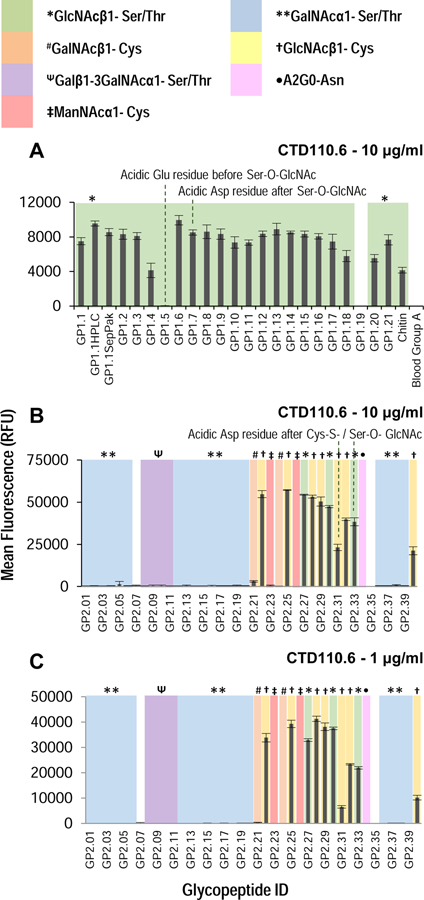
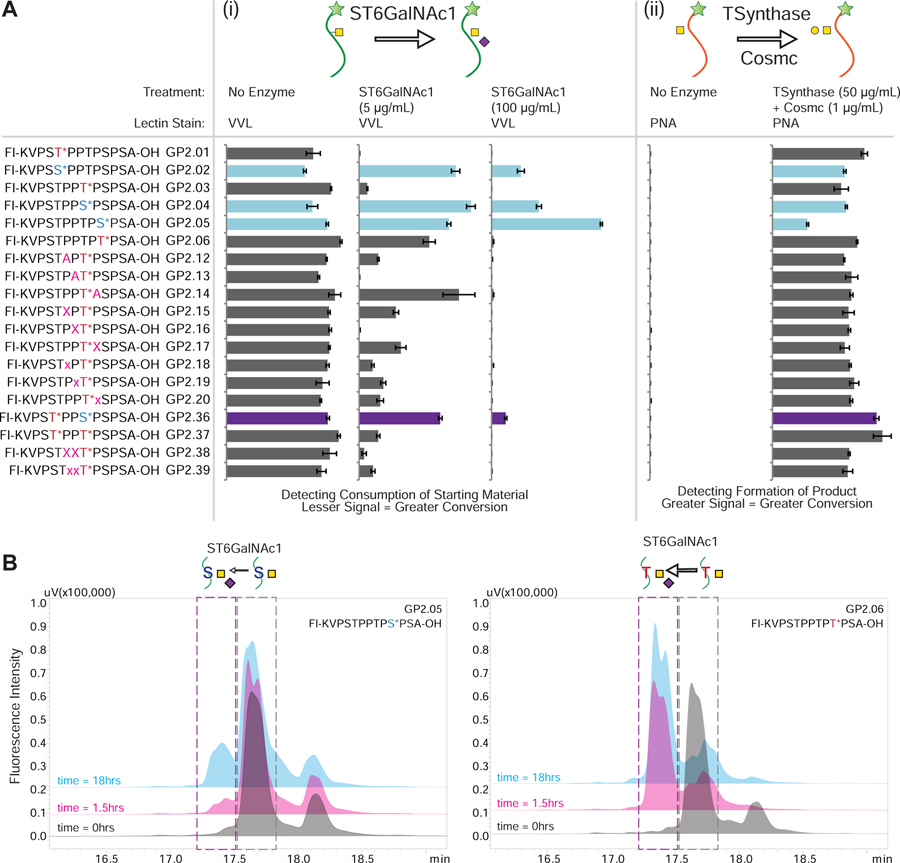
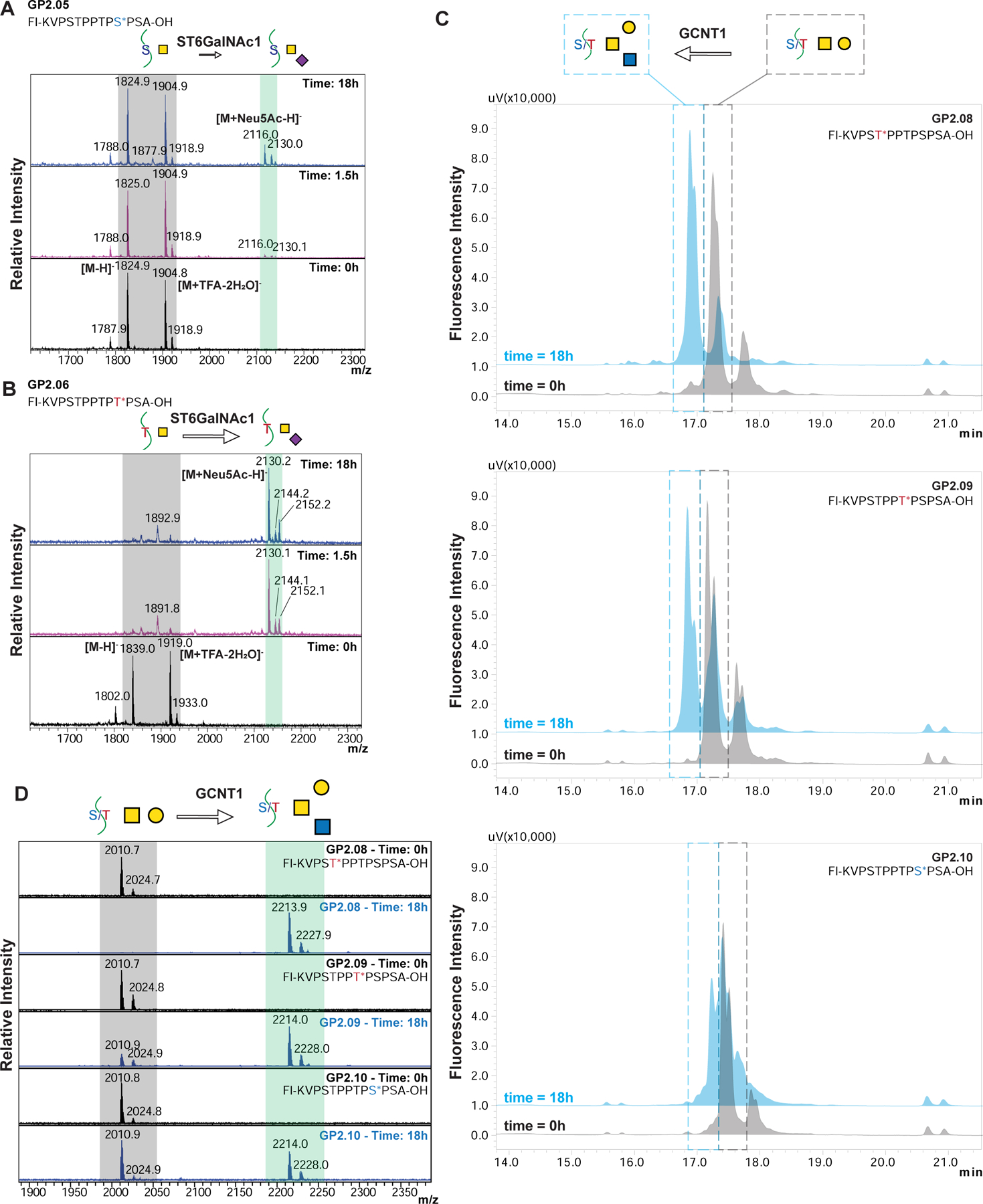
Glycan recognition is typically studied using free glycans, but glycopeptide presentations represent more physiological conditions for glycoproteins. To facilitate studies of glycopeptide recognition, we developed Glyco-SPOT synthesis, which enables the parallel production of diverse glycopeptide libraries at microgram scales. The method uses a closed system for prolonged reactions required for coupling Fmoc-protected glycoamino acids, including O-, N-, and S-linked glycosides, and release conditions to prevent side reactions. To optimize reaction conditions and sample reaction progress, we devised a biopsy testing method. We demonstrate the efficient utilization of such microscale glycopeptide libraries to determine the specificity of glycan-recognizing antibodies (e.g., CTD110.6) using microarrays, enzyme specificity on-array and in-solution (e.g., ST6GalNAc1, GCNT1, and T-synthase), and binding kinetics using fluorescence polarization. We demonstrated that the glycosylation on these peptides can be expanded using glycosyltransferases both in-solution and on-array. This technology will promote the discovery of biological functions of peptide modifications by glycans.
聚糖识别通常使用游离聚糖进行研究,但糖肽展示对于糖蛋白而言代表了更接近生理的条件。为便于开展糖肽识别研究,我们开发了糖基化斑点合成法,该方法能够以微克规模平行制备多样的糖肽文库。该方法采用封闭系统进行连接Fmoc保护的糖氨基酸(包括O-、N-和S-连接糖苷)所需的长时间反应,并采用释放条件以防止副反应。为优化反应条件并监测样品反应进程,我们设计了一种活检测试方法。我们展示了利用此类微量糖肽文库通过微阵列测定聚糖识别抗体(如CTD110.6)的特异性、在阵列上和溶液中(如ST6GalNAc1、GCNT1和T-合酶)的酶特异性以及利用荧光偏振测定结合动力学。我们证明这些肽上的糖基化可以在溶液中和阵列上使用糖基转移酶进行扩展。这项技术将促进对聚糖介导的肽修饰生物学功能的发现。