Department of Restorative Sciences, MDRCBB-Minnesota Dental Research Center for Biomaterials and Biomechanics, School of Dentistry, University of Minnesota, Minneapolis, Minnesota, United States of America.
PLoS One. 2020 Jul 2;15(7):e0235283. doi: 10.1371/journal.pone.0235283. eCollection 2020.
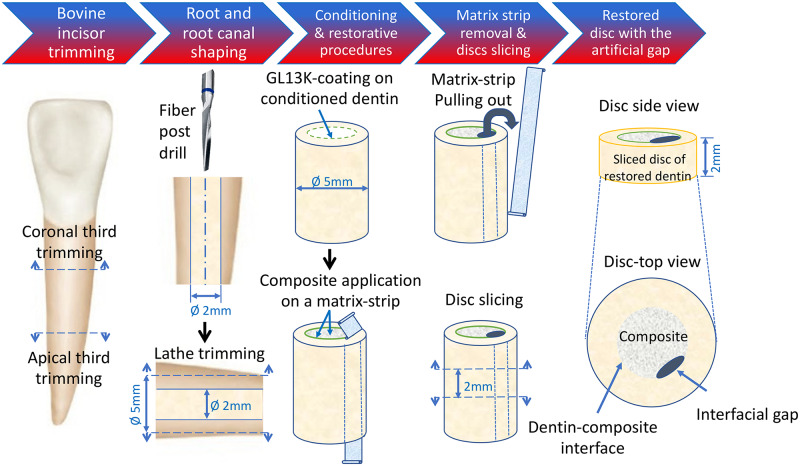
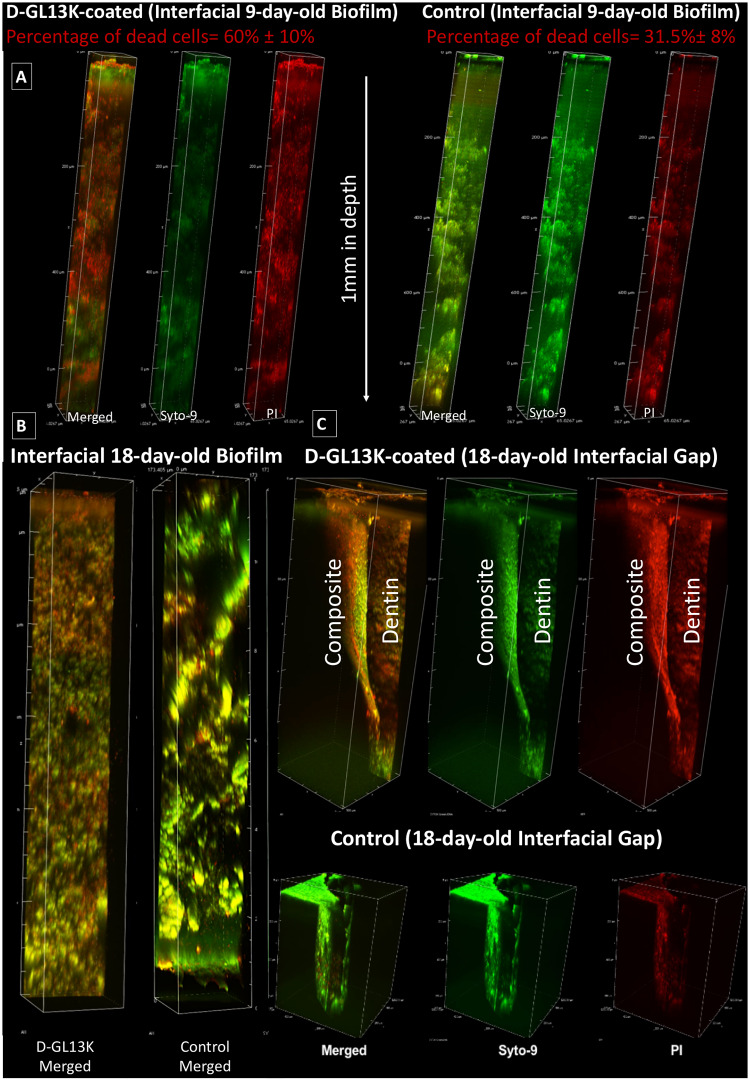
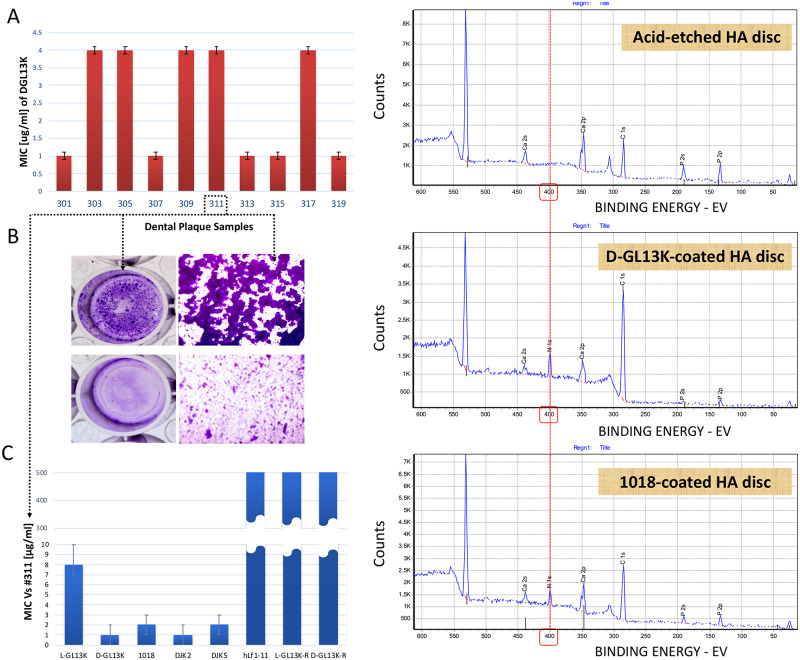
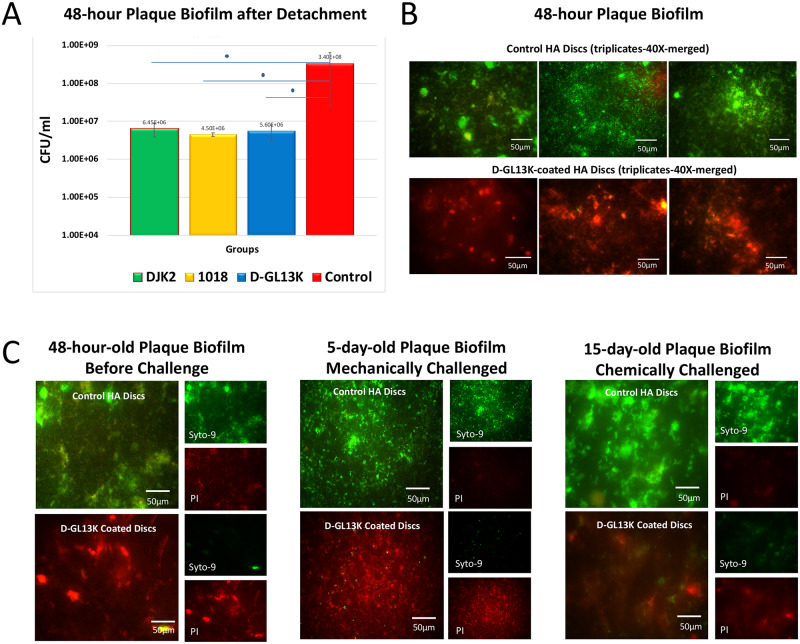
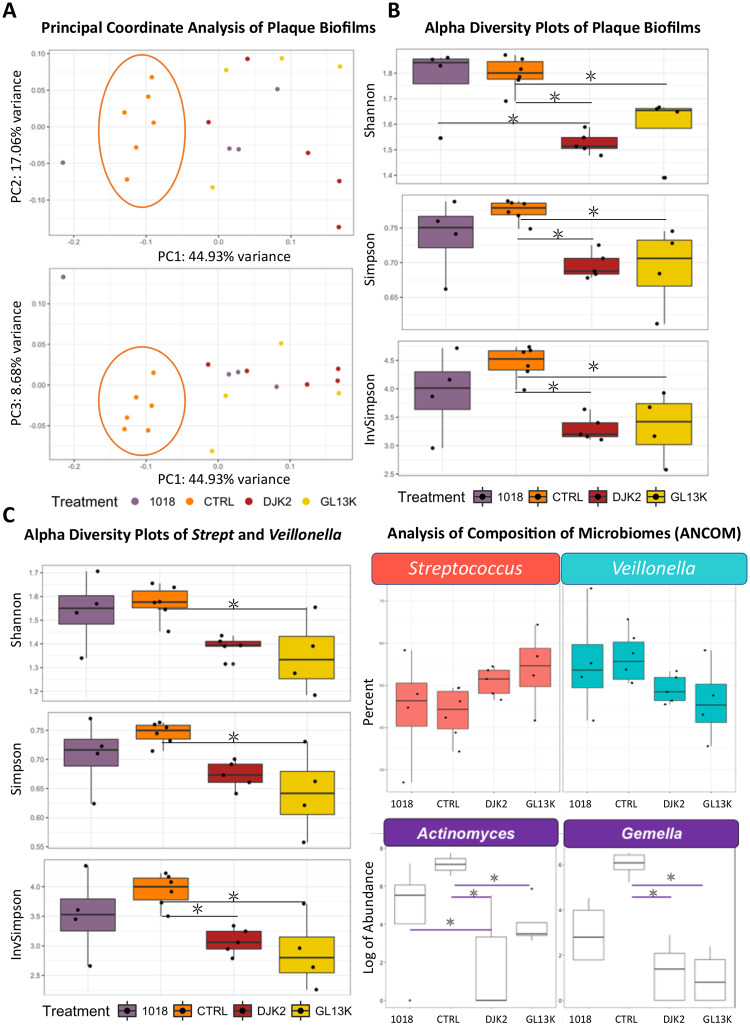
Recurrent caries, the development of carious lesions at the interface between the restorative material and the tooth structure, is highly prevalent and represents the primary cause for failure of dental restorations. Correspondingly, we exploited the self-assembly and strong antibiofilm activity of amphipathic antimicrobial peptides (AAMPs) to form novel coatings on dentin that aimed to prevent recurrent caries at susceptible cavosurface margins. AAMPs are alternative to traditional antimicrobial agents and antibiotics with the ability to target the complex and heterogeneous organization of microbial communities. Unlike approaches that have focused on using these AAMPs in aqueous solutions for a transient activity, here we assess the effects on microcosm biofilms of a long-acting AAMPs-based antibiofilm coating to protect the tooth-composite interface. Genomewise, we studied the impact of AAMPs coatings on the dental plaque microbial community. We found that non-native all D-amino acids AAMPs coatings induced a marked shift in the plaque community and selectively targeted three primary acidogenic colonizers, including the most common taxa around Class II composite restorations. Accordingly, we investigated the translational potential of our antibiofilm dentin using multiphoton pulsed near infra-red laser for deep bioimaging to assess the impact of AAMPs-coated dentin on plaque biofilms along dentin-composite interfaces. Multiphoton enabled us to record the antibiofilm potency of AAMPs-coated dentin on plaque biofilms throughout exaggeratedly failed interfaces. In conclusion, AAMPs-coatings on dentin showed selective and long-acting antibiofilm activity against three dominant acidogenic colonizers and potential to resist recurrent caries to promote and sustain the interfacial integrity of adhesive-based interfaces.
复发性龋,即在修复材料与牙体结构交界处出现龋损的发展,其发病率很高,是导致牙体修复失败的主要原因。相应地,我们利用两亲性抗菌肽(AAMPs)的自组装和强抗生物膜活性,在牙本质上形成新的涂层,旨在防止易发生龋的窝沟边缘发生复发性龋。AAMPs 是传统抗菌剂和抗生素的替代品,能够靶向微生物群落的复杂和异质结构。与那些专注于将这些 AAMPs 用于水溶液中以实现短暂活性的方法不同,我们在这里评估了长效 AAMPs 基抗生物膜涂层对保护牙-复合界面的微宇宙生物膜的影响。从全基因组的角度来看,我们研究了 AAMPs 涂层对牙菌斑微生物群落的影响。我们发现,非天然的全 D-氨基酸 AAMPs 涂层会导致菌斑群落发生明显变化,并选择性地针对三种主要的产酸定植菌,包括围绕 II 类复合修复体最常见的类群。因此,我们使用多光子脉冲近红外激光对深生物成像进行研究,以评估抗生物膜牙本质在牙本质-复合界面上对牙菌斑生物膜的转化潜力。多光子技术使我们能够在夸张失效的界面上记录 AAMPs 涂层牙本质对牙菌斑生物膜的抗生物膜效力。总之,牙本质上的 AAMPs 涂层对三种主要的产酸定植菌具有选择性和长效的抗生物膜活性,并有可能抵抗复发性龋,从而促进和维持基于黏结剂的界面的界面完整性。