Department of Biology, Tehran-east Payame Noor University, Tehran, Iran.
Department of Cell and Molecular Biology and Microbiology, Faculty of Biological Science and Technology, University of Isfahan, Isfahan, Iran.
BMC Cancer. 2020 Jul 2;20(1):621. doi: 10.1186/s12885-020-07116-5.
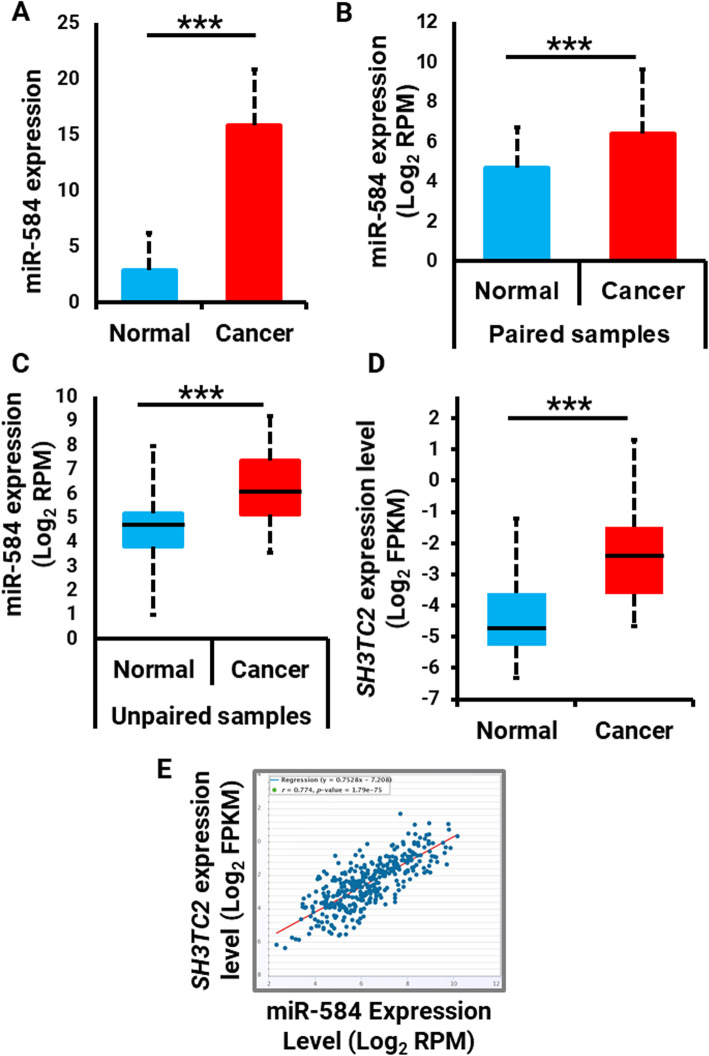
Gastric cancer is the fifth most common cancer worldwide. Along with environmental factors, such as Helicobacter pylori (H. pylori) infection, genetic changes play important roles in gastric tumor formations. miR-584 is a less well-characterized microRNA (miRNA), with apparent activity in human cancers. However, miR-584 expression pattern in gastric cancer development has remained unclear. This study aims to analyze the expression of miR-584 in gastric cancer samples and investigates the associations between this miRNA and H. pylori infection and clinical characteristics.
The expression level of miR-584 was studied in primary gastric cancers versus healthy control gastric mucosa samples using the RT-qPCR method. The clinical data were analyzed statistically in terms of miR-584 expression. In silico studies were employed to study miR-584 more broadly in order to assess its expression and find new potential target genes.
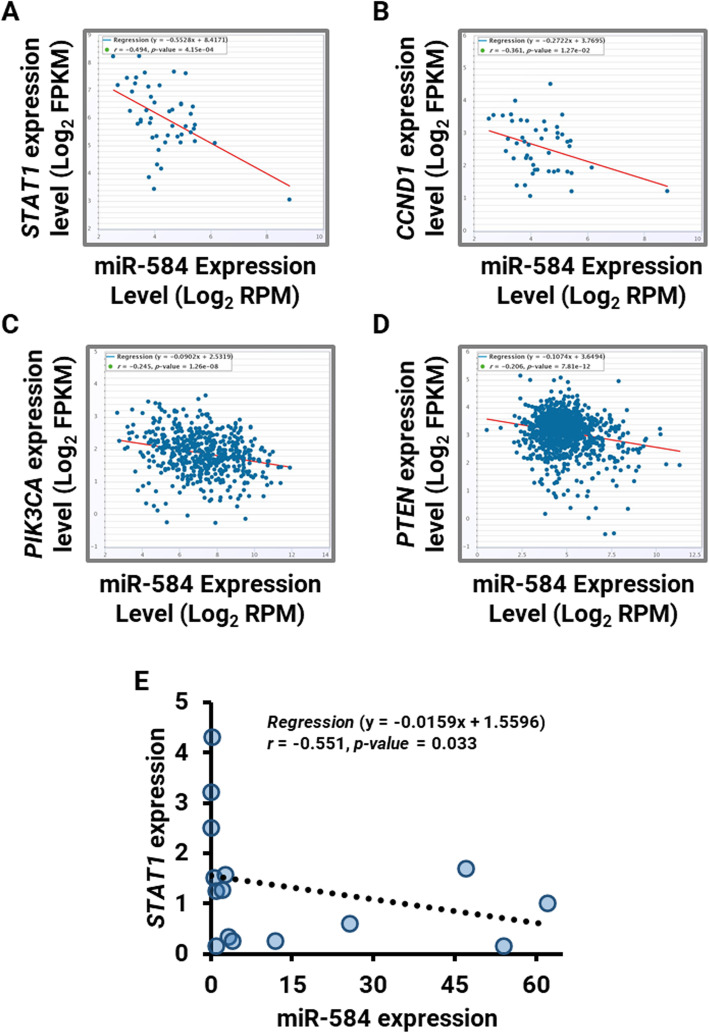
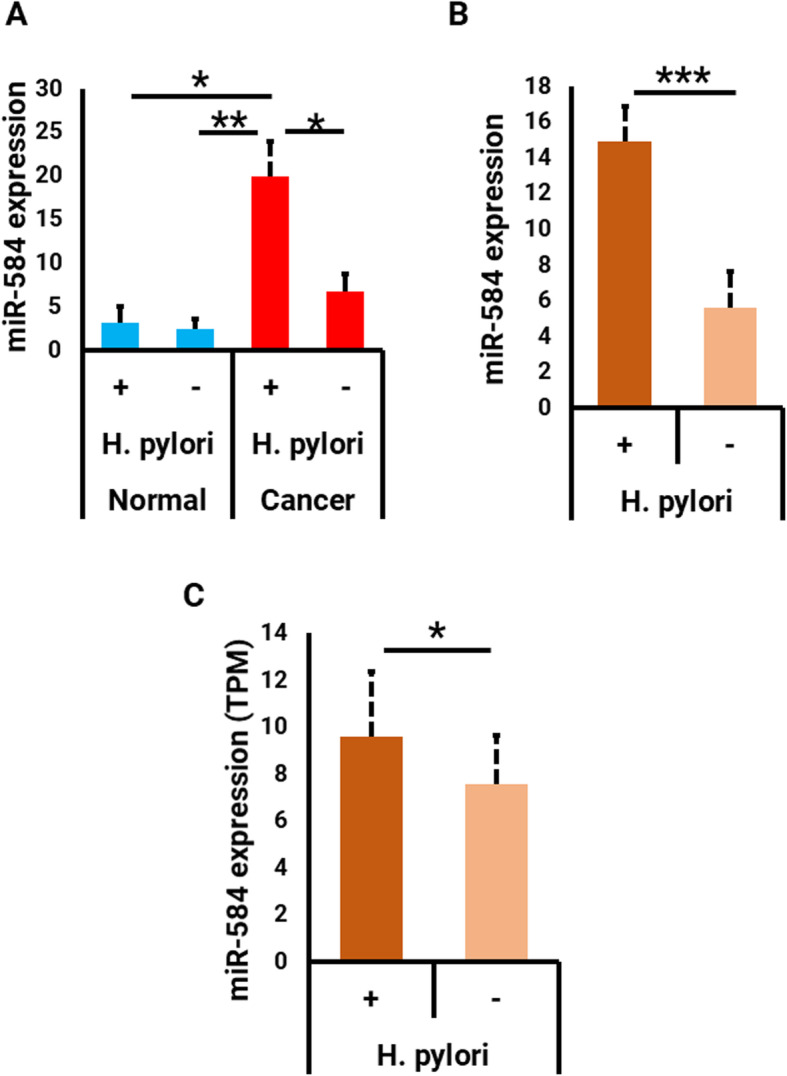
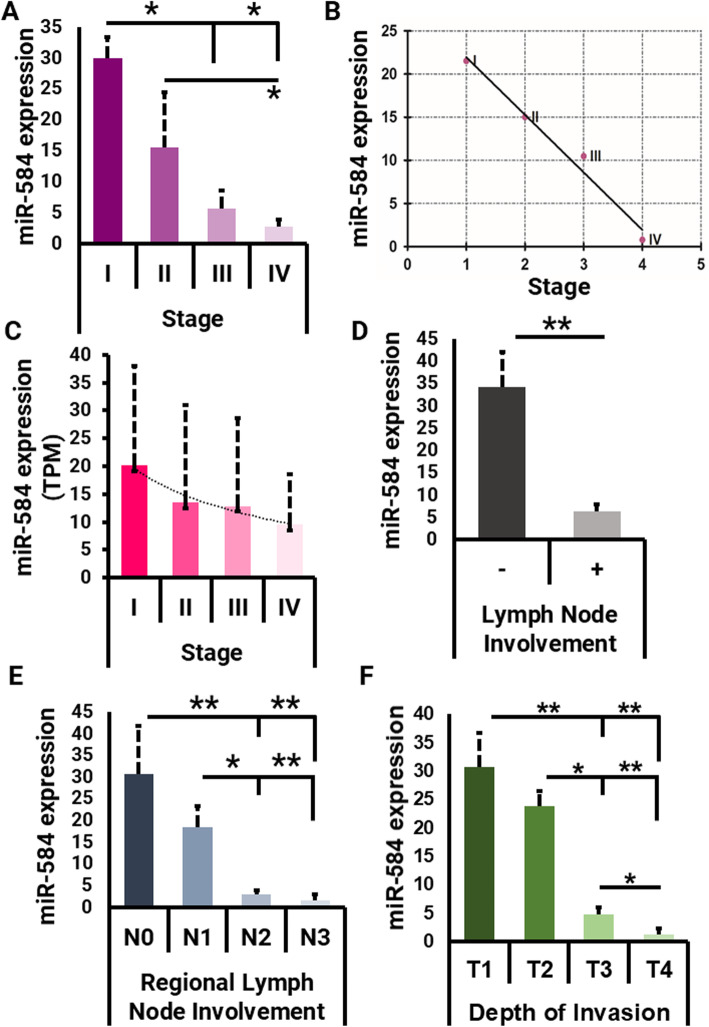
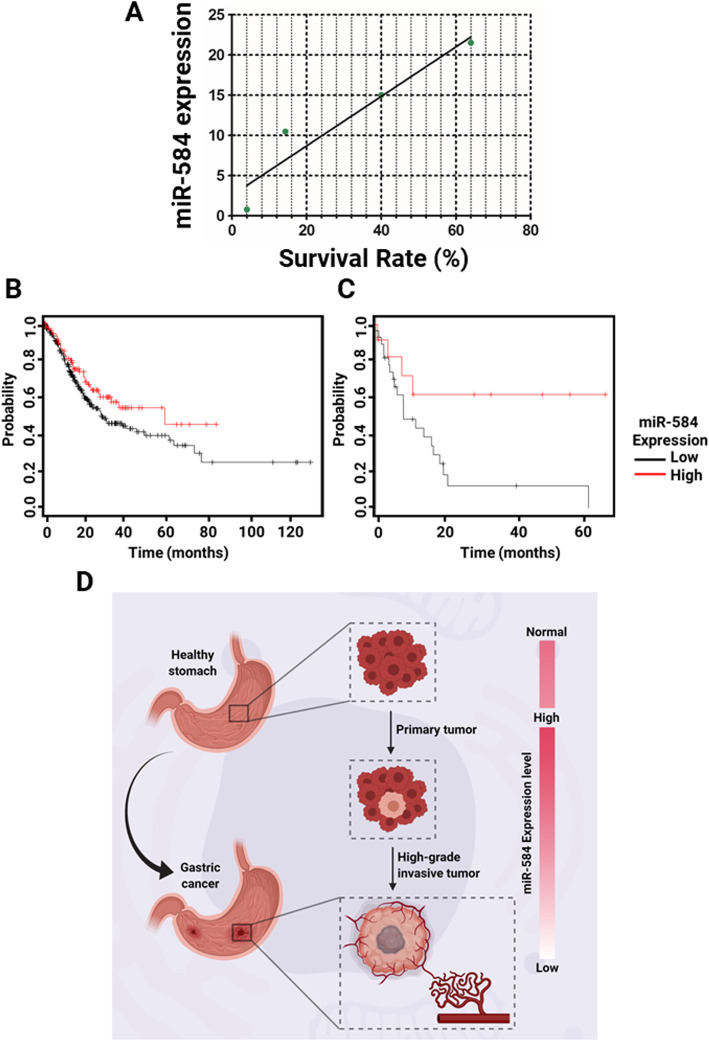
Both experimental and in silico studies showed up-regulation of miR-584 in patients with gastric cancer. This up-regulation seems to be induced by H. pylori infection since the infected samples showed increased levels of miR-584 expression. Deeper analyses revealed that miR-584 undergoes a dramatic down-regulation in late stages, invasive and lymph node-metastatic gastric tumors. Bioinformatics studies demonstrated that miR-584 has a substantial role in cancer pathways and has the potential to target STAT1 transcripts. Consistent with the inverse correlation between TCGA RNA-seq data of miR-584 and STAT1 transcripts, the qPCR analysis showed a significant negative correlation between these two RNAs in a set of clinical samples.
miR-584 undergoes up-regulation in the stage of primary tumor formation; however, becomes down-regulated upon the progression of gastric cancer. These findings suggest the potential of miR-584 as a diagnostic or prognostic biomarker in gastric cancer.
胃癌是全球第五大常见癌症。除了环境因素,如幽门螺杆菌(H. pylori)感染,遗传变化在胃肿瘤形成中也起着重要作用。miR-584 是一种研究较少的 microRNA(miRNA),在人类癌症中具有明显的活性。然而,miR-584 在胃癌发展中的表达模式仍不清楚。本研究旨在分析胃癌组织中 miR-584 的表达,并研究该 miRNA 与 H. pylori 感染和临床特征之间的关系。
采用 RT-qPCR 方法检测原发性胃癌与健康对照胃黏膜组织中 miR-584 的表达水平。根据 miR-584 的表达情况对临床资料进行统计学分析。通过计算机模拟研究进一步研究 miR-584,以评估其表达并寻找新的潜在靶基因。
实验和计算机模拟研究均显示胃癌患者 miR-584 表达上调。这种上调似乎是由 H. pylori 感染诱导的,因为感染样本显示 miR-584 表达水平升高。进一步分析表明,miR-584 在晚期、侵袭性和淋巴结转移性胃癌中显著下调。生物信息学研究表明,miR-584 在癌症途径中具有重要作用,并具有靶向 STAT1 转录本的潜力。与 TCGA RNA-seq 数据中 miR-584 和 STAT1 转录本之间的负相关一致,qPCR 分析显示在一组临床样本中这两种 RNA 之间存在显著的负相关。
miR-584 在原发性肿瘤形成阶段上调,但在胃癌进展过程中下调。这些发现表明 miR-584 可能成为胃癌的诊断或预后生物标志物。