CIRI, Lyon University, Inserm U 1111, Lyon, France.
Hospices Civils de Lyon, Croix-Rousse University Hospital, Infectious Agents Institute (IAI) Laboratory of Virology-National Reference Center for Respiratory Viruses (Including Influenza), Lyon, France.
BMC Infect Dis. 2020 Jul 2;20(1):465. doi: 10.1186/s12879-020-05167-4.
Since 2011, the Global Influenza Hospital Surveillance Network (GIHSN) has used active surveillance to prospectively collect epidemiological and virological data on patients hospitalized with influenza virus infection. Here, we describe influenza virus strain circulation in the GIHSN participant countries during 2017-2018 season and examine factors associated with complicated hospitalization among patients admitted with laboratory-confirmed influenza illness.
The study enrolled patients who were hospitalized in a GIHSN hospital in the previous 48 h with acute respiratory symptoms and who had symptoms consistent with influenza within the 7 days before admission. Enrolled patients were tested by reverse transcription-polymerase chain reaction to confirm influenza virus infection. "Complicated hospitalization" was defined as a need for mechanical ventilation, admission to an intensive care unit, or in-hospital death. In each of four age strata (< 15, 15-< 50, 50-< 65, and ≥ 65 years), factors associated with complicated hospitalization in influenza-positive patients were identified by mixed effects logistic regression and those associated with length of hospital stay using a linear mixed-effects regression model.
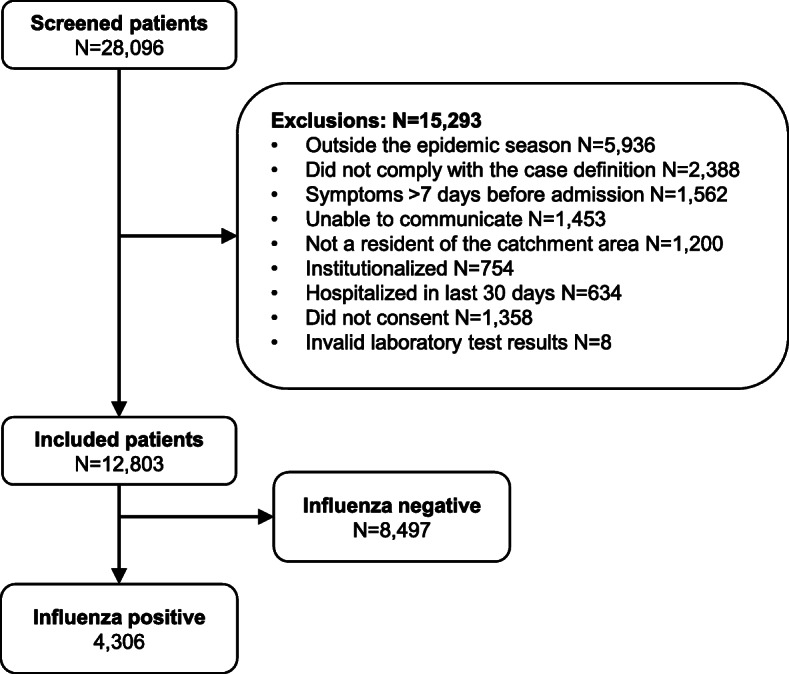
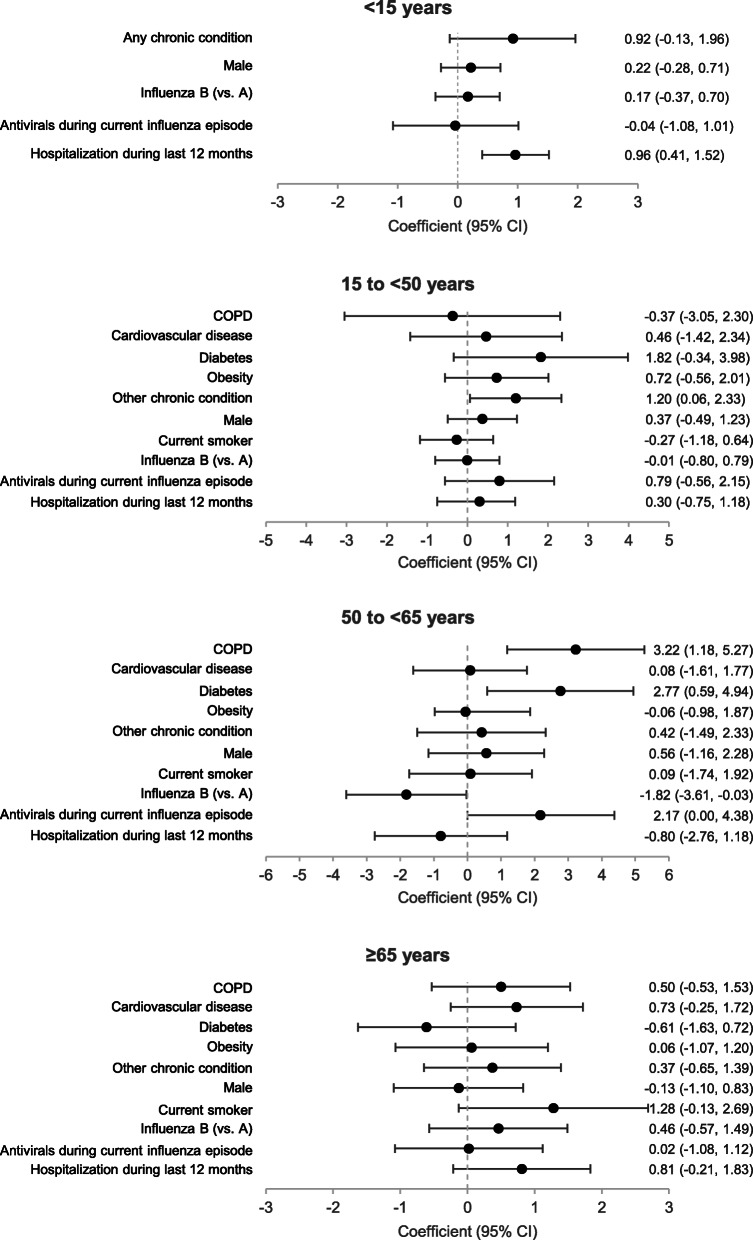
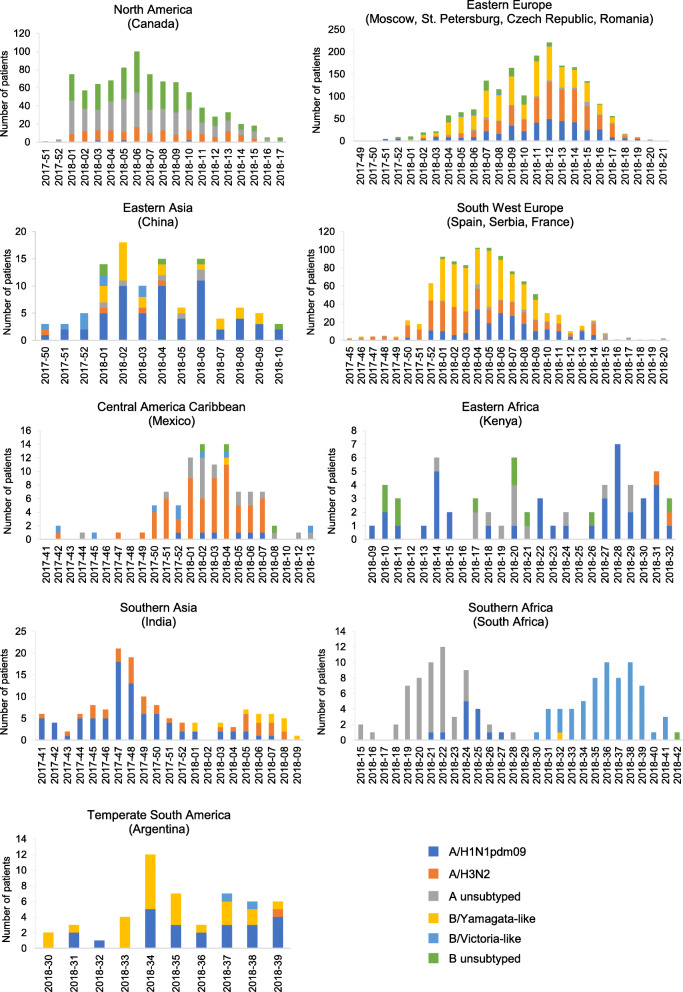
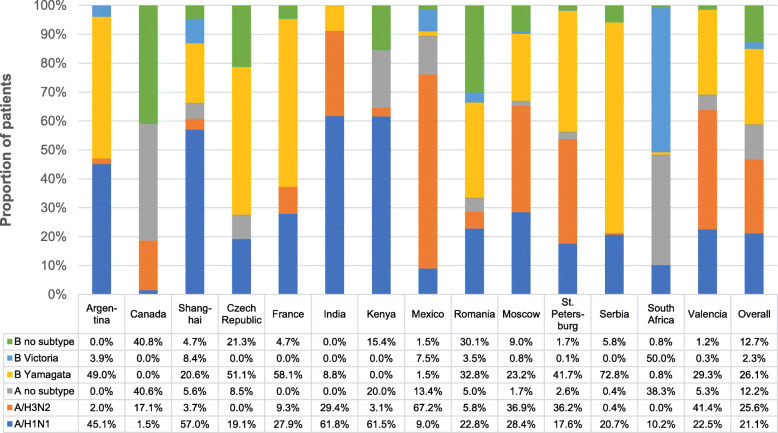
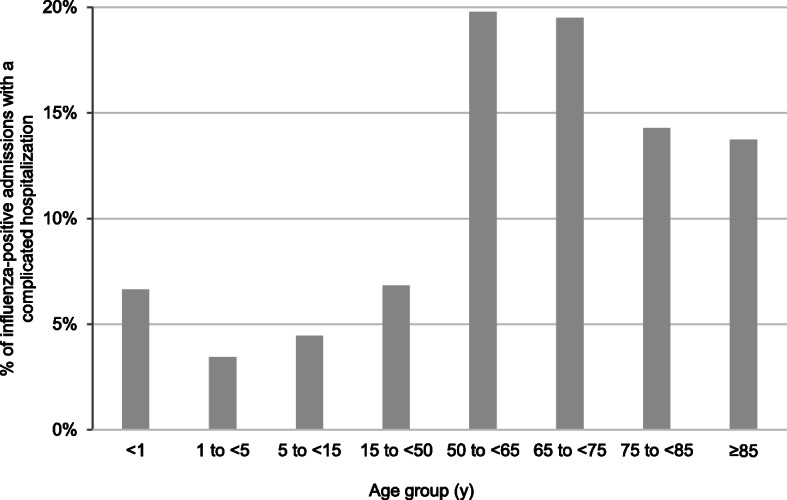
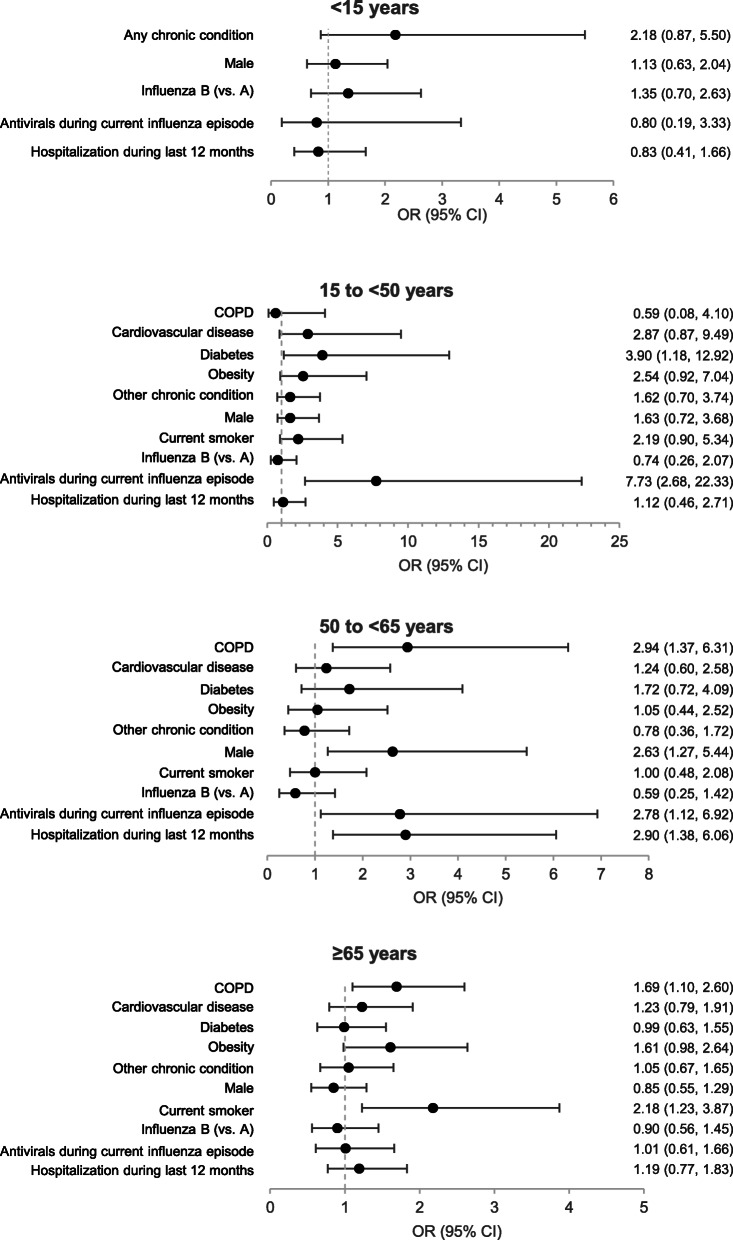
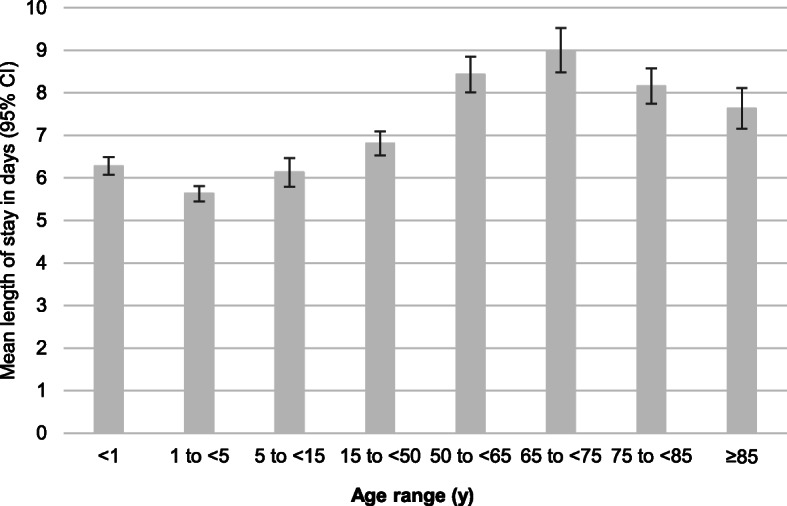
The study included 12,803 hospitalized patients at 14 coordinating sites in 13 countries, of which 4306 (34%) tested positive for influenza. Influenza viruses B/Yamagata, A/H3N2, and A/H1N1pdm09 strains dominated and cocirculated, although the dominant strains varied between sites. Complicated hospitalization occurred in 10.6% of influenza-positive patients. Factors associated with complicated hospitalization in influenza-positive patients included chronic obstructive pulmonary disease (15-< 50 years and ≥ 65 years), diabetes (15-< 50 years), male sex (50-< 65 years), hospitalization during the last 12 months (50-< 65 years), and current smoking (≥65 years). Chronic obstructive pulmonary disease (50-< 65 years), other chronic conditions (15-< 50 years), influenza A (50-< 65 years), and hospitalization during the last 12 months (< 15 years) were associated with a longer hospital stay. The proportion of patients with complicated influenza did not differ between influenza A and B.
Complicated hospitalizations occurred in over 10% of patients hospitalized with influenza virus infection. Factors commonly associated with complicated or longer hospitalization differed by age group but commonly included chronic obstructive pulmonary disease, diabetes, and hospitalization during the last 12 months.
自 2011 年以来,全球流感医院监测网络(GIHSN)一直采用主动监测的方法,前瞻性地收集因流感病毒感染住院患者的流行病学和病毒学数据。在此,我们描述了 2017-2018 季节期间 GIHSN 参与者国家的流感病毒株循环情况,并研究了与确诊流感住院患者中复杂住院相关的因素。
本研究纳入了过去 48 小时内在 GIHSN 医院住院、有急性呼吸道症状且在入院前 7 天内有流感样症状的患者。通过逆转录-聚合酶链反应对纳入的患者进行检测,以确认流感病毒感染。“复杂住院”定义为需要机械通气、入住重症监护病房或院内死亡。在四个年龄层(<15 岁、15-<50 岁、50-<65 岁和≥65 岁)中,对流感阳性患者中与复杂住院相关的因素通过混合效应逻辑回归进行了鉴定,并通过线性混合效应回归模型确定了与住院时间相关的因素。
本研究共纳入了来自 13 个国家的 14 个协调地点的 12803 名住院患者,其中 4306 例(34%)流感检测呈阳性。流感病毒 B/Yamagata、A/H3N2 和 A/H1N1pdm09 株占主导地位并共同流行,尽管不同地点的优势株有所不同。流感阳性患者中,复杂住院的发生率为 10.6%。与流感阳性患者中复杂住院相关的因素包括慢性阻塞性肺疾病(15-<50 岁和≥65 岁)、糖尿病(15-<50 岁)、男性(50-<65 岁)、过去 12 个月住院(50-<65 岁)和当前吸烟(≥65 岁)。慢性阻塞性肺疾病(50-<65 岁)、其他慢性疾病(15-<50 岁)、流感 A(50-<65 岁)和过去 12 个月住院(<15 岁)与住院时间延长有关。流感 A 和 B 导致的复杂流感患者比例无差异。
因流感病毒感染住院的患者中,超过 10%发生了复杂住院。与复杂或延长住院相关的因素因年龄组而异,但通常包括慢性阻塞性肺疾病、糖尿病和过去 12 个月的住院治疗。