Division of Animal Genetics, Laboratory Animal Research Center, Institute of Medical Science, The University of Tokyo, Tokyo, 108-8639, Japan.
Division of Genome Engineering, Center for Experimental Medicine and Systems Biology, Institute of Medical Science, The University of Tokyo, Tokyo, 108-8639, Japan.
Hum Genet. 2021 Feb;140(2):277-287. doi: 10.1007/s00439-020-02198-4. Epub 2020 Jul 2.
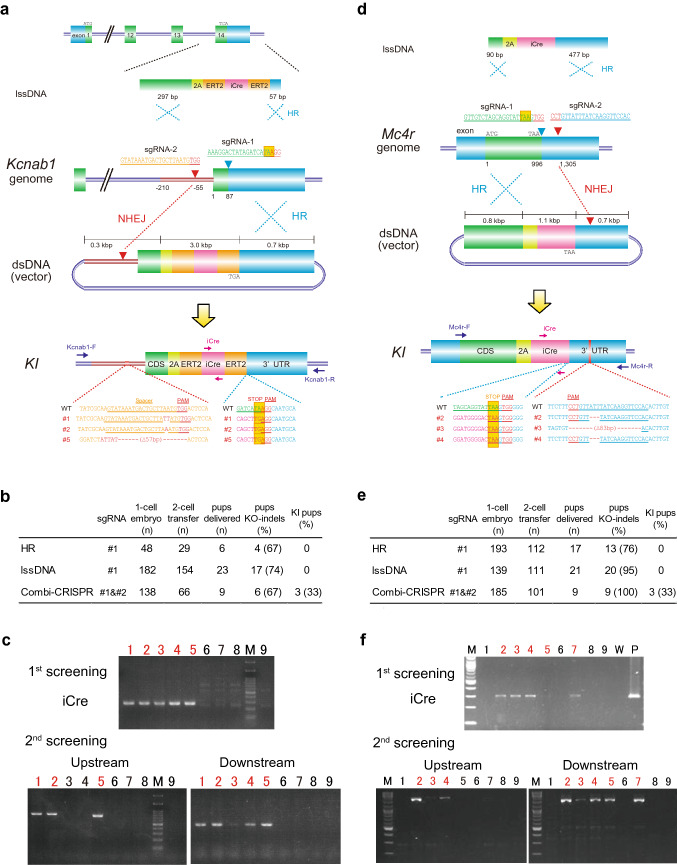
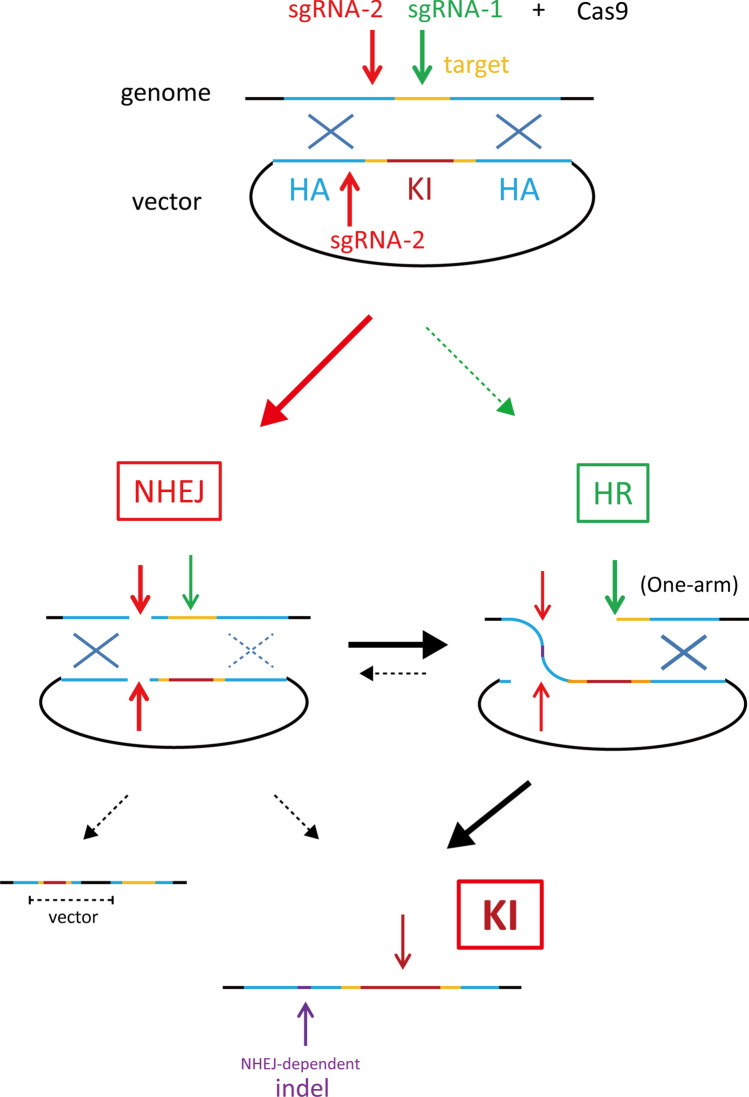
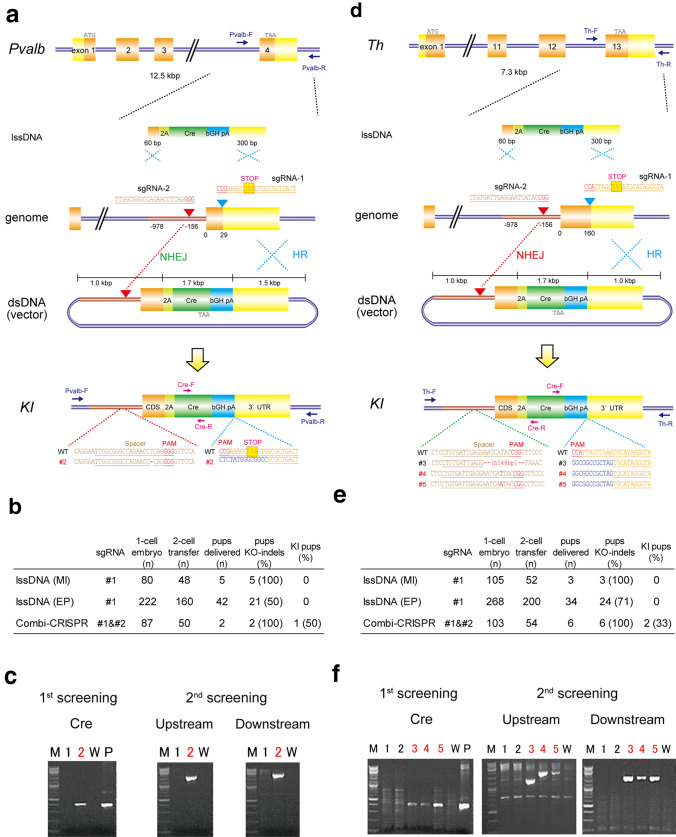
CRISPR-Cas9 are widely used for gene targeting in mice and rats. The non-homologous end-joining (NHEJ) repair pathway, which is dominant in zygotes, efficiently induces insertion or deletion (indel) mutations as gene knockouts at targeted sites, whereas gene knock-ins (KIs) via homology-directed repair (HDR) are difficult to generate. In this study, we used a double-stranded DNA (dsDNA) donor template with Cas9 and two single guide RNAs, one designed to cut the targeted genome sequences and the other to cut both the flanked genomic region and one homology arm of the dsDNA plasmid, which resulted in 20-33% KI efficiency among G0 pups. G0 KI mice carried NHEJ-dependent indel mutations at one targeting site that was designed at the intron region, and HDR-dependent precise KIs of the various donor cassettes spanning from 1 to 5 kbp, such as EGFP, mCherry, Cre, and genes of interest, at the other exon site. These findings indicate that this combinatorial method of NHEJ and HDR mediated by the CRISPR-Cas9 system facilitates the efficient and precise KIs of plasmid DNA cassettes in mice and rats.
CRISPR-Cas9 被广泛用于小鼠和大鼠的基因靶向。非同源末端连接(NHEJ)修复途径在受精卵中占主导地位,可有效地在靶向位点诱导插入或缺失(indel)突变,从而导致基因敲除,而通过同源定向修复(HDR)进行基因敲入(KI)则较为困难。在这项研究中,我们使用了带有 Cas9 和两个单链向导 RNA 的双链 DNA(dsDNA)供体模板,一个设计用于切割靶向基因组序列,另一个设计用于切割侧翼基因组区域和 dsDNA 质粒的一个同源臂,从而在 G0 幼鼠中产生了 20-33%的 KI 效率。G0 KI 小鼠在一个靶向位点携带 NHEJ 依赖性 indel 突变,该位点设计在内含子区域,而在另一个外显子位点则携带 HDR 依赖性精确的 1-5 kbp 各种供体盒,如 EGFP、mCherry、Cre 和感兴趣的基因。这些发现表明,这种由 CRISPR-Cas9 系统介导的 NHEJ 和 HDR 的组合方法促进了质粒 DNA 盒在小鼠和大鼠中的高效和精确的 KI。