Centro Nacional de Análisis Genómico (CNAG)-Centro de Regulación Genómica (CRG), Centre for Genomic Regulation, Barcelona Institute of Science and Technology, Barcelona, Spain.
Department of Medicine, Division of Neurology, Children's Hospital of Eastern Ontario Research Institute, The Ottawa Hospital, Ottawa, Ontario, Canada; Brain and Mind Research Institute, University of Ottawa, Ottawa, Ontario, Canada.
J Mol Diagn. 2020 Sep;22(9):1205-1215. doi: 10.1016/j.jmoldx.2020.06.008. Epub 2020 Jun 30.
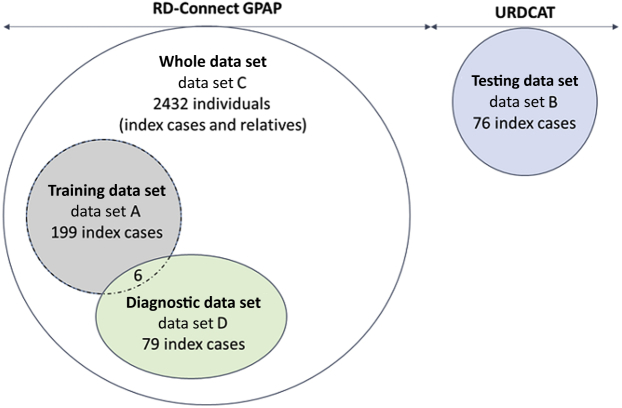
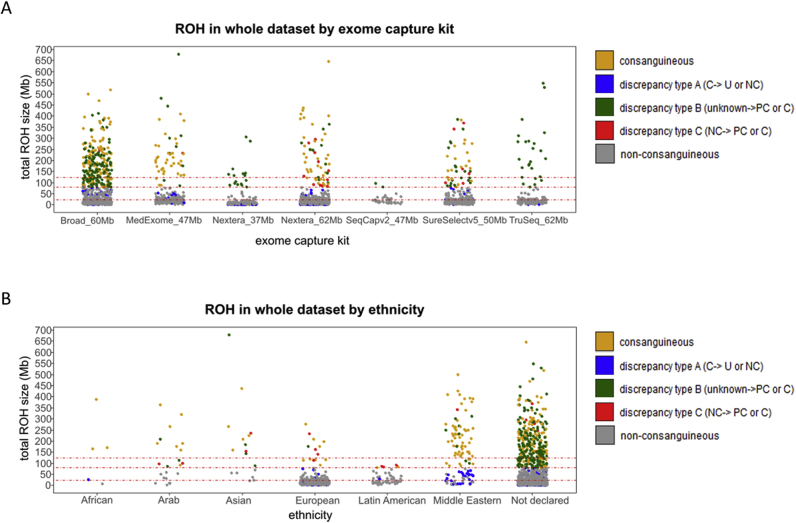
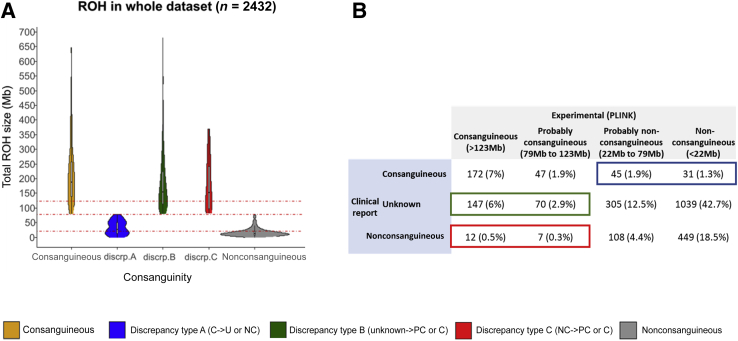
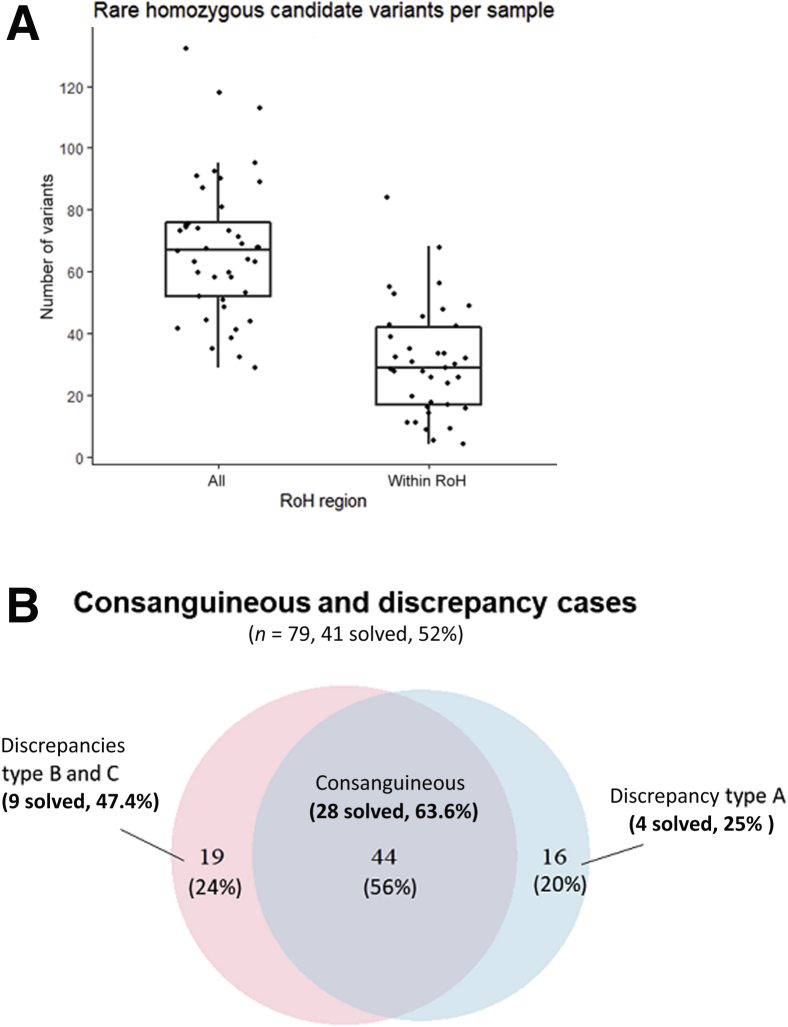
Autozygosity is associated with an increased risk of genetic rare disease, thus being a relevant factor for clinical genetic studies. More than 2400 exome sequencing data sets were analyzed and screened for autozygosity on the basis of detection of >1 Mbp runs of homozygosity (ROHs). A model was built to predict if an individual is likely to be a consanguineous offspring (accuracy, 98%), and probability of consanguinity ranges were established according to the total ROH size. Application of the model resulted in the reclassification of the consanguinity status of 12% of the patients. The analysis of a subset of 79 consanguineous cases with the Rare Disease (RD)-Connect Genome-Phenome Analysis Platform, combining variant filtering and homozygosity mapping, enabled a 50% reduction in the number of candidate variants and the identification of homozygous pathogenic variants in 41 patients, with an overall diagnostic yield of 52%. The newly defined consanguinity ranges provide, for the first time, specific ROH thresholds to estimate inbreeding within a pedigree on disparate exome sequencing data, enabling confirmation or (re)classification of consanguineous status, hence increasing the efficiency of molecular diagnosis and reporting on secondary consanguinity findings, as recommended by American College of Medical Genetics and Genomics guidelines.
自交是与遗传罕见病风险增加相关的,因此是临床遗传研究的一个相关因素。在基于检测>1 Mbp 长度的纯合性区域 (ROH) 的基础上,分析和筛选了超过 2400 个外显子组测序数据集以进行自交分析。建立了一个模型来预测个体是否可能是近亲生育的后代(准确率为 98%),并根据总 ROH 大小建立了亲缘关系概率范围。该模型的应用导致 12%的患者的亲缘关系状态被重新分类。对 79 名近亲生育病例的子集应用 Rare Disease (RD)-Connect 基因组-表型分析平台,结合变异过滤和纯合性映射,将候选变异数量减少了 50%,并在 41 名患者中鉴定出纯合致病性变异,总体诊断率为 52%。新定义的亲缘关系范围首次提供了在不同外显子组测序数据中估计家系内近亲繁殖的特定 ROH 阈值,能够确认或(重新)分类近亲关系状态,从而提高分子诊断的效率,并根据美国医学遗传学和基因组学学院的指南报告二级近亲关系发现。