Seoul National University Biomedical Informatics (SNUBI), Division of Biomedical Informatics, Seoul National University College of Medicine, Seoul, 03080, Republic of Korea.
Department of Biomedical Systems Informatics, Yonsei University College of Medicine, Seoul, 03722, Republic of Korea.
BMC Med Inform Decis Mak. 2020 Jul 3;20(1):147. doi: 10.1186/s12911-020-01168-0.
Semantic interoperability is essential for improving data quality and sharing. The ISO/IEC 11179 Metadata Registry (MDR) standard has been highlighted as a solution for standardizing and registering clinical data elements (DEs). However, the standard model has both structural and semantic limitations, and the number of DEs continues to increase due to poor term reusability. Semantic types and constraints are lacking for comprehensively describing and evaluating DEs on real-world clinical documents.
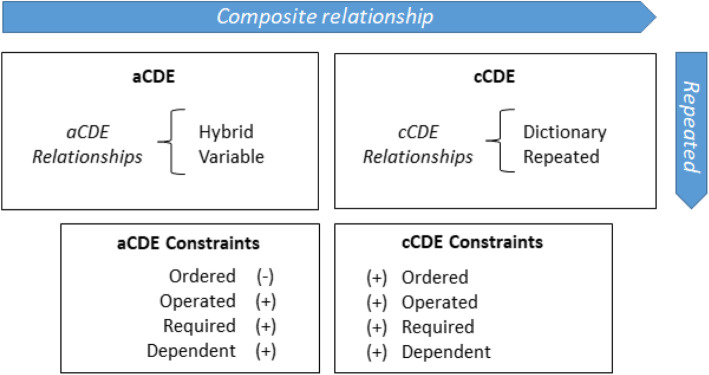
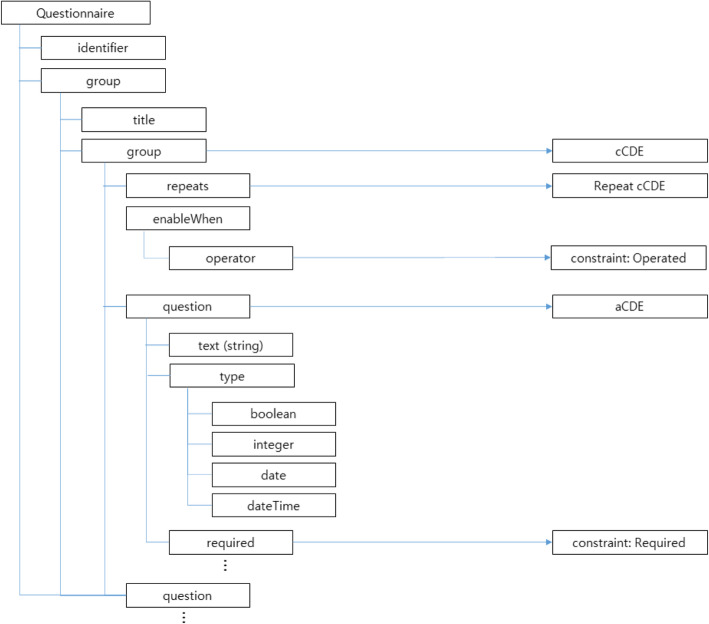
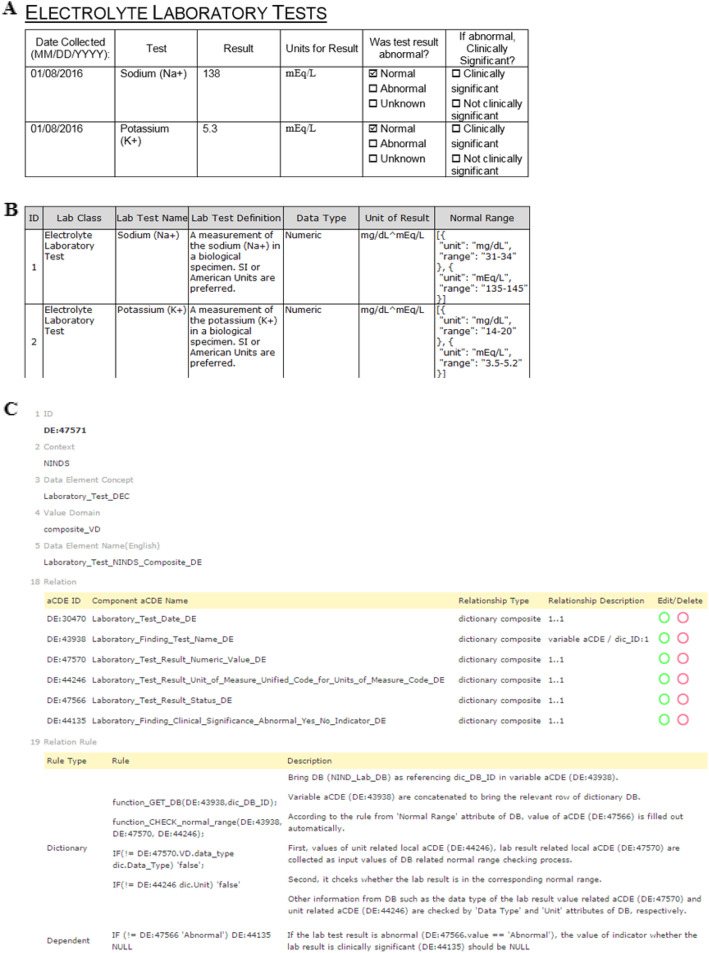
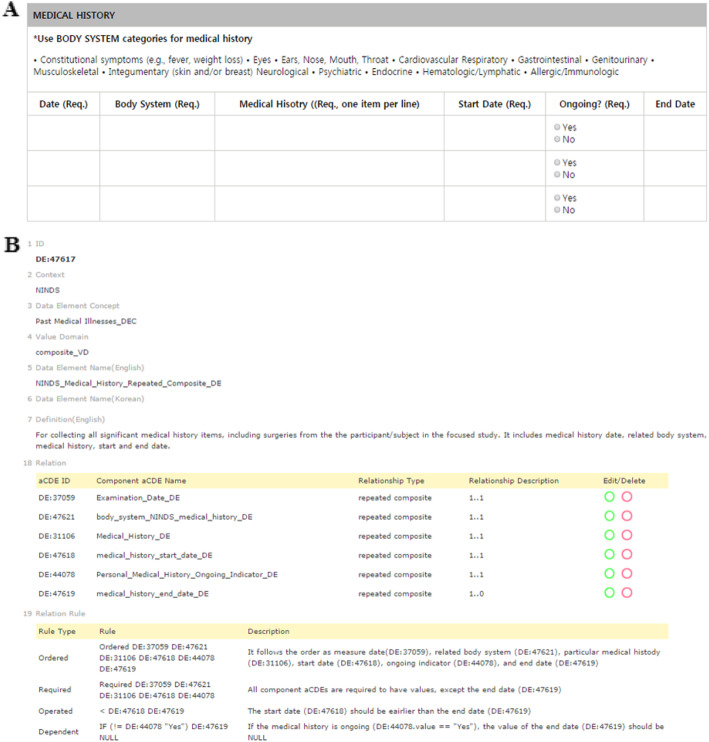
We addressed these limitations by defining three new types of semantic relationship (dependency, composite, and variable) in our previous studies. The present study created new and further extended existing semantic types (hybrid atomic and repeated and dictionary composite common data elements [CDEs]) with four constraints: ordered, operated, required, and dependent. For evaluation, we extracted all atomic and composite CDEs from five major clinical documents from five teaching hospitals in Korea, 14 Fast Healthcare Interoperability Resources (FHIR) resources from FHIR bulk sample data, and MIMIC-III (Medical Information Mart for Intensive Care) demo dataset. Metadata reusability and semantic interoperability in real clinical settings were comprehensively evaluated by applying the CDEs with our extended semantic types and constraints.
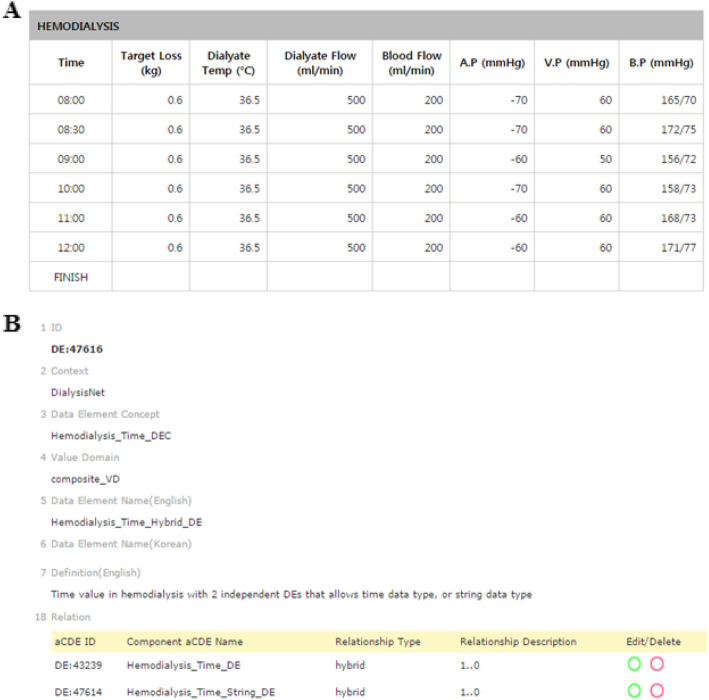
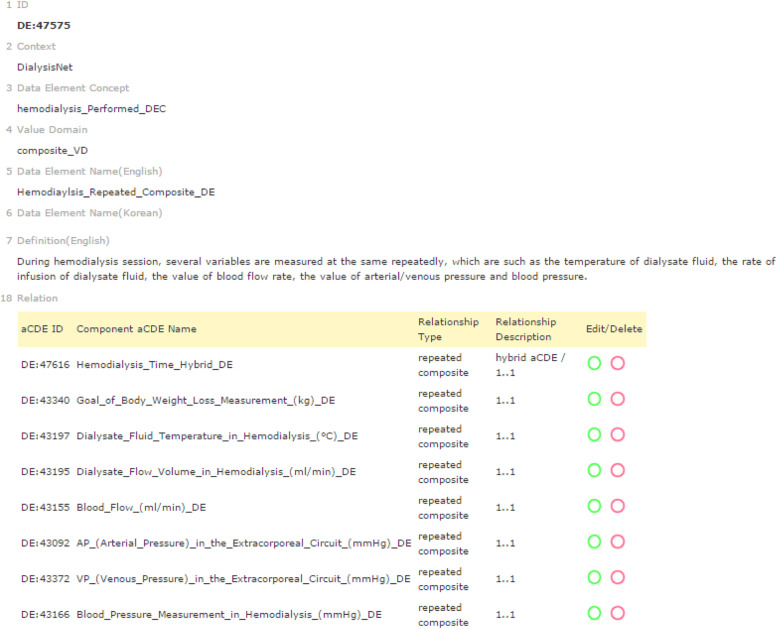
All of the CDEs (n = 1142) extracted from the 25 clinical documents were successfully integrated with a very high CDE reuse ratio (46.9%) into 586 CDEs (259 atomic and 20 unique composite CDEs), and all of CDEs (n = 238) extracted from the 14 FHIR resources of FHIR bulk sample data were successfully integrated with high CDE reuse ration (59.7%) into 96 CDEs (21 atomic and 28 unique composite CDEs), which improved the semantic integrity and interoperability without any semantic loss. Moreover, the most complex data structures from two CDE projects were successfully encoded with rich semantics and semantic integrity.
MDR-based extended semantic types and constraints can facilitate comprehensive representation of clinical documents with rich semantics, and improved semantic interoperability without semantic loss.
语义互操作性对于提高数据质量和共享至关重要。ISO/IEC 11179 元数据注册中心 (MDR) 标准已被视为标准化和注册临床数据元素 (DE) 的解决方案。然而,该标准模型在结构和语义上都存在局限性,并且由于术语重用率低,DE 的数量不断增加。在真实的临床文档中,缺乏全面描述和评估 DE 的语义类型和约束。
在之前的研究中,我们通过定义三种新的语义关系类型(依赖、组合和变量)来解决这些局限性。本研究创建了新的和进一步扩展的现有语义类型(混合原子和重复以及字典组合通用数据元素 [CDE]),并具有四个约束:有序、操作、必需和依赖。为了评估,我们从韩国五所教学医院的五份主要临床文档中提取了所有原子和组合 CDE,从 FHIR 大容量样本数据的 14 个 Fast Healthcare Interoperability Resources (FHIR) 资源中提取了 14 个,从 MIMIC-III(重症监护医疗信息集市)演示数据集提取了 14 个。通过应用具有我们扩展的语义类型和约束的 CDE,全面评估了真实临床环境中的元数据可重用性和语义互操作性。
从 25 份临床文档中提取的所有 CDE(n=1142)都成功地整合在一起,CDE 重用率非常高(46.9%),形成了 586 个 CDE(259 个原子和 20 个独特的组合 CDE),从 FHIR 大容量样本数据的 14 个 FHIR 资源中提取的所有 CDE(n=238)都成功地整合在一起,CDE 重用率很高(59.7%),形成了 96 个 CDE(21 个原子和 28 个独特的组合 CDE),这提高了语义完整性和互操作性,没有任何语义损失。此外,两个 CDE 项目中最复杂的数据结构都成功地用丰富的语义和语义完整性进行了编码。
基于 MDR 的扩展语义类型和约束可以促进具有丰富语义的临床文档的全面表示,并在不损失语义的情况下提高语义互操作性。