Rokkas Theodore
Gastroenterology Clinic, Henry Dunant Hospital, Athens, Greece.
Ann Gastroenterol. 2020 Jul-Aug;33(4):355-365. doi: 10.20524/aog.2020.0506. Epub 2020 Jun 6.
Patients with COVID-19 usually manifest fever and respiratory symptoms. However, some patients also experience gastrointestinal (GI) symptoms such as diarrhea, vomiting and abdominal pain. In addition, SARS-CoV-2 RNA has been detected in feces of infected patients. Currently there is huge evolving research interest in this potentially lethal disease. We systematically reviewed and meta-analyzed the evidence suggesting involvement of the digestive system in COVID-19.
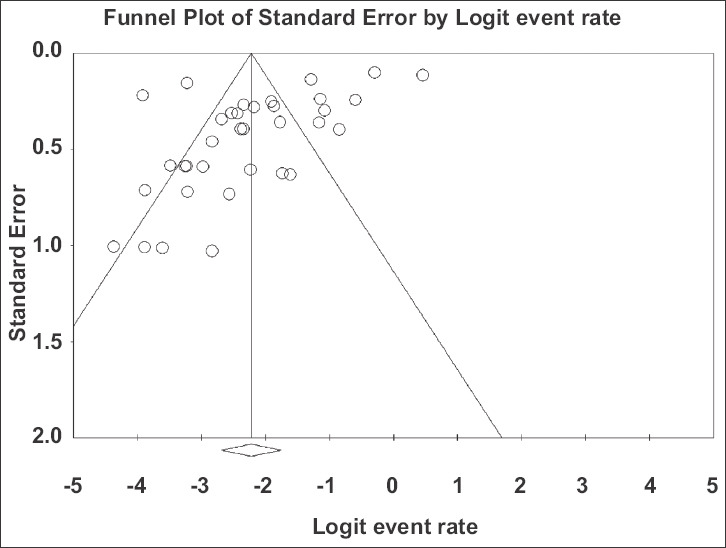
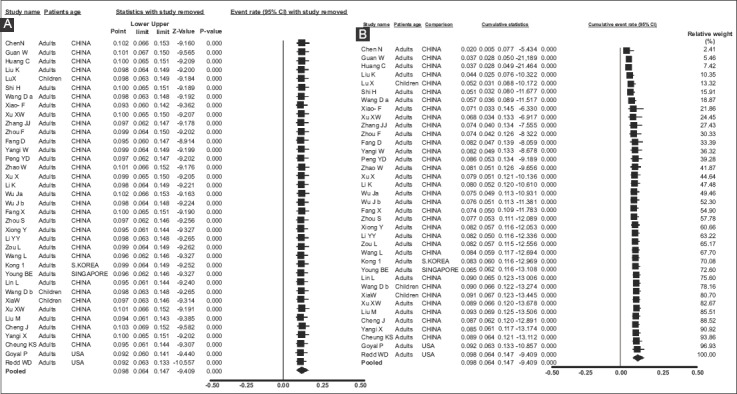
PubMed, Medline and Embase databases were searched up to 10 April 2020, using suitable keywords. Individual and pooled prevalence rates with 95% confidence intervals (CI) were calculated using the fixed- or random-effects model as appropriate. Heterogeneity between studies was calculated employing the Cochran Q test and values, whereas the possibility of publication bias was examined by constructing funnel plots. Additionally, subgroup and sensitivity analyses were performed.
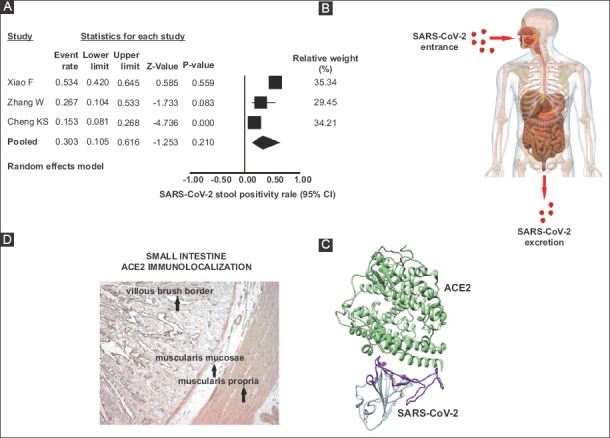
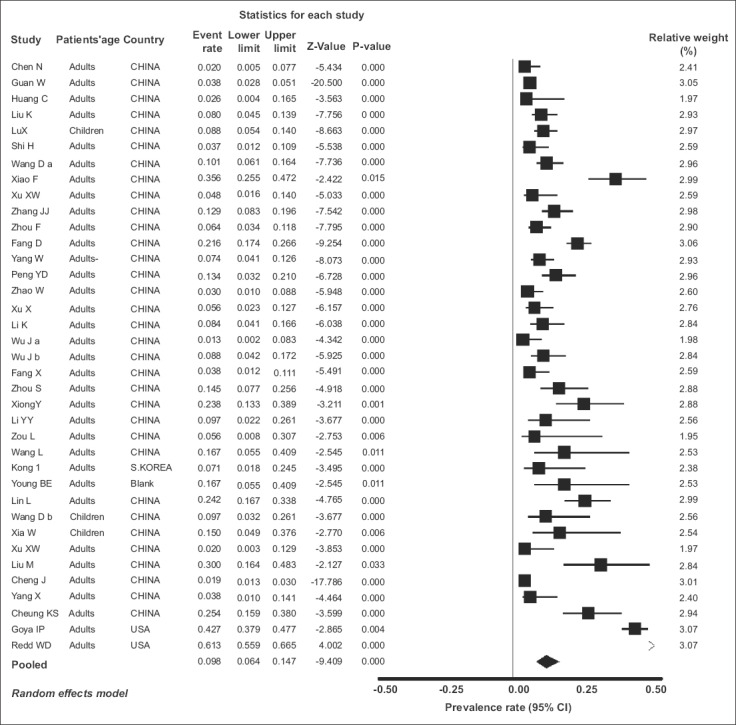
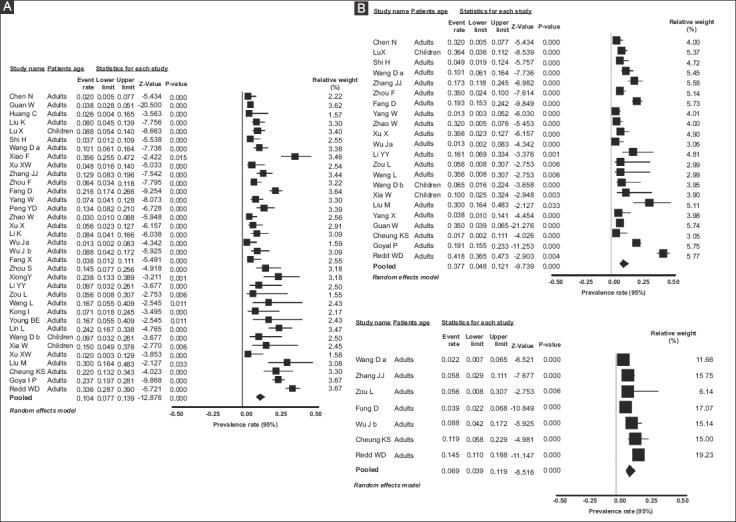
In adult COVID-19 patients, the prevalence rates (95%CI) for all GI symptoms, and separately for diarrhea, nausea/vomiting, and abdominal discomfort/pain were 9.8% (6.4-14.7), 10.4% (95%CI 7.7-13.9), 7.7% (95%CI 4.8-12.1), and 6.9% (95%CI 3.9-11.9) respectively. The prevalence rates for children were 9.6% (95%CI 6.3-14.3) for all symptoms, 9.6% (95%CI 6.3-14.3) for diarrhea, and 6.8% (95% CI 4.2-11) for nausea/vomiting. In 30.3% (95%CI 10.5-61.6) of the patients SARS-CoV-2 RNA was detected in feces.
A percentage of patients with COVID-19 will manifest symptoms from the digestive system. The GI tract may be a target organ and potential transmission route of SARS-CoV-2, with important implications for disease management and transmission.
新型冠状病毒肺炎(COVID-19)患者通常表现出发热和呼吸道症状。然而,一些患者也会出现胃肠道症状,如腹泻、呕吐和腹痛。此外,在感染患者的粪便中已检测到严重急性呼吸综合征冠状病毒2(SARS-CoV-2)RNA。目前,对于这种潜在致命疾病的研究兴趣正在迅速发展。我们系统地回顾并荟萃分析了表明消化系统参与COVID-19的证据。
截至2020年4月10日,使用适当的关键词检索了PubMed、Medline和Embase数据库。根据情况使用固定效应模型或随机效应模型计算个体患病率和合并患病率以及95%置信区间(CI)。采用Cochran Q检验和I²值计算研究之间的异质性,而通过构建漏斗图来检验发表偏倚的可能性。此外,还进行了亚组分析和敏感性分析。
在成年COVID-19患者中,所有胃肠道症状的患病率(95%CI),以及腹泻、恶心/呕吐和腹部不适/疼痛的单独患病率分别为9.8%(6.4 - 14.7)、10.4%(95%CI 7.7 - 13.9)、7.7%(95%CI 4.8 - 12.1)和6.9%(95%CI 3.9 - 11.9)。儿童所有症状的患病率为9.6%(95%CI 6.3 - 14.3),腹泻患病率为9.6%(95%CI 6.3 - 14.3),恶心/呕吐患病率为6.8%(95%CI 4.2 - 11)。在30.3%(95%CI 10.5 - 61.6)的患者粪便中检测到SARS-CoV-2 RNA。
一部分COVID-19患者会出现消化系统症状。胃肠道可能是SARS-CoV-2的靶器官和潜在传播途径,对疾病管理和传播具有重要意义。