Department of Biology, New York University, New York, United States.
Elife. 2020 Jul 6;9:e58880. doi: 10.7554/eLife.58880.
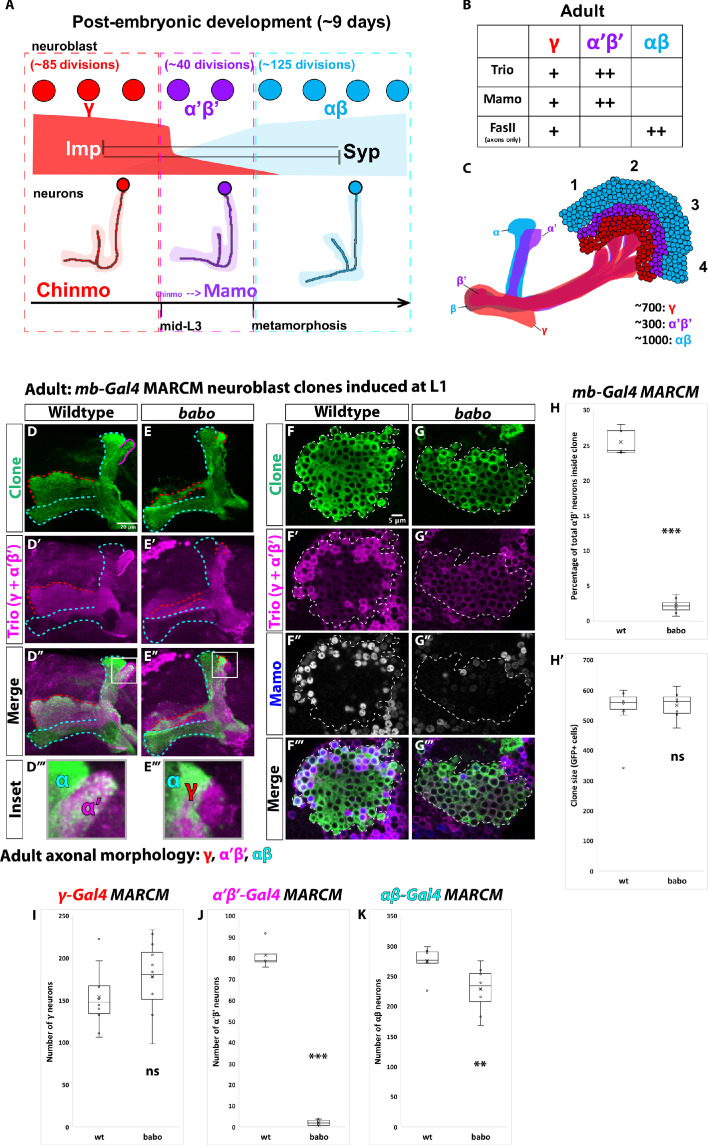
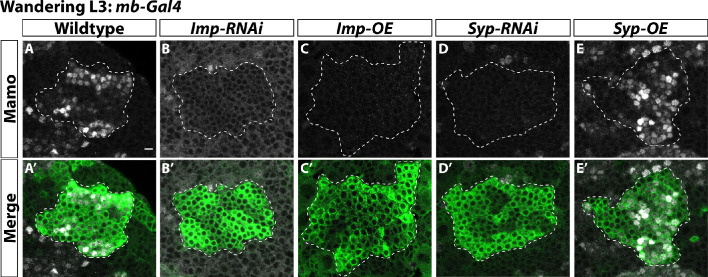
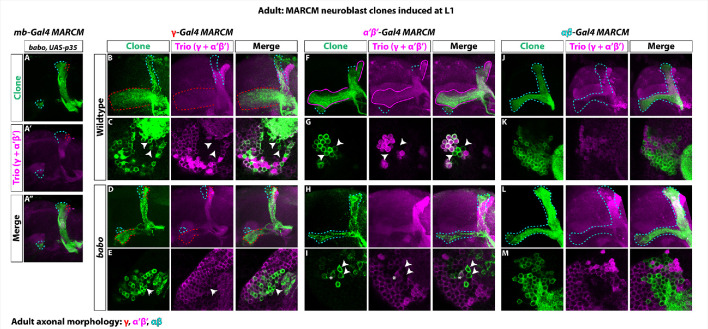
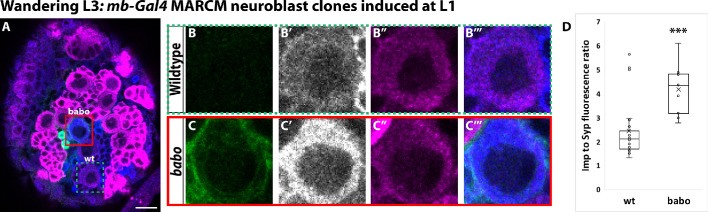
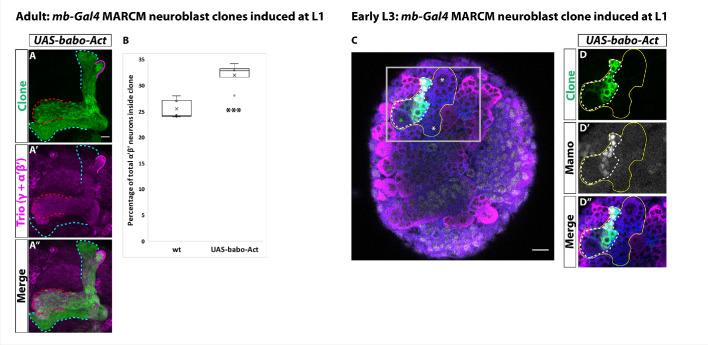
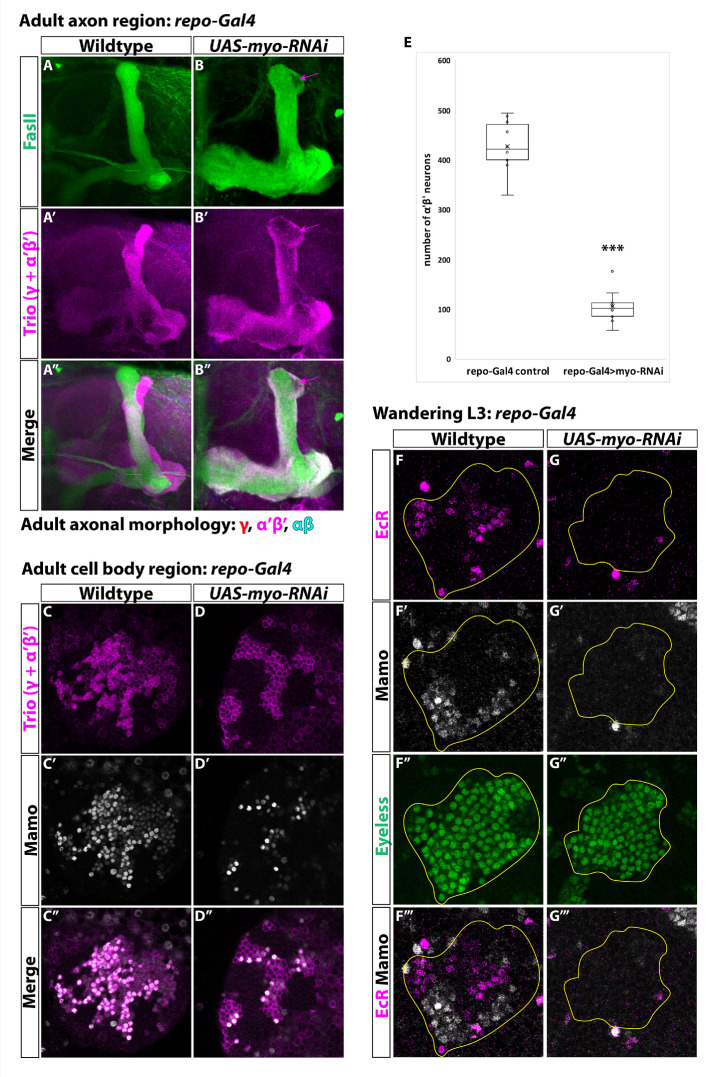
Temporal patterning of neural progenitors leads to the sequential production of diverse neurons. To understand how extrinsic cues influence intrinsic temporal programs, we studied mushroom body progenitors (neuroblasts) that sequentially produce only three neuronal types: γ, then α'β', followed by αβ. Opposing gradients of two RNA-binding proteins Imp and Syp comprise the intrinsic temporal program. Extrinsic activin signaling regulates the production of α'β' neurons but whether it affects the intrinsic temporal program was not known. We show that the activin ligand Myoglianin from glia regulates the temporal factor Imp in mushroom body neuroblasts. Neuroblasts missing the activin receptor Baboon have a delayed intrinsic program as Imp is higher than normal during the α'β' temporal window, causing the loss of α'β' neurons, a decrease in αβ neurons, and a likely increase in γ neurons, without affecting the overall number of neurons produced. Our results illustrate that an extrinsic cue modifies an intrinsic temporal program to increase neuronal diversity.
神经祖细胞的时间模式导致不同神经元的顺序产生。为了了解外在线索如何影响内在的时间程序,我们研究了仅顺序产生三种神经元类型的蘑菇体祖细胞(神经母细胞):γ 型、α'β'型,然后是αβ 型。两种 RNA 结合蛋白 Imp 和 Syp 的相反梯度构成了内在的时间程序。外在的激活素信号调节α'β'神经元的产生,但它是否影响内在的时间程序尚不清楚。我们表明,来自胶质细胞的激活素配体 Myoglianin 调节蘑菇体神经母细胞中的时间因子 Imp。缺失激活素受体 Baboon 的神经母细胞的内在程序会延迟,因为 Imp 在 α'β'时间窗口期间高于正常水平,导致 α'β'神经元的丧失、αβ 神经元的减少,以及 γ 神经元的增加,而不影响产生的神经元总数。我们的结果表明,外在线索修饰了内在的时间程序以增加神经元的多样性。