Cleveland Clinic Lerner College of Medicine (A.K.F., M.K.C.), Case Western Reserve University, OH.
Department of Cardiovascular Medicine, Cleveland Clinic, OH (M.K.C., K.G.T., S.A.T.).
Circ Arrhythm Electrophysiol. 2020 Aug;13(8):e007952. doi: 10.1161/CIRCEP.119.007952. Epub 2020 Jul 6.
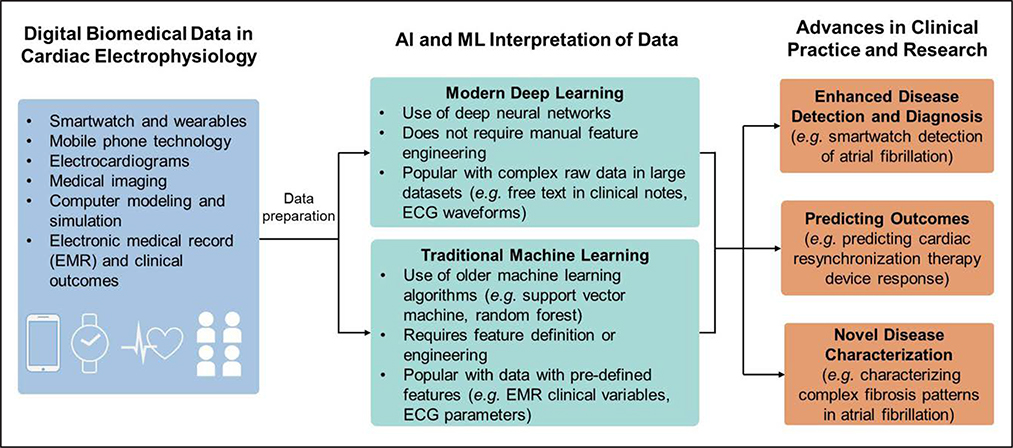
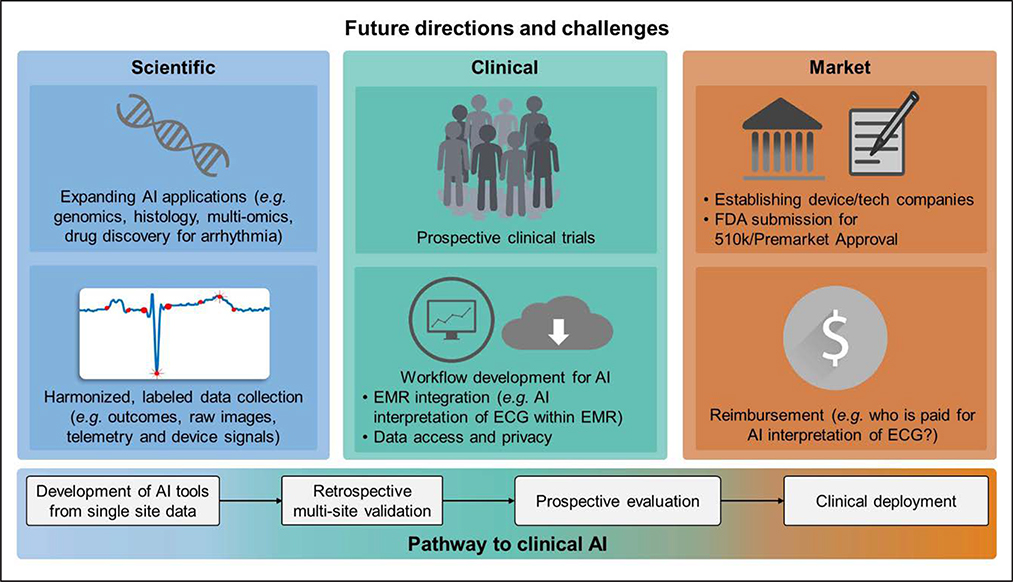
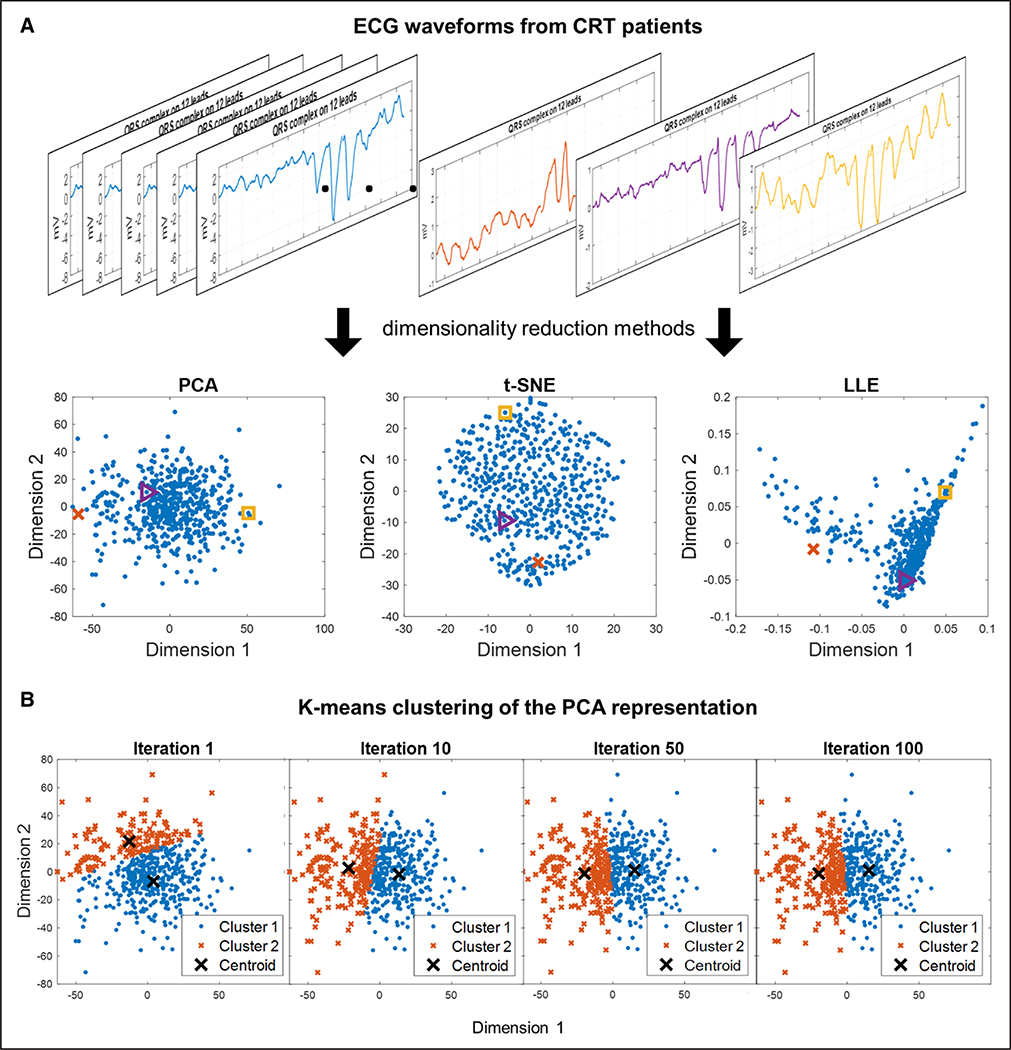
Artificial intelligence (AI) and machine learning (ML) in medicine are currently areas of intense exploration, showing potential to automate human tasks and even perform tasks beyond human capabilities. Literacy and understanding of AI/ML methods are becoming increasingly important to researchers and clinicians. The first objective of this review is to provide the novice reader with literacy of AI/ML methods and provide a foundation for how one might conduct an ML study. We provide a technical overview of some of the most commonly used terms, techniques, and challenges in AI/ML studies, with reference to recent studies in cardiac electrophysiology to illustrate key points. The second objective of this review is to use examples from recent literature to discuss how AI and ML are changing clinical practice and research in cardiac electrophysiology, with emphasis on disease detection and diagnosis, prediction of patient outcomes, and novel characterization of disease. The final objective is to highlight important considerations and challenges for appropriate validation, adoption, and deployment of AI technologies into clinical practice.
人工智能(AI)和机器学习(ML)在医学领域目前是一个深入探索的领域,具有自动化人类任务甚至执行超越人类能力的任务的潜力。对研究人员和临床医生来说,具备 AI/ML 方法的读写能力变得越来越重要。本综述的第一个目标是为初学者提供 AI/ML 方法的读写能力,并为如何进行 ML 研究提供基础。我们提供了一些最常用的术语、技术和 AI/ML 研究中的挑战的技术概述,并参考心脏电生理学中的最新研究来说明要点。本综述的第二个目标是使用来自最新文献的示例来讨论 AI 和 ML 如何改变心脏电生理学的临床实践和研究,重点是疾病检测和诊断、患者预后预测以及疾病的新特征描述。最后一个目标是强调在将 AI 技术恰当地验证、采用和部署到临床实践中时需要考虑的重要因素和挑战。