Laser Research Centre, Faculty of Health Sciences, University of Johannesburg, Johannesburg 2028, South Africa.
Int J Mol Sci. 2020 Jul 3;21(13):4745. doi: 10.3390/ijms21134745.
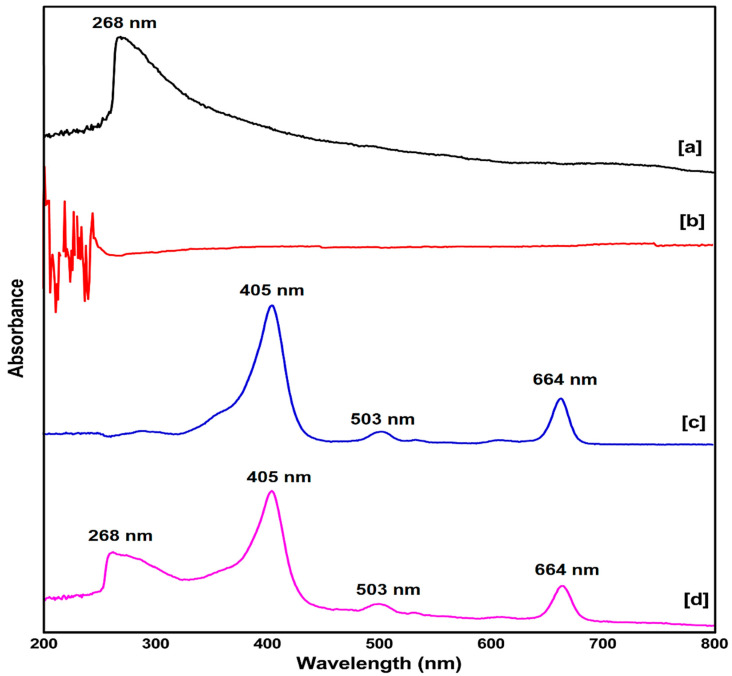
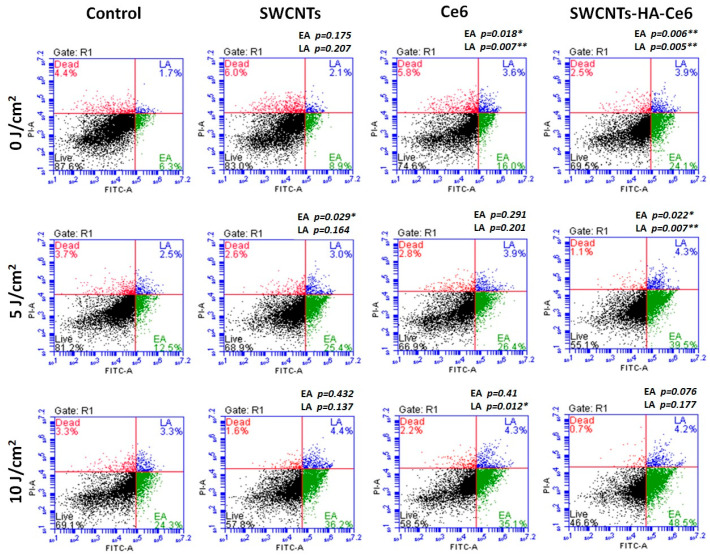
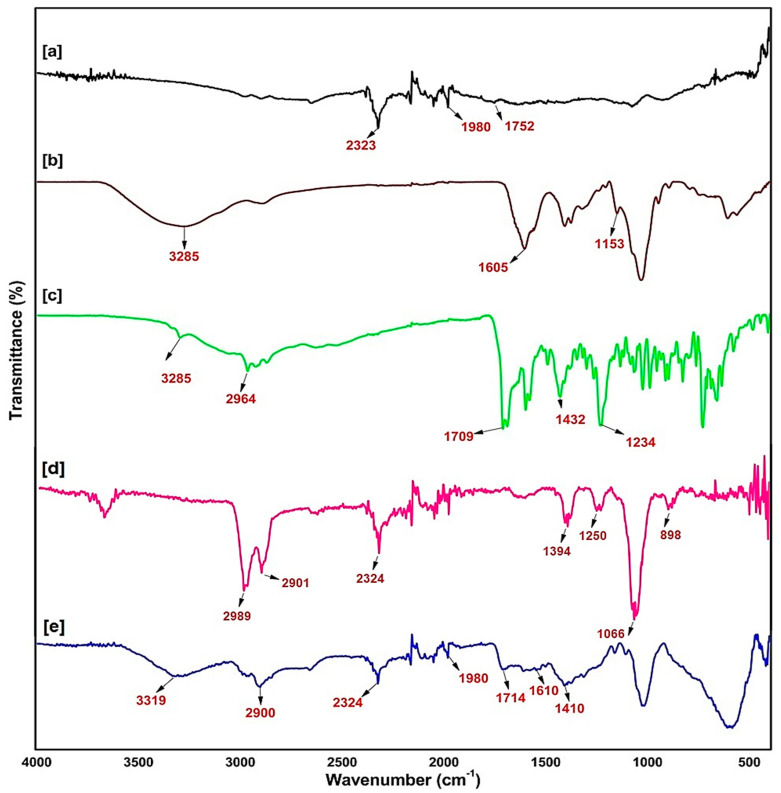
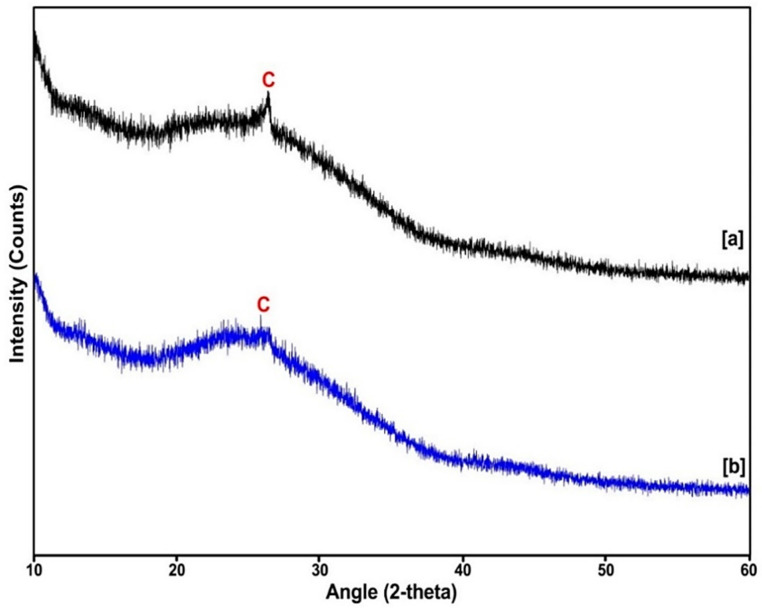
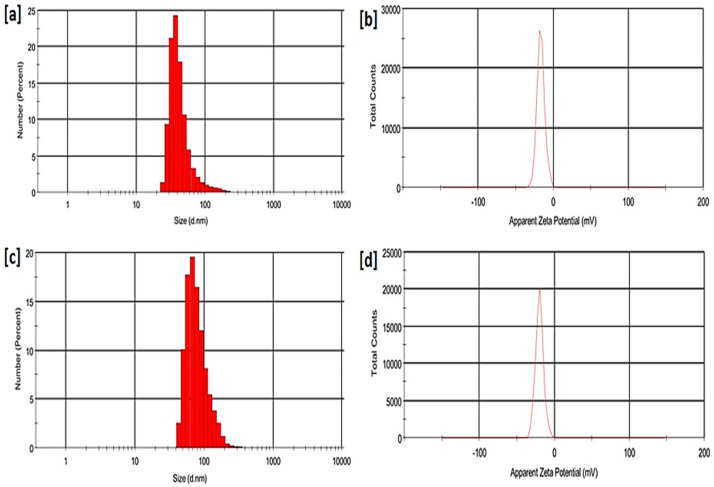
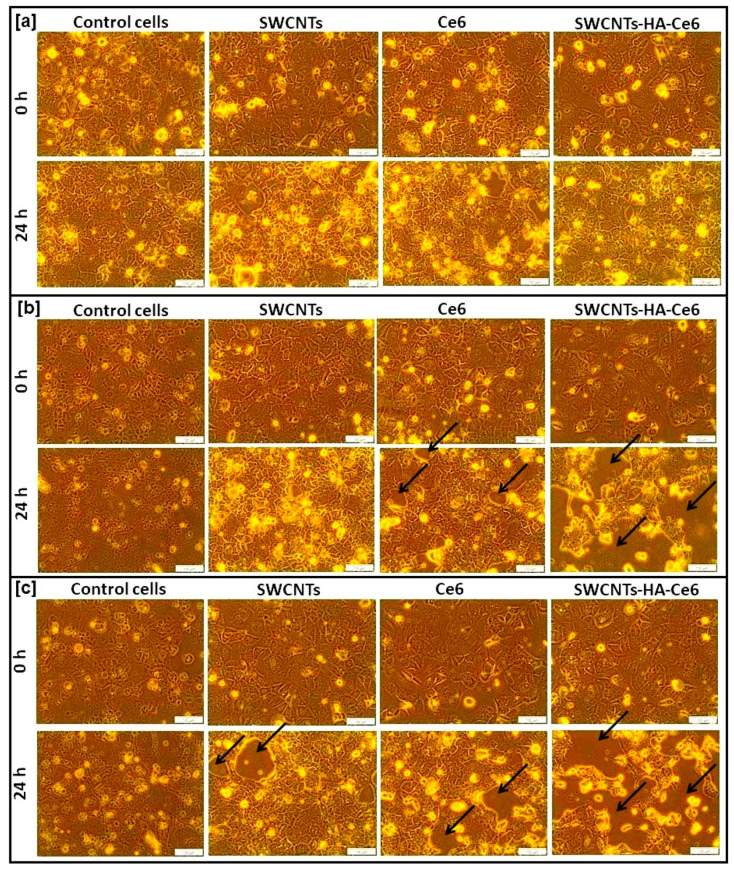
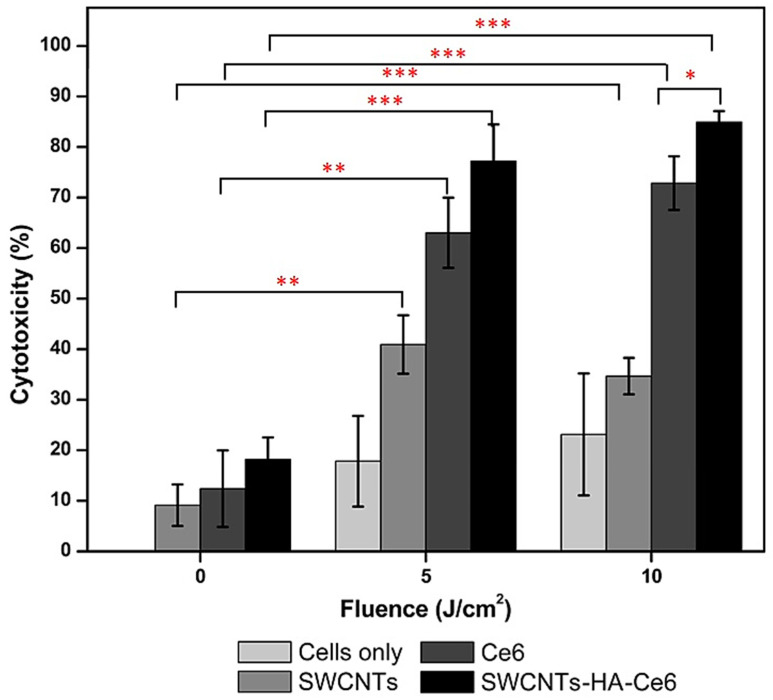
Colon cancer is the third major cancer contributor to mortality worldwide. Nanosized particles have attracted attention due to their possible contribution towards cancer treatment and diagnosis. Photodynamic therapy (PDT) is a cancer therapeutic modality that involves a light source, a photosensitizer and reactive oxygen species. Carbon nanotubes are fascinating nanocarriers for drug delivery, cancer diagnosis and numerous potential applications due to their unique physicochemical properties. In this study, single walled carbon nanotubes (SWCNTs) were coupled with hyaluronic acid (HA) and chlorin e6 (Ce6) coated on the walls of SWCNTs. The newly synthesized nanobiocomposite was characterized using ultraviolet-visible spectroscopy, Fourier transform electron microscopy (FTIR), X-ray diffraction analysis (XRD), particle size analysis and zeta potential. The loading efficiency of the SWCNTs-HA for Ce6 was calculated. The toxicity of the nanobiocomposite was tested on colon cancer cells using PDT at a fluence of 5 J/cm and 10 J/cm. After 24 h, cellular changes were observed via microscopy, LDH cytotoxicity assay and cell death induction using annexin propidium iodide. The results showed that the newly synthesized nanobiocomposite enhanced the ability of PDT to be a photosensitizer carrier and induced cell death in colon cancer cells.
结肠癌是全球导致死亡的第三大主要癌症。由于纳米颗粒在癌症治疗和诊断方面的潜在贡献,它们引起了人们的关注。光动力疗法(PDT)是一种癌症治疗方式,涉及光源、光敏剂和活性氧。由于其独特的物理化学性质,碳纳米管是用于药物输送、癌症诊断和许多潜在应用的迷人的纳米载体。在这项研究中,单壁碳纳米管(SWCNTs)与透明质酸(HA)偶联,并在 SWCNTs 的壁上涂覆了叶绿素 e6(Ce6)。使用紫外-可见光谱、傅里叶变换电子显微镜(FTIR)、X 射线衍射分析(XRD)、粒度分析和zeta 电位对新合成的纳米生物复合材料进行了表征。计算了 SWCNTs-HA 对 Ce6 的负载效率。使用 PDT 在 5 J/cm 和 10 J/cm 的辐照下,通过细胞毒性测定、细胞死亡诱导实验和荧光显微镜观察,测试了纳米生物复合材料对结肠癌细胞的毒性。结果表明,新合成的纳米生物复合材料增强了 PDT 作为光敏剂载体的能力,并诱导了结肠癌细胞的死亡。