Shanghai Key Laboratory for Nucleic Acid Chemistry and Nanomedicine, Institute of Molecular Medicine, State Key Laboratory of Oncogenes and Related Genes, Shanghai Cancer Institute, Renji Hospital, School of Medicine, Shanghai Jiao Tong University, Shanghai 200127, China.
Sci Adv. 2020 Jun 24;6(26):eabb1952. doi: 10.1126/sciadv.abb1952. eCollection 2020 Jun.
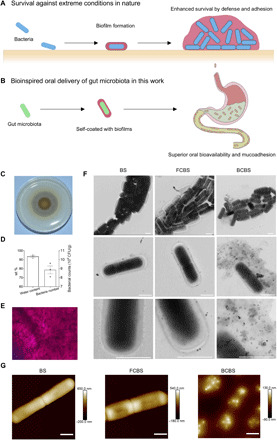
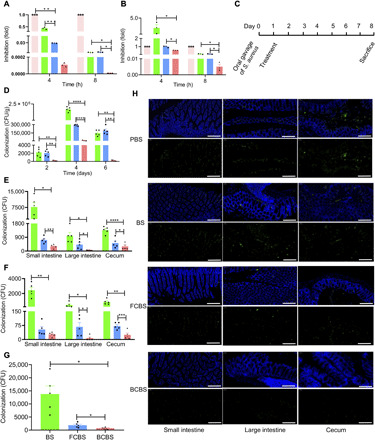
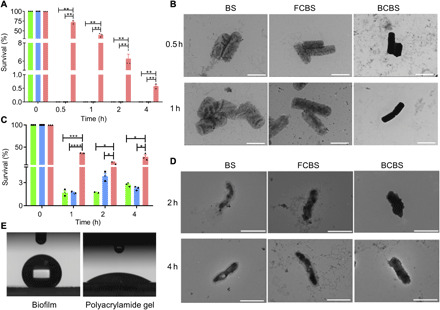
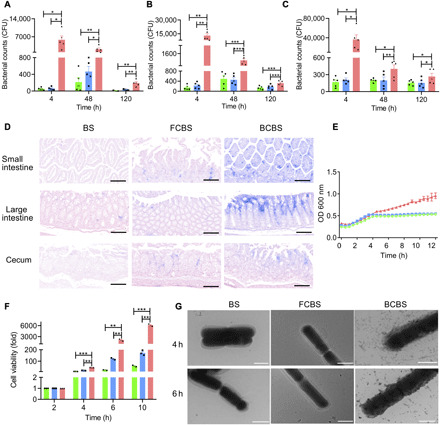
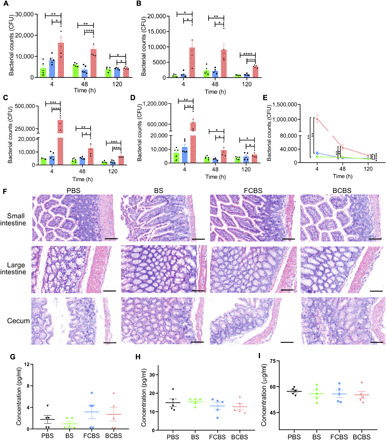
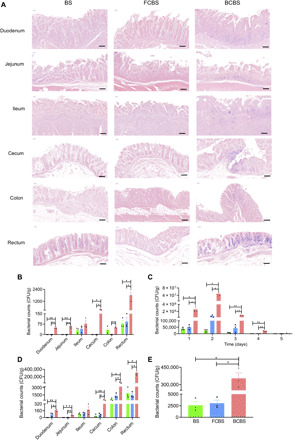
Transplanting beneficial bacteria to the gut microbiome can positively modulate the bacterial composition and remains of great interest in prevention and treatment. However, environmental assaults and rapid transit times in the gastrointestinal (GI) tract result in low oral bioavailability and limited intestinal colonization. Here, we describe a bioinspired strategy of self-coating with biofilms that endows the transplanted gut microbiota with superior resistance and adhesion capacity. Using clinical as a model probiotic bacterium, biofilm-coated probiotics demonstrate substantially improved GI tract tolerance and mucoadhesion in mice and swine. In particular, coated probiotics exhibit a 125-fold higher oral bioavailability and a 17 times greater intestinal colonization than uncoated bacteria in the porcine model. With notable ability to survive and reside in the GI tract, coated bacteria further show a significantly enhanced decolonization effect in mice colonized with . Self-coating with biofilms suggests a robust platform for oral doses of gut microbiota.
将有益细菌移植到肠道微生物群中可以积极调节细菌组成,在预防和治疗方面仍然具有很大的兴趣。然而,胃肠道(GI)中的环境攻击和快速传输时间导致口服生物利用度低和有限的肠道定植。在这里,我们描述了一种自我包被生物膜的仿生策略,赋予移植的肠道微生物群更好的抗性和粘附能力。使用临床作为模型益生菌细菌,生物膜包被的益生菌在小鼠和猪中表现出显著提高的胃肠道耐受性和粘膜粘附性。特别是,包被的益生菌在猪模型中表现出比未包被细菌高 125 倍的口服生物利用度和 17 倍的肠道定植率。由于具有在胃肠道中存活和驻留的显著能力,包被细菌在定植有 的小鼠中进一步显示出显著增强的去定植效果。生物膜的自我包被为口服剂量的肠道微生物群提供了一个强大的平台。