Department of Mouse Molecular Genetics, Institute of Molecular Genetics of the Czech Academy of Science, Vestec, Czech Republic.
Research Facility Studenec, Institute of Vertebrate Biology of the Czech Academy of Sciences, Brno, Czech Republic.
Mol Biol Evol. 2020 Dec 16;37(12):3423-3438. doi: 10.1093/molbev/msaa167.
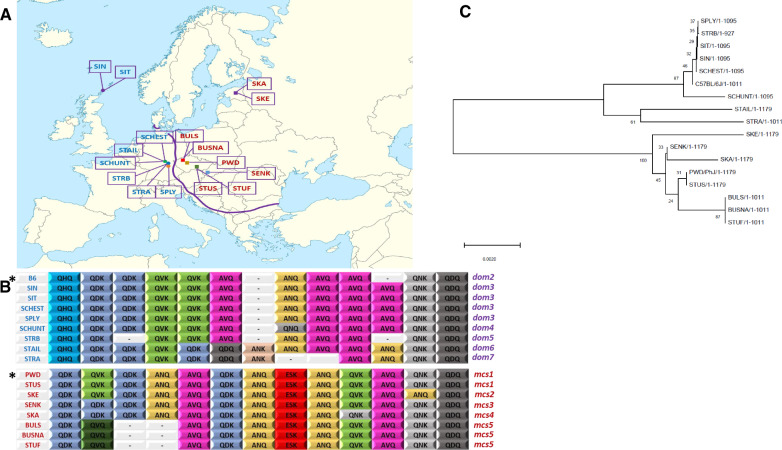
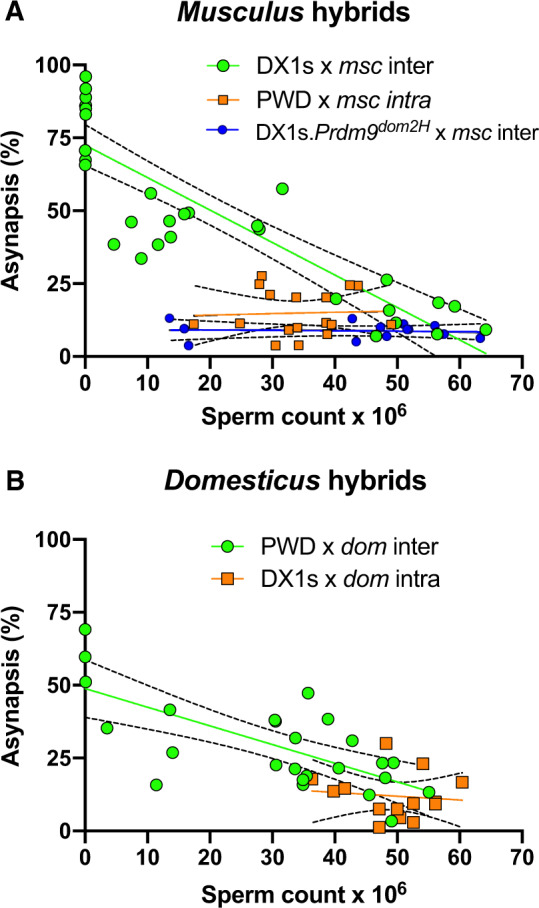
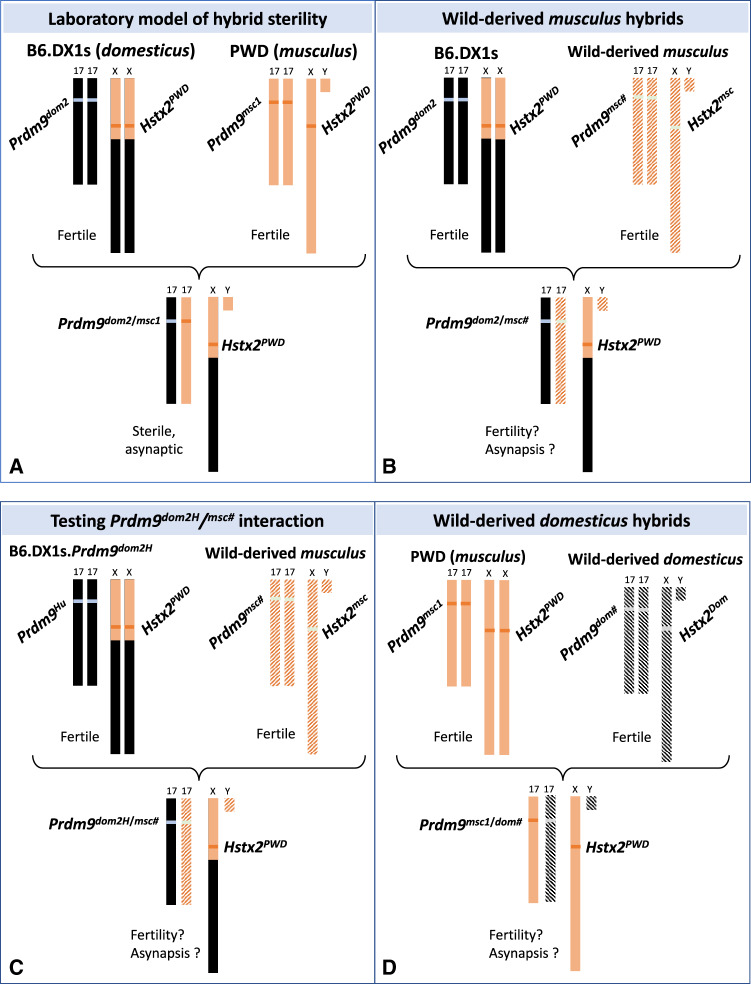
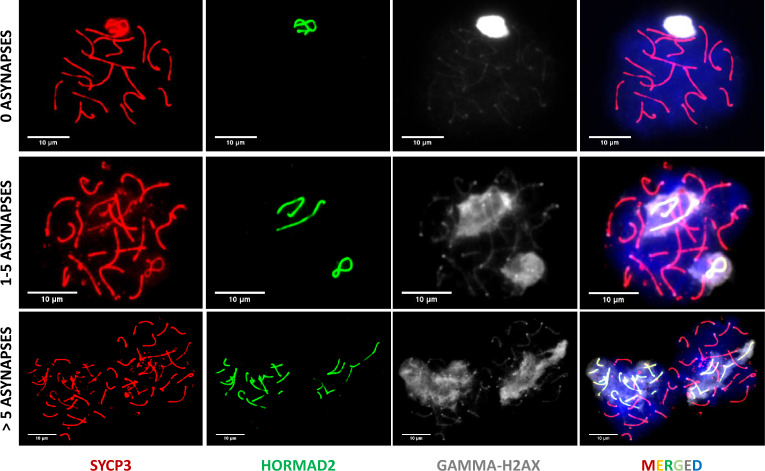
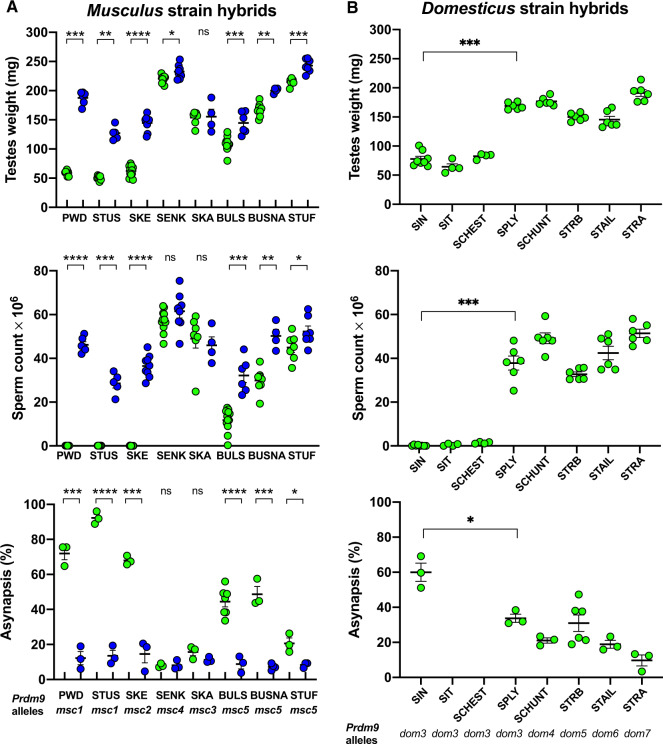
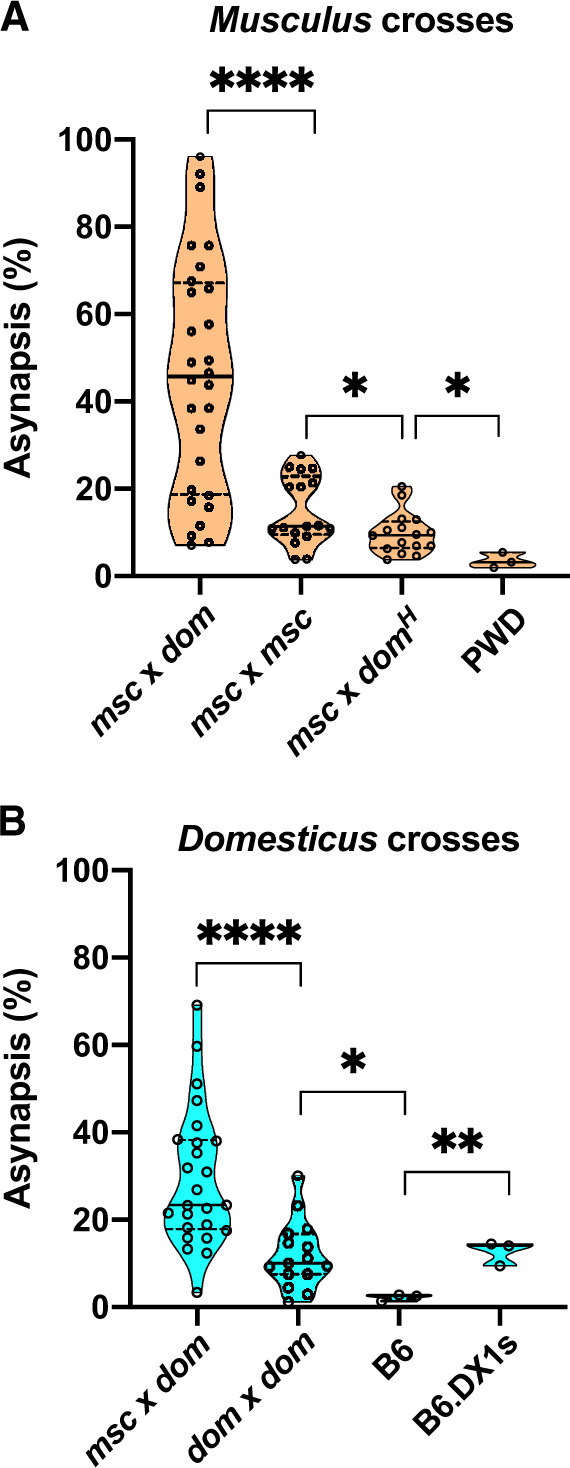
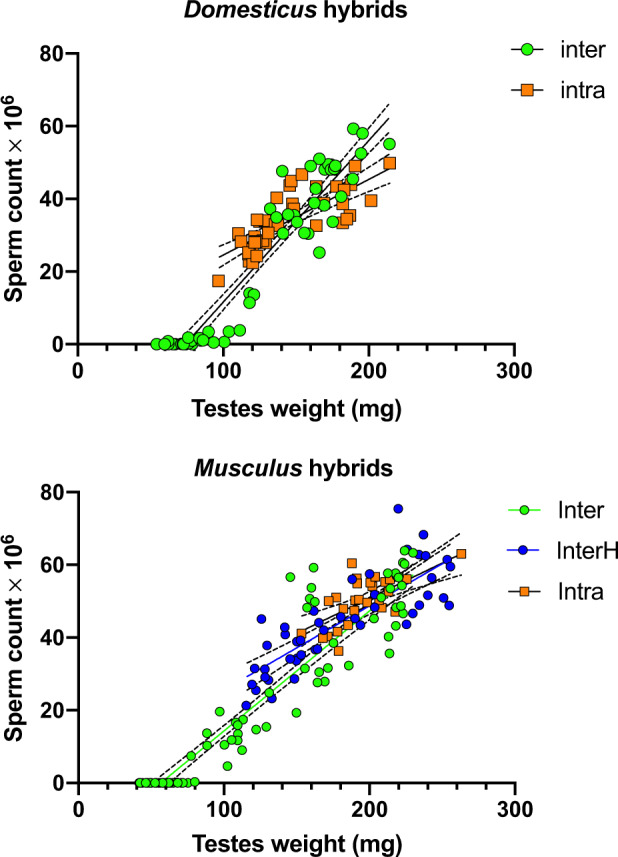
The classical definition posits hybrid sterility as a phenomenon when two parental taxa each of which is fertile produce a hybrid that is sterile. The first hybrid sterility gene in vertebrates, Prdm9, coding for a histone methyltransferase, was identified in crosses between two laboratory mouse strains derived from Mus mus musculus and M. m. domesticus subspecies. The unique function of PRDM9 protein in the initiation of meiotic recombination led to the discovery of the basic molecular mechanism of hybrid sterility in laboratory crosses. However, the role of this protein as a component of reproductive barrier outside the laboratory model remained unclear. Here, we show that the Prdm9 allelic incompatibilities represent the primary cause of reduced fertility in intersubspecific hybrids between M. m. musculus and M. m. domesticus including 16 musculus and domesticus wild-derived strains. Disruption of fertility phenotypes correlated with the rate of failure of synapsis between homologous chromosomes in meiosis I and with early meiotic arrest. All phenotypes were restored to normal when the domesticus Prdm9dom2 allele was substituted with the Prdm9dom2H humanized variant. To conclude, our data show for the first time the male infertility of wild-derived musculus and domesticus subspecies F1 hybrids controlled by Prdm9 as the major hybrid sterility gene. The impairment of fertility surrogates, testes weight and sperm count, correlated with increasing difficulties of meiotic synapsis of homologous chromosomes and with meiotic arrest, which we suppose reflect the increasing asymmetry of PRDM9-dependent DNA double-strand breaks.
经典定义认为杂种不育是指双亲种每个种都有生育能力,但产生的杂种却是不育的现象。脊椎动物的第一个杂种不育基因 Prdm9 是在两个实验室小鼠品系之间杂交时发现的,这两个品系分别来自 Mus musculus 和 M. m. domesticus 亚种。PRDM9 蛋白在减数分裂重组起始中的独特功能导致了实验室杂交中杂种不育的基本分子机制的发现。然而,该蛋白作为实验室模型之外生殖障碍的一个组成部分的作用仍然不清楚。在这里,我们表明 Prdm9 等位基因不相容性代表了 M. m. musculus 和 M. m. domesticus 亚种之间(包括 16 个野生型鼠和家鼠)杂种生育力降低的主要原因。生育力表型的破坏与减数分裂 I 中同源染色体联会的失败率以及早期减数分裂阻滞相关。当 domesticus Prdm9dom2 等位基因被人源化的 Prdm9dom2H 变体取代时,所有表型都恢复正常。总之,我们的数据首次表明,由 Prdm9 控制的野生型鼠和家鼠亚种 F1 杂种的雄性不育是主要的杂种不育基因。生育力替代物、睾丸重量和精子计数的损伤与同源染色体减数分裂联会的困难增加以及减数分裂阻滞相关,我们推测这反映了 PRDM9 依赖性 DNA 双链断裂的不对称性增加。