CAS Key Laboratory of Systems Biology, Shanghai Institute of Biochemistry and Cell Biology, Center for Excellence in Mollecular Cell Science, Chinese Academy of Sciences, Shanghai 200031, China.
College of Life Sciences, University of Chinese Academy of Sciences, Beijing 100049, China.
J Mol Cell Biol. 2020 Jun 11;12(12):946-957. doi: 10.1093/jmcb/mjaa033.
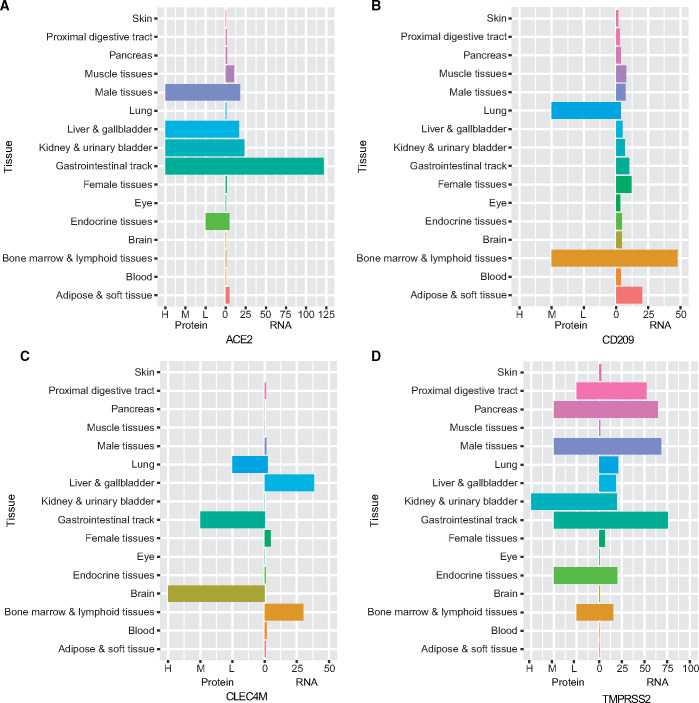
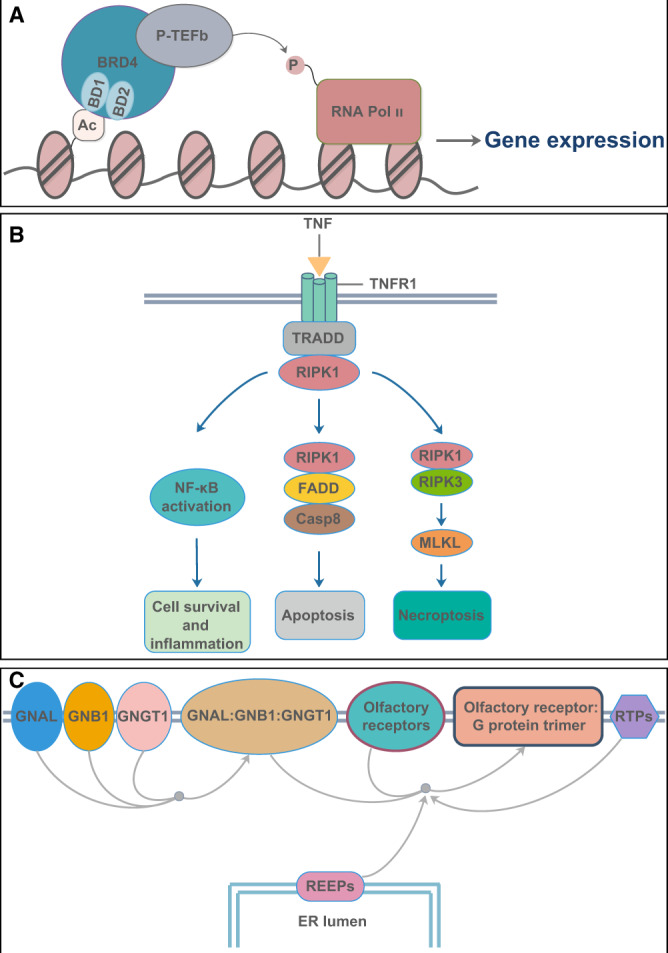
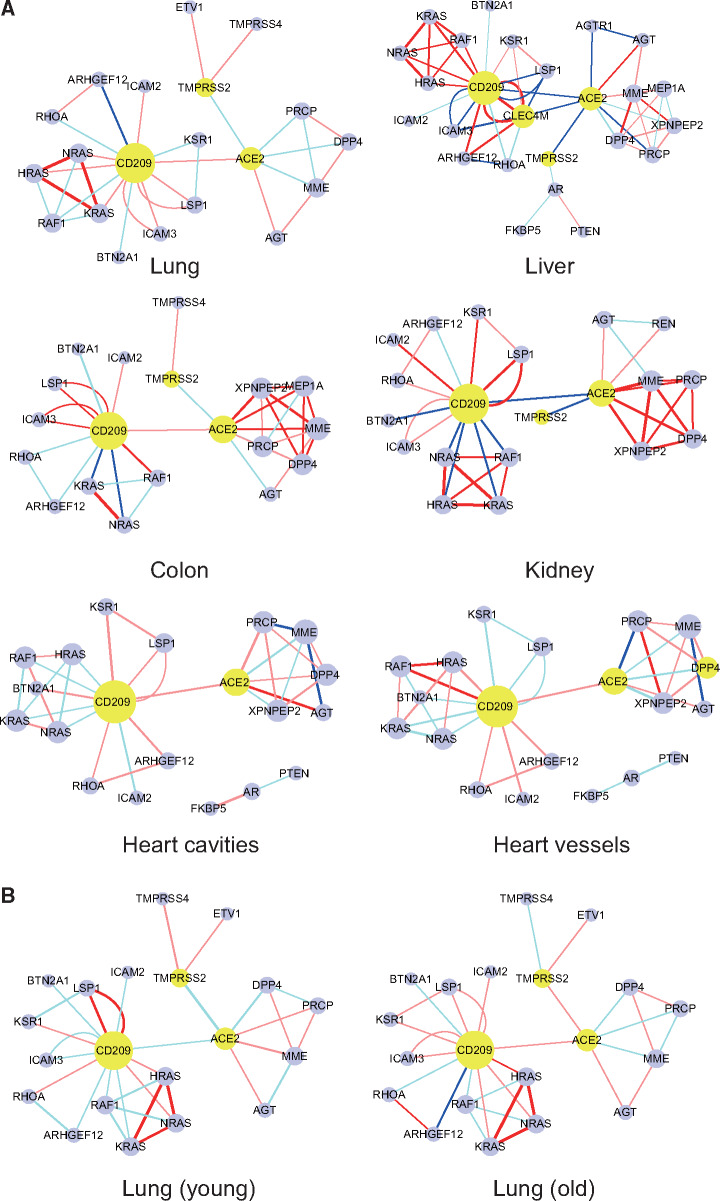
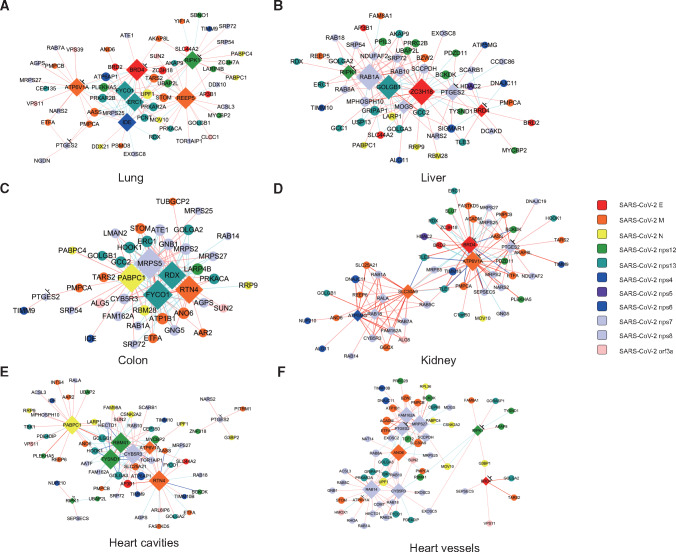
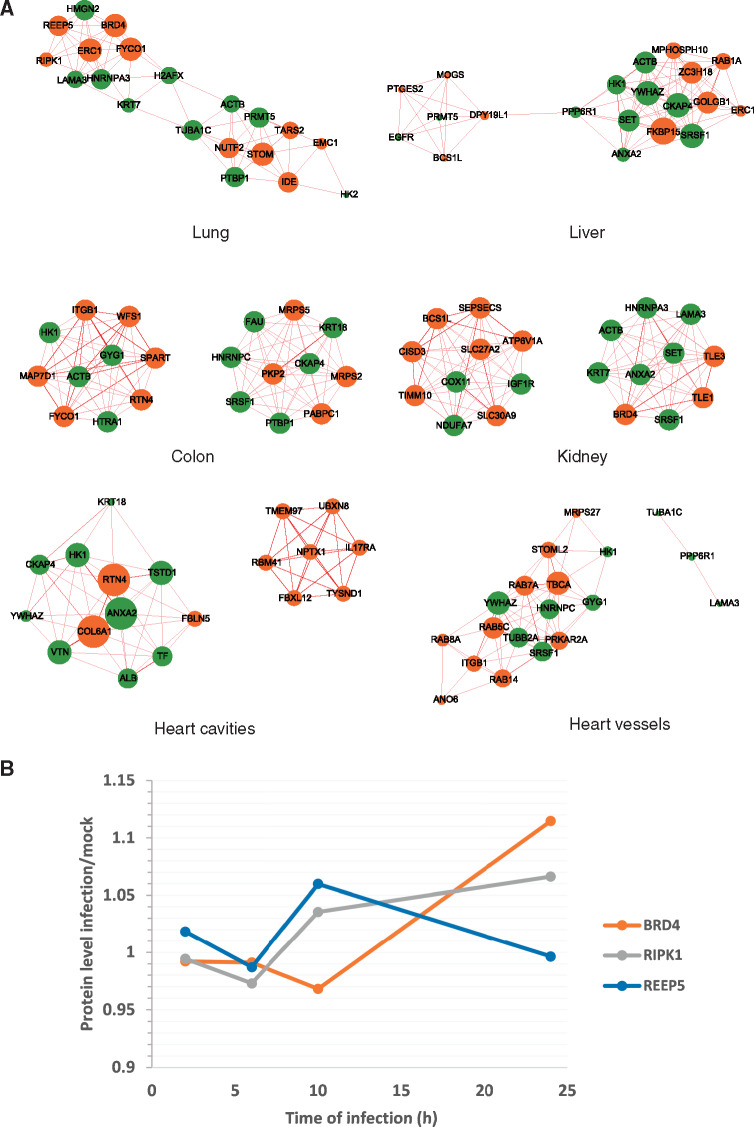
For patients with COVID-19 caused by severe acute respiratory syndrome coronavirus 2 (SARS-CoV-2), the damages to multiple organs have been clinically observed. Since most of current investigations for virus-host interaction are based on cell level, there is an urgent demand to probe tissue-specific features associated with SARS-CoV-2 infection. Based on collected proteomic datasets from human lung, colon, kidney, liver, and heart, we constructed a virus-receptor network, a virus-interaction network, and a virus-perturbation network. In the tissue-specific networks associated with virus-host crosstalk, both common and different key hubs are revealed in diverse tissues. Ubiquitous hubs in multiple tissues such as BRD4 and RIPK1 would be promising drug targets to rescue multi-organ injury and deal with inflammation. Certain tissue-unique hubs such as REEP5 might mediate specific olfactory dysfunction. The present analysis implies that SARS-CoV-2 could affect multi-targets in diverse host tissues, and the treatment of COVID-19 would be a complex task.
对于由严重急性呼吸系统综合征冠状病毒 2(SARS-CoV-2)引起的 COVID-19 患者,已经在临床上观察到多个器官的损伤。由于目前大多数病毒-宿主相互作用的研究都是基于细胞水平,因此迫切需要探测与 SARS-CoV-2 感染相关的组织特异性特征。基于从人肺、结肠、肾、肝和心脏收集的蛋白质组学数据集,我们构建了病毒-受体网络、病毒-相互作用网络和病毒-扰动网络。在与病毒-宿主串扰相关的组织特异性网络中,在不同的组织中揭示了共同和不同的关键枢纽。BRD4 和 RIPK1 等在多种组织中普遍存在的枢纽可能是有希望的药物靶点,可用于挽救多器官损伤和应对炎症。REEP5 等某些组织特有的枢纽可能介导特定的嗅觉功能障碍。本分析表明,SARS-CoV-2 可能会影响多种宿主组织中的多个靶标,而 COVID-19 的治疗将是一项复杂的任务。