Dong Tianyu, Zheng Ting, Fu Weihong, Guan Lubin, Jia Haifeng, Fang Jinggui
Key Laboratory of Genetics and Fruit development, Horticultural College, Nanjing Agricultural University, Nanjing 210095, China.
Foods. 2020 Jul 7;9(7):892. doi: 10.3390/foods9070892.
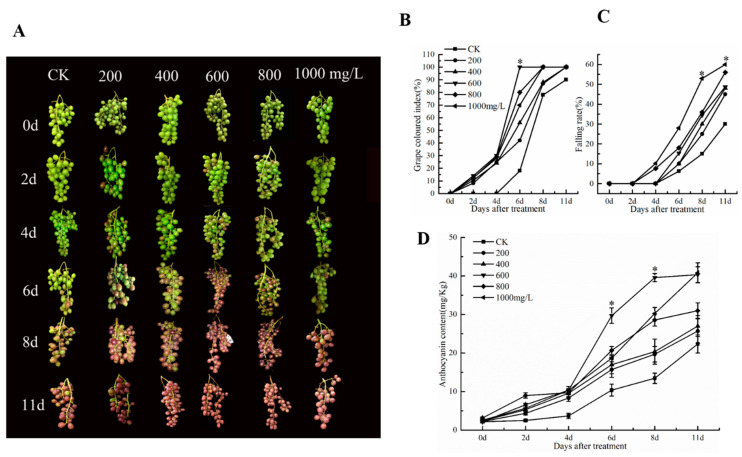
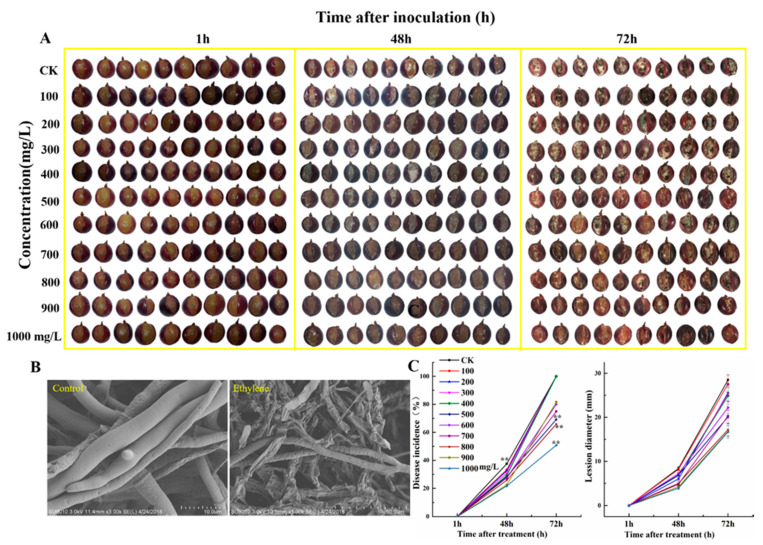
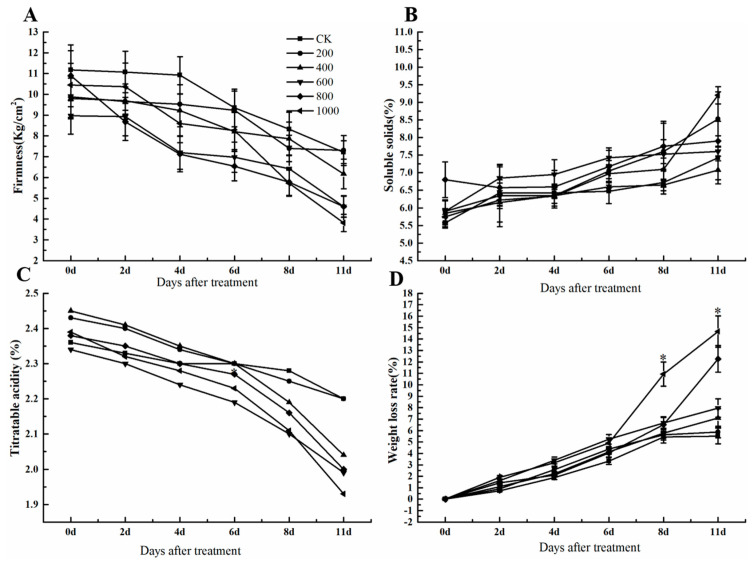
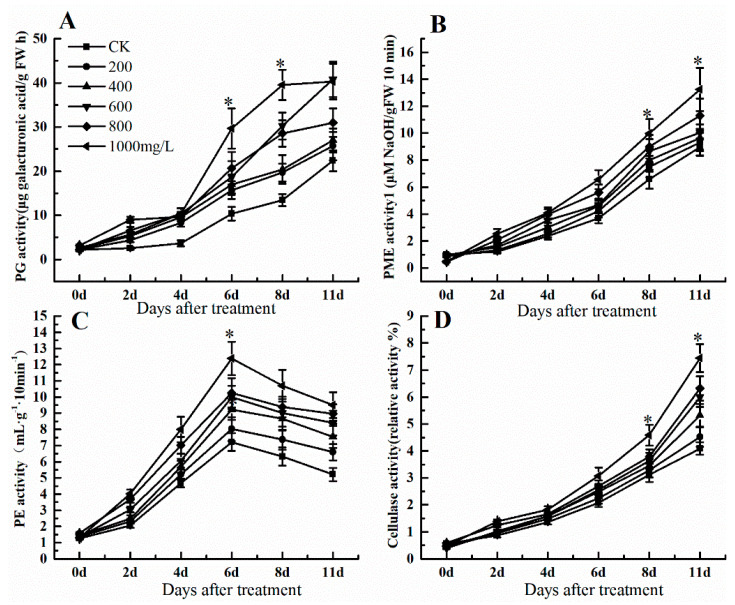
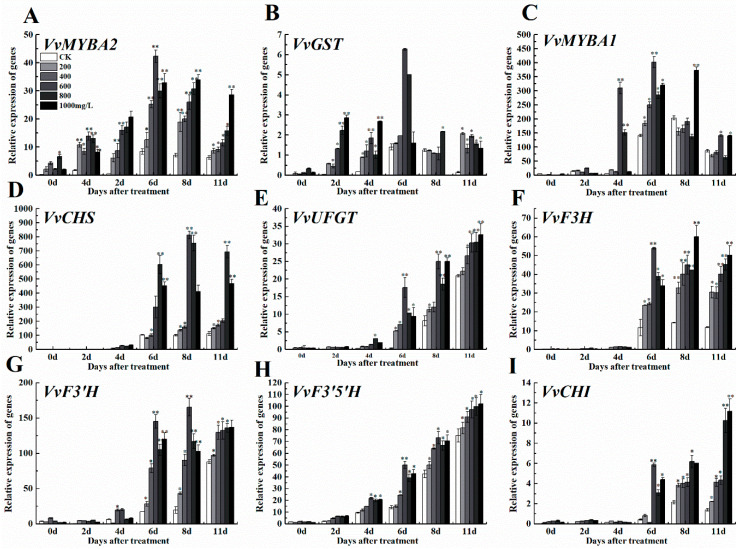
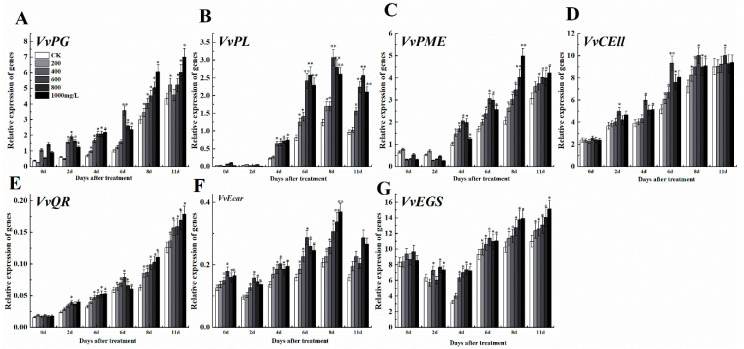
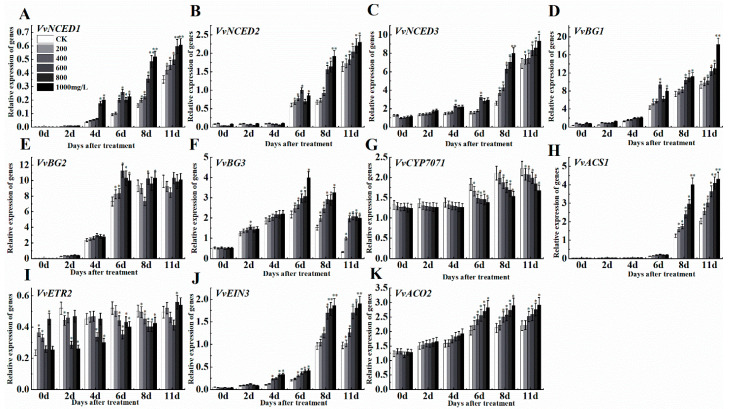
The formation of grape quality and the mechanism of resistance against foreign pathogens affect the storage stability of fruits during post-harvest handling. Ethylene plays a crucial role in regulating the ripeness of fruits and can be used as an exogenous regulator to resist exogenous pathogens. In this study, we used different concentrations of ethephon for treatment of grape fruits before veraison, analyzed the anthocyanin content, soluble solids, titratable acid, and determined fruit firmness and cell wall metabolism-related enzymes during fruit development. Results showed that exogenous ethephon promoted the early coloration of grape fruits and increased the coloring-related genes myeloblastosis A1(MYBA1), myeloblastosis A2(MYBA2), chalcone isomerase (CHI), flavanone 3-hydroxylase (F3H), flavonoid 3'-hydroxylase gene (F3'H), flavonoid 3', 5'hydroxylase (F3'5'H), 3-O-flavonoid glucosyltransferase (UFGT), and glutathione S-transferase (GST), softening related genes Polygalacturonase(PG), pectinate lyases(PL) and Pectin methylesterase( PME, as well as ethylene metabolism pathway-related genes 1-aminocyclopropane-1-carboxylic acid synthase 1(ACS1), 1-aminocyclopropane-1-carboxylic acid oxidase 2 (ACO2), ethylene receptor gene(ETR2), and ethylene-insensitive 3 (EIN3). Ethephon treatment also increased soluble solids and decreased titratable acid in grape fruit. Fruits pretreated with ethephon were inoculated with , which led to resistance in grape fruit through activation of the antioxidant system. The expression levels of disease resistance-related genes including , , , , , , , , also increased in inoculated fruit with pathogen following ethephon pretreatment. Furthermore, we monitored ethylene response factor 1(ERF1) transcription factor, which could interact with protein EIN3 during ethylene signal transduction and mediate fruit resistance against infection. Meanwhile, overexpression of VvERF1 vectorin strawberry fruits reduced the susceptibility to infection. We suggest that ethylene can induce resistance in ripened fruits after infection and provide adequate postharvest care.
葡萄品质的形成以及对外源病原体的抗性机制影响果实采后处理期间的贮藏稳定性。乙烯在调节果实成熟过程中起关键作用,并且可以用作抵抗外源病原体的外源调节剂。在本研究中,我们在葡萄转色前用不同浓度的乙烯利处理葡萄果实,分析了花青素含量、可溶性固形物、可滴定酸,并测定了果实发育过程中的果实硬度和细胞壁代谢相关酶。结果表明,外源乙烯利促进了葡萄果实的早期着色,并增加了与着色相关的基因髓母细胞瘤A1(MYBA1)、髓母细胞瘤A2(MYBA2)、查尔酮异构酶(CHI)、黄烷酮3-羟化酶(F3H)、类黄酮3'-羟化酶基因(F3'H)、类黄酮3',5'-羟化酶(F3'5'H)、3-O-类黄酮葡萄糖基转移酶(UFGT)和谷胱甘肽S-转移酶(GST),与软化相关的基因多聚半乳糖醛酸酶(PG)、果胶酸裂解酶(PL)和果胶甲酯酶(PME),以及乙烯代谢途径相关基因1-氨基环丙烷-1-羧酸合酶1(ACS1)、1-氨基环丙烷-1-羧酸氧化酶2(ACO2)、乙烯受体基因(ETR2)和乙烯不敏感3(EIN3)。乙烯利处理还增加了葡萄果实中的可溶性固形物并降低了可滴定酸。用乙烯利预处理的果实接种了(此处原文缺失接种物信息),通过激活抗氧化系统导致葡萄果实产生抗性。在接种病原体的果实中,乙烯利预处理后,包括(此处原文缺失相关抗病基因信息)等抗病相关基因的表达水平也增加。此外,我们监测了乙烯反应因子1(ERF1)转录因子,其在乙烯信号转导过程中可以与EIN3蛋白相互作用并介导果实对(此处原文缺失感染病原体信息)感染的抗性。同时,草莓果实中VvERF1载体的过表达降低了对(此处原文缺失感染病原体信息)感染的易感性。我们认为乙烯可以在(此处原文缺失感染病原体信息)感染后诱导成熟果实产生抗性并提供充分的采后护理。