Department of Clinical Laboratory, the First Affiliated Hospital of Wenzhou Medical University, Wenzhou, Zhejiang Province, China.
School of Laboratory Medicine and Life Sciences, Wenzhou Medical University, Wenzhou, Zhejiang Province, China.
BMC Microbiol. 2020 Jul 9;20(1):203. doi: 10.1186/s12866-020-01889-2.
Pseudomonas aeruginosa is the most common Gram-negative pathogen responsible for chronic wound infections, such as diabetic foot infections, and further exacerbates the treatment options and cost of such conditions. Hypertonic glucose, a commonly used prolotherapy solution, can accelerate the proliferation of granulation tissue and improve microcirculation in wounds. However, the action of hypertonic glucose on bacterial pathogens that infect wounds is unclear. In this study, we investigated the inhibitory effects of hypertonic glucose on multidrug-resistant P. aeruginosa strains isolated from diabetic foot infections. Hypertonic glucose represents a novel approach to control chronic wound infections caused by P. aeruginosa.
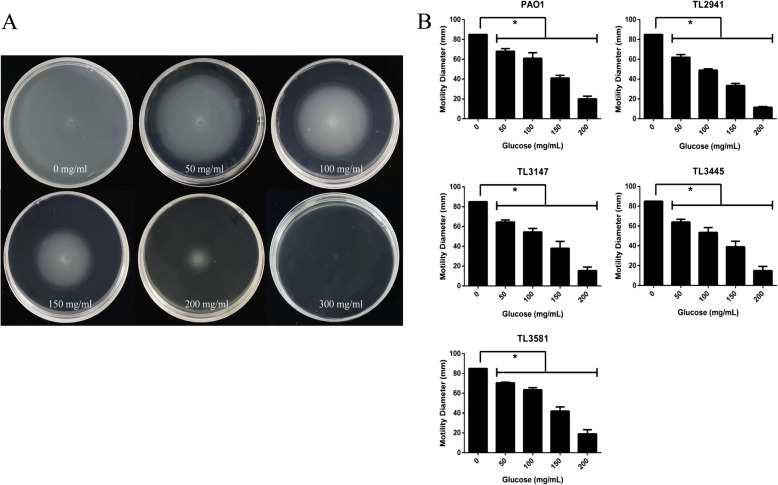
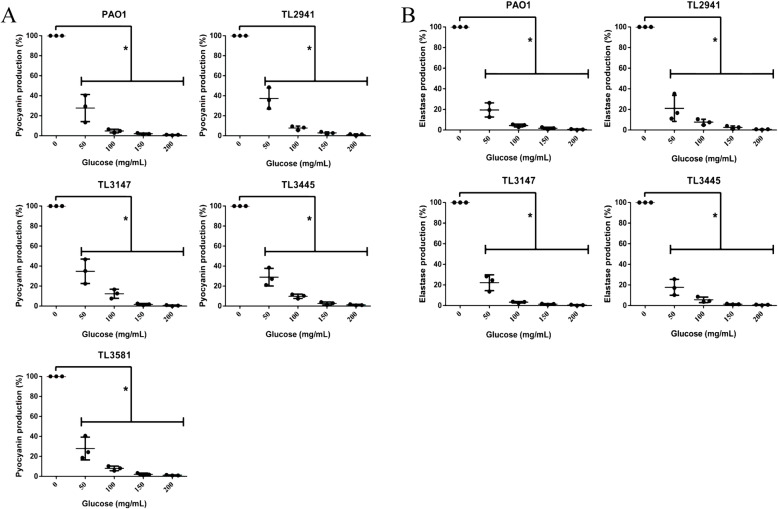
Four multidrug-resistant P. aeruginosa clinical strains isolated from diabetic foot ulcers from a tertiary hospital in China and the reference P. aeruginosa PAO1 strain were studied. Hypertonic glucose significantly inhibited the growth, biofilm formation, and swimming motility of P. aeruginosa clinical strains and PAO1. Furthermore, hypertonic glucose significantly reduced the production of pyocyanin and elastase virulence factors in P. aeruginosa. The expression of major quorum sensing genes (lasI, lasR, rhlI, and rhlR) in P. aeruginosa were all downregulated in response to hypertonic glucose treatment. In a Galleria mellonella larvae infection model, the administration of hypertonic glucose was shown to increase the survival rates of larvae infected by P. aeruginosa strains (3/5).
Hypertonic glucose inhibited the growth, biofilm formation, and swimming motility of P. aeruginosa, as well as reduced the production of virulence factors and quorum sensing gene expression. Further studies that investigate hypertonic glucose therapy should be considered in treating chronic wound infections.
铜绿假单胞菌是导致慢性伤口感染(如糖尿病足感染)的最常见革兰氏阴性病原体,进一步加剧了这些疾病的治疗选择和成本。高渗葡萄糖是一种常用的增生疗法溶液,可加速肉芽组织的增殖并改善伤口的微循环。然而,高渗葡萄糖对感染伤口的细菌病原体的作用尚不清楚。在这项研究中,我们研究了高渗葡萄糖对从中国一家三级医院的糖尿病足溃疡中分离出的耐多药铜绿假单胞菌菌株的抑制作用。高渗葡萄糖代表了控制由铜绿假单胞菌引起的慢性伤口感染的新方法。
研究了从中国一家三级医院的糖尿病足溃疡中分离出的 4 株耐多药铜绿假单胞菌临床株和参考铜绿假单胞菌 PAO1 株以及耐多药铜绿假单胞菌临床株和 PAO1。高渗葡萄糖显著抑制铜绿假单胞菌临床株和 PAO1 的生长、生物膜形成和泳动运动。此外,高渗葡萄糖显著降低了铜绿假单胞菌产绿脓菌素和弹性蛋白酶毒力因子的产生。铜绿假单胞菌主要群体感应基因(lasI、lasR、rhlI 和 rhlR)的表达在高渗葡萄糖处理后均下调。在大蜡螟幼虫感染模型中,给予高渗葡萄糖可提高大蜡螟幼虫感染铜绿假单胞菌菌株的存活率(3/5)。
高渗葡萄糖抑制铜绿假单胞菌的生长、生物膜形成和泳动运动,减少毒力因子的产生和群体感应基因的表达。应考虑进一步研究高渗葡萄糖治疗在治疗慢性伤口感染中的作用。