1Department of Economics, American University, Washington, District of Columbia.
2Department of Pediatrics, Tropical Medicine Section, Baylor College of Medicine, Houston, Texas.
Am J Trop Med Hyg. 2020 Jul;103(1):295-302. doi: 10.4269/ajtmh.19-0898.
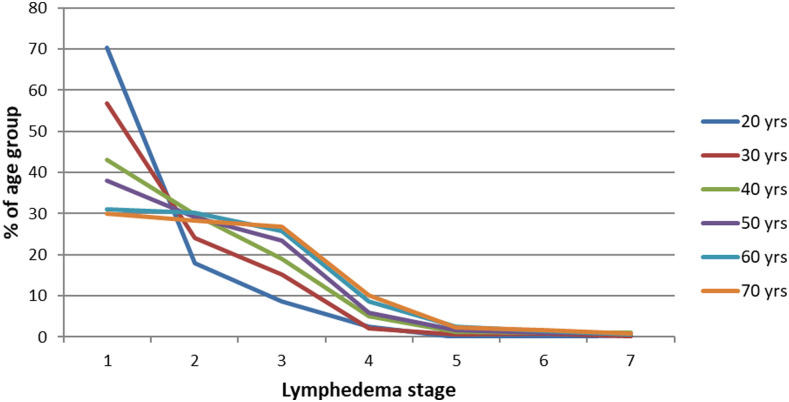
Lymphatic filariasis (LF) is endemic in 72 countries; 15 million persons live with chronic filarial lymphedema. It can be a disabling condition, frequently painful, leading to reduced mobility, social exclusion, and depression. The Global Program to Eliminate Lymphatic Filariasis aims to stop new infections and care for affected persons, but morbidity management has been initiated in only 38 countries. We examine economic costs and benefits of alleviating chronic lymphedema and its effects through simple limb care. We use economic and epidemiological data from 12 Indian states in which 99% of Indians with filariasis reside. Using census data, we calculate the age distribution of filarial lymphedema and predict the burden of morbidity of infected persons. We estimate lifetime medical costs and lost earnings due to lymphedema and acute dermatolymphangioadenitis (ADLA) with and without community-based limb-care programs. Programs of community-based limb care in all Indian endemic areas would reduce costs of disability by 52%, saving a per person average of US$2,721, equivalent to 703 workdays. Per-person savings are 185 times the program's per-person cost. Chronic lymphedema and ADLA impose a substantial physical and economic burden in filariasis-endemic areas. Low-cost programs for lymphedema management based on limb washing and topical medication are effective in reducing the number of ADLA episodes and stopping progression of disabling lymphedema. With reduced disability, people can work longer hours per day, more days per year, and in more strenuous, higher paying jobs, resulting in important economic benefits to themselves, their families, and their communities.
淋巴丝虫病(LF)在 72 个国家流行;有 1500 万人患有慢性丝虫性淋巴水肿。它可能是一种使人丧失能力的疾病,经常伴有疼痛,导致行动不便、社会排斥和抑郁。全球消灭淋巴丝虫病规划旨在阻止新的感染并为受影响的人提供护理,但仅有 38 个国家启动了发病率管理。我们通过简单的肢体护理来减轻慢性淋巴水肿及其影响,考察了减轻慢性淋巴水肿及其影响的经济成本和收益。我们使用了印度 12 个邦的经济和流行病学数据,这些邦居住着 99%的印度淋巴丝虫病患者。我们利用人口普查数据计算了淋巴丝虫病的年龄分布,并预测了感染者的发病负担。我们估计了患有淋巴水肿和急性皮肤淋巴管炎(ADLA)的终生医疗费用和因该病导致的收入损失,以及是否开展社区肢体护理项目。在所有印度流行地区开展社区肢体护理项目,将使残疾成本降低 52%,每人平均节省 2721 美元,相当于 703 个工作日。每人节省的费用是项目每人成本的 185 倍。慢性淋巴水肿和 ADLA 在淋巴丝虫病流行地区造成了巨大的身体和经济负担。基于肢体清洗和局部用药的廉价淋巴水肿管理方案可有效减少 ADLA 发作次数,并阻止致残性淋巴水肿的进展。残疾程度降低后,人们每天可工作更长时间、每年可工作更多天数、从事更艰苦和收入更高的工作,从而为他们自己、家人和社区带来重要的经济效益。