Guan Yue, Chambers Christopher B, Tabatabai Taylor, Hatley Ha, Delfino Kristin R, Robinson Kathy, Alanee Shaheen R, Ran Sophia, Torry Donald S, Wilber Andrew
Department of Medical Microbiology, Immunology and Cell Biology, Southern Illinois University School of Medicine, Springfield, IL 62702, USA.
Center for Clinical Research, Southern Illinois University School of Medicine, Springfield, IL 62702, USA.
Oncotarget. 2020 Jun 30;11(26):2571-2585. doi: 10.18632/oncotarget.27654.
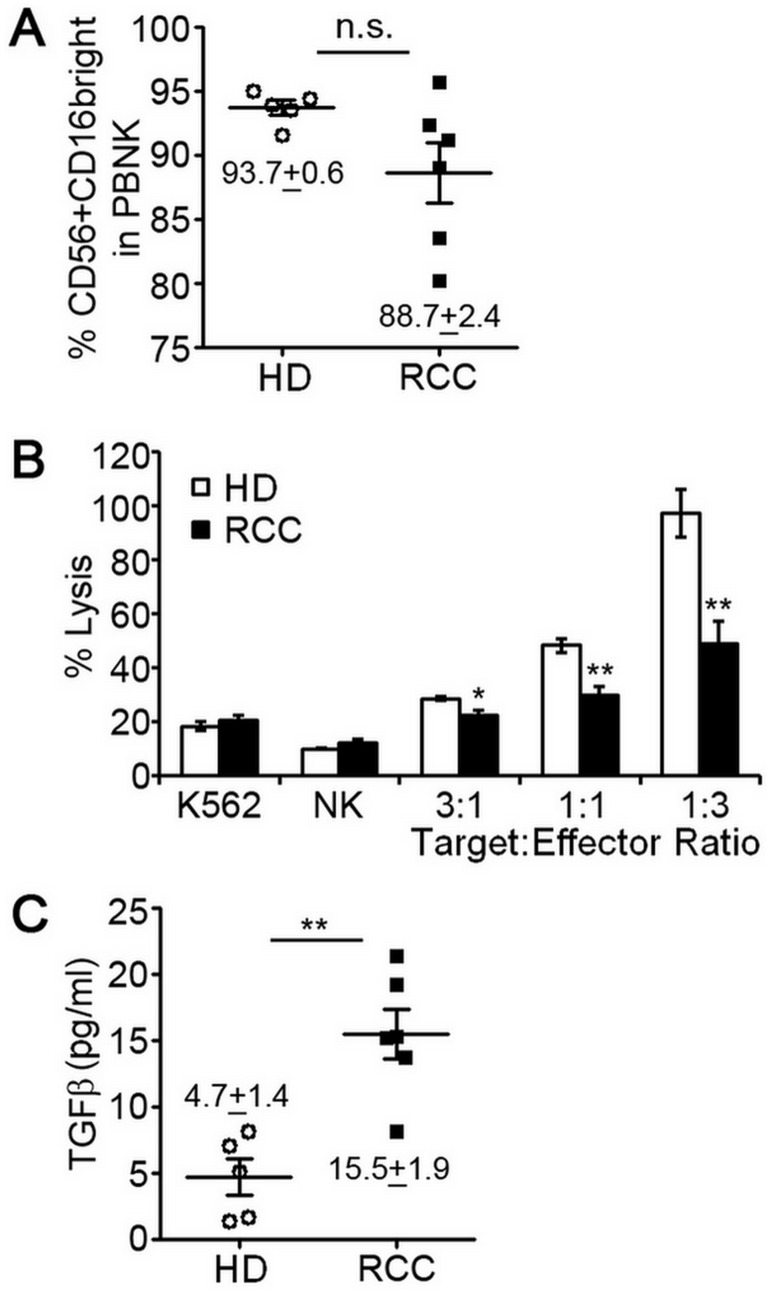
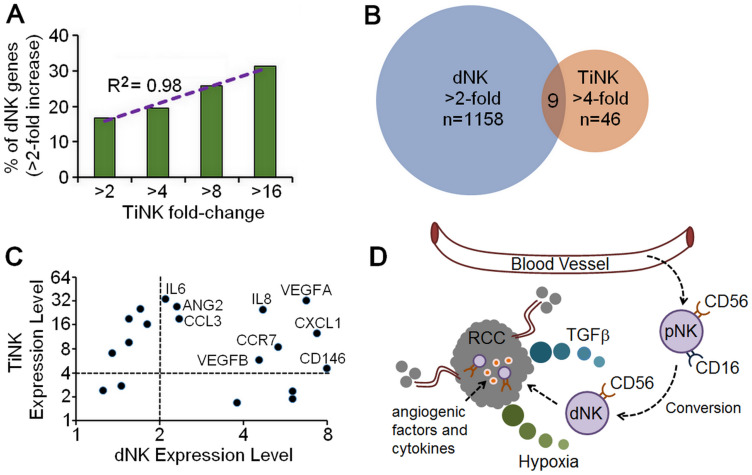
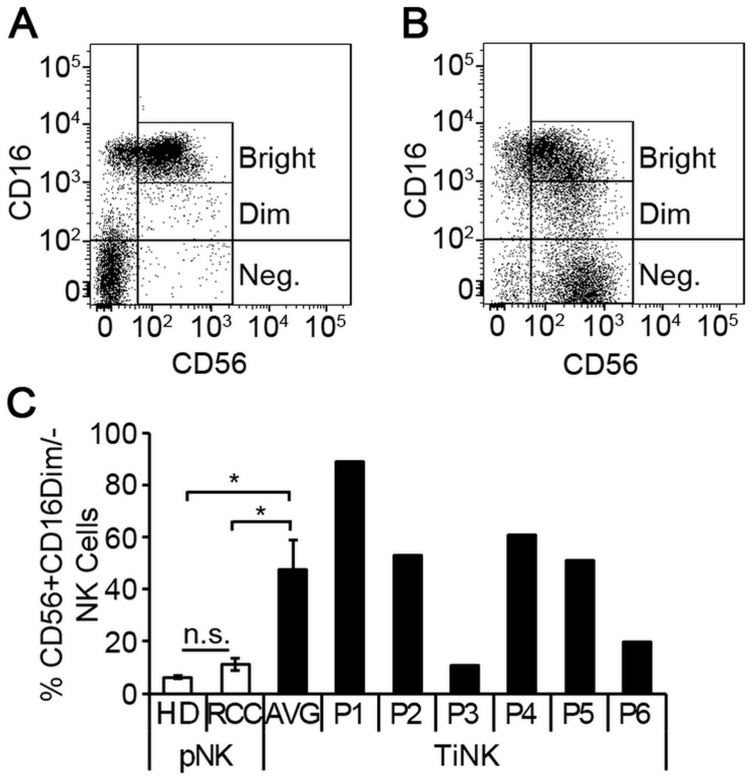
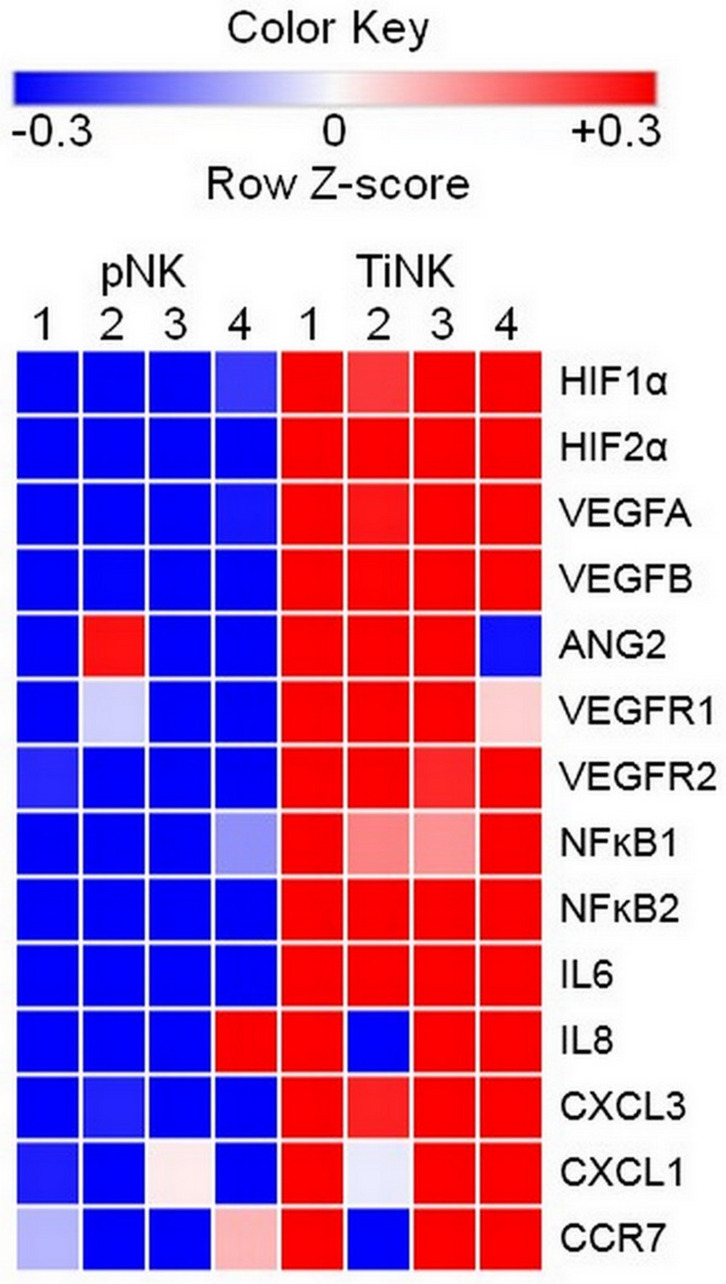
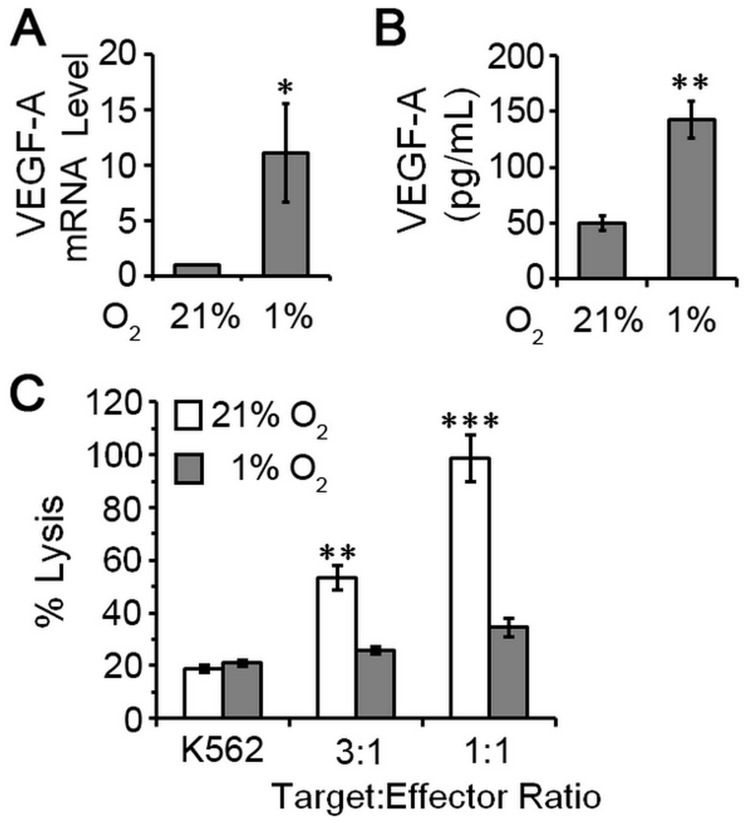
Natural killer (NK) cells are classically associated with immune surveillance and destruction of tumor cells. Inconsistent with this function, NK cells are found in advanced human tumors including renal cell carcinoma (RCC). NK cells with non-classical phenotypes (CD56CD16; termed decidua NK (dNK) cells) accumulate at the maternal-fetal interface during embryo implantation. These dNK cells are poorly cytotoxic, proangiogenic, and facilitate placenta development. As similarities between embryo implantation and tumor growth exist, we tested the hypothesis that an analogous shift in NK cell phenotype and function occurs in RCC tumors. Our results show that peripheral NK (pNK) cells of RCC patients were uniformly CD56CD16, but lacked full cytotoxic ability. By comparison, RCC tumor-infiltrated NK (TiNK) cells were significantly enriched for CD56CD16 cells, a phenotype of dNK cells. Gene expression analysis revealed that angiogenic and inflammatory genes were significantly increased for RCC TiNK versus RCC pNK populations, with enrichment of genes in the hypoxia inducible factor (HIF) 1α pathway. Consistent with this finding, NK cells cultured under hypoxia demonstrated limited cytotoxicity capacity, but augmented production of vascular endothelial growth factor (VEGF). Finally, comparison of gene expression data for RCC TiNK and dNK cells revealed a shared transcriptional signature of genes with known roles in angiogenesis and immunosuppression. These studies confirm conversion of pNK cells to a dNK-like phenotype in RCC tumors. These characteristics are conceivably beneficial for placentation, but likely exploited to support early tumor growth and promote metastasis.
自然杀伤(NK)细胞传统上与免疫监视和肿瘤细胞破坏相关。与这种功能不一致的是,在包括肾细胞癌(RCC)在内的晚期人类肿瘤中发现了NK细胞。具有非经典表型(CD56CD16;称为蜕膜NK(dNK)细胞)的NK细胞在胚胎植入期间在母胎界面处积聚。这些dNK细胞细胞毒性较弱、具有促血管生成作用,并促进胎盘发育。由于胚胎植入和肿瘤生长之间存在相似性,我们测试了RCC肿瘤中NK细胞表型和功能发生类似转变的假设。我们的结果表明,RCC患者的外周血NK(pNK)细胞均为CD56CD16,但缺乏完全的细胞毒性能力。相比之下,RCC肿瘤浸润性NK(TiNK)细胞中CD56CD16细胞显著富集,这是dNK细胞的一种表型。基因表达分析显示,与RCC pNK群体相比,RCC TiNK群体中血管生成和炎症基因显著增加,缺氧诱导因子(HIF)1α途径中的基因富集。与这一发现一致,在缺氧条件下培养的NK细胞表现出有限的细胞毒性能力,但血管内皮生长因子(VEGF)的产生增加。最后,对RCC TiNK和dNK细胞的基因表达数据进行比较,发现了在血管生成和免疫抑制中具有已知作用的基因的共同转录特征。这些研究证实了RCC肿瘤中pNK细胞向dNK样表型的转变。这些特征可能对胎盘形成有益,但可能被肿瘤利用来支持早期肿瘤生长并促进转移。