Turchioe Meghan Reading, Jimenez Victoria, Isaac Samuel, Alshalabi Munther, Slotwiner David, Creber Ruth Masterson
Department of Population Health Sciences, Division of Health Informatics, Weill Cornell Medicine, New York, New York.
Heart Rhythm O2. 2020 Apr;1(1):35-43. doi: 10.1016/j.hroo.2020.02.005. Epub 2020 Apr 27.
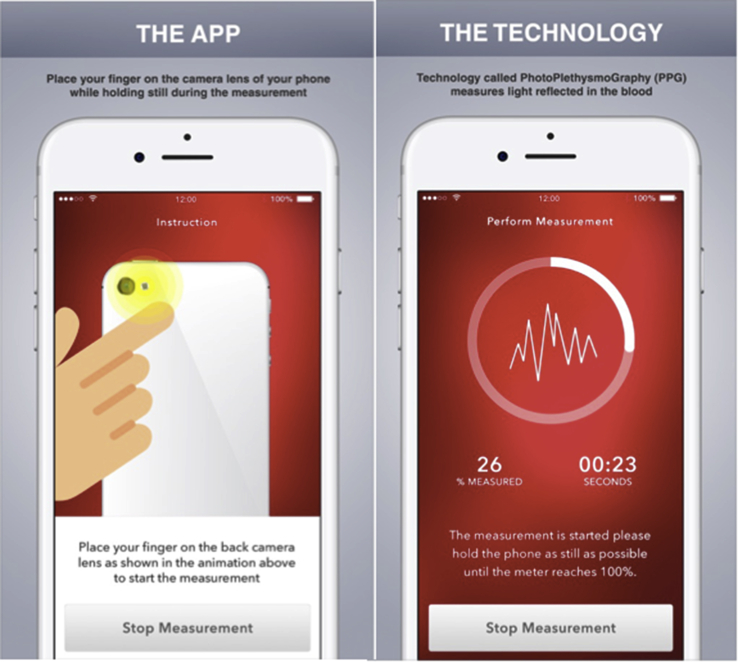
Free mobile applications (apps) that use photoplethysmography (PPG) waveforms may extend atrial fibrillation (AF) detection to underserved populations, but they have not been rigorously evaluated.
The purpose of this study was to systematically review and evaluate the quality, functionality, and adherence to self-management behaviors of existing mobile apps for AF.
We systematically searched 3 app stores for apps that were free, available in English, and intended for use by patients to detect and manage AF. A minimum of 2 reviewers evaluated (1) app quality, using the Mobile Application Rating Scale (MARS); (2) functionality using published criteria; and (3) features that support 4 self-management behaviors (including PPG waveform monitoring) identified using evidence-based guidelines. Interrater reliability between the reviewers was calculated.
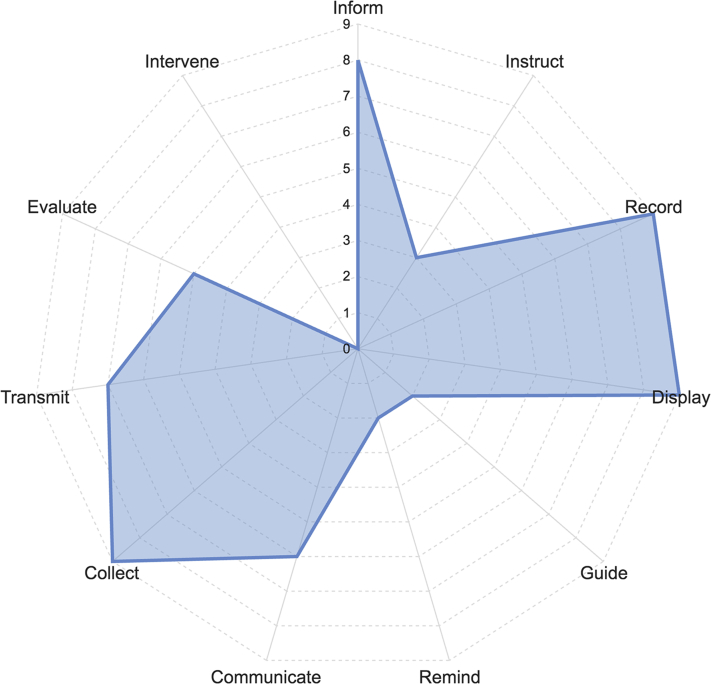
Of 12 included apps, 5 (42%) scored above average for quality (MARS score ≥3.0). App quality was highest for their ease of use, navigation, layout, and visual appeal (eg, functionality and aesthetics) and lowest for their behavioral change support and subjective impressions of quality. The most common app functionalities were capturing and graphically displaying user-entered data (n = 9 [75%]). Nearly all apps (n = 11 [92%]) supported PPG waveform monitoring, but only 2 (17%) supported all 4 self-management behaviors. Interrater reliability was high (0.75-0.83).
The reviewed apps had wide variability in quality, functionality, and adherence to self-management behaviors. Given the accessibility of these apps to underserved populations and the tremendous potential they hold for improving AF detection and management, high priority should be given to improving app quality and functionality.
使用光电容积脉搏波描记法(PPG)波形的免费移动应用程序(应用)可能会将房颤(AF)检测扩展到服务不足的人群,但尚未经过严格评估。
本研究的目的是系统评价和评估现有房颤移动应用的质量、功能以及对自我管理行为的依从性。
我们在3个应用商店中系统搜索免费、英文且供患者用于检测和管理房颤的应用。至少2名评审员评估:(1)应用质量,使用移动应用评分量表(MARS);(2)功能,使用已发表的标准;(3)支持根据循证指南确定的4种自我管理行为(包括PPG波形监测)的功能。计算评审员之间的评分者间信度。
在纳入的12个应用中,5个(42%)质量得分高于平均水平(MARS评分≥3.0)。应用在易用性、导航、布局和视觉吸引力(如功能和美观)方面质量最高,在行为改变支持和质量主观印象方面最低。最常见的应用功能是捕获并以图形方式显示用户输入的数据(n = 9 [75%])。几乎所有应用(n = 11 [92%])都支持PPG波形监测,但只有2个(17%)支持所有4种自我管理行为。评分者间信度较高(0.75 - 0.83)。
所审查的应用在质量、功能以及对自我管理行为的依从性方面存在很大差异。鉴于这些应用对服务不足人群的可及性以及它们在改善房颤检测和管理方面的巨大潜力,应高度优先提高应用的质量和功能。